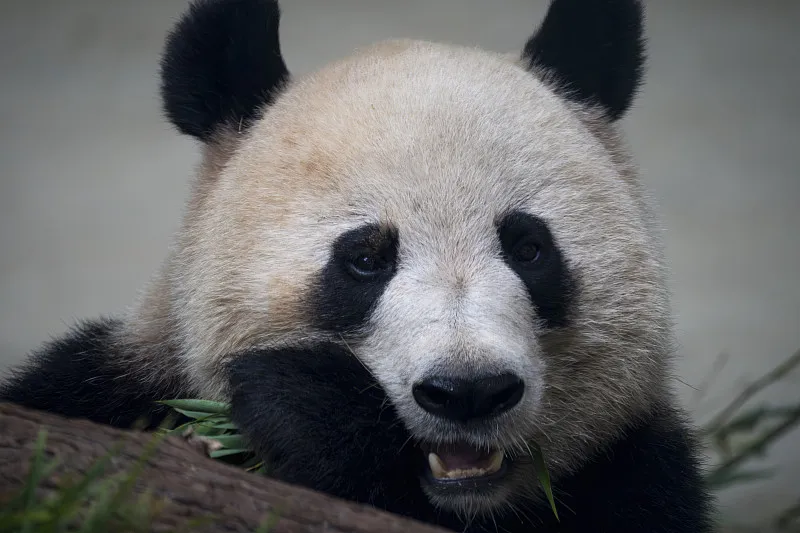
Why Are Pandas Black and White? A Color Camouflage Guide for Kids 🎨
🐼 Key Fact: Pandas didn’t get their black-and-white colors just to look cute — each color serves a special purpose! The white fur acts like an invisibility cloak in snow, the black fur helps them vanish into dark forest shadows, and the black eye patches work like personal name tags that help pandas recognize each other. Together, these colors make pandas one of the best-camouflaged large animals in their misty mountain homes.
Key Takeaways
-
🎨 White fur = snow camouflage, black fur = shadow camouflage. Pandas live in snowy mountains AND dark forests, so they need both colors.
-
👁️ Eye patches are personal name tags. No two pandas have exactly the same eye patches — each one is unique, helping pandas recognize each other.
-
🐻 Baby pandas are born PINK! The famous black-and-white pattern takes weeks to appear, and it develops in the same order it evolved millions of years ago.
Hello, color detective! Have you ever looked at a panda and wondered: “Why THOSE colors?” Why not green like a frog, or brown like a deer, or striped like a zebra?
The answer is hiding in the snowy, shadowy, misty bamboo forests of China — and it’s WAY cooler than “because they look cute.” Ready to solve the mystery of the panda’s colors?
The Magic Disappearing Panda Trick ✨
Imagine you’re walking through a snowy mountain forest in Sichuan, China. Everything is white — the ground, the bamboo stalks, the branches of the fir trees. Snowflakes drift silently through the cold air.
Suddenly, you spot something moving. You look closer. It’s… nothing? The shape you thought you saw has vanished.
That’s the panda’s superpower: disappearing!
Let me explain how it works:
In the snow: A panda’s white belly and white face match the snow perfectly. When a panda sits in a snowy bamboo grove, its white parts blend into the white snow around it. A predator looking for lunch would see… just snow.
In the shadows: A panda’s black shoulders and black legs match the dark shadows between tree trunks. When a panda walks through a dark forest, its black parts dissolve into the shadows. The panda doesn’t disappear completely — it BREAKS APART, like a puzzle whose pieces scatter into different backgrounds.
This two-color trick is called background matching across two habitats, and pandas are one of the few large animals that can do it. Most camouflaged animals can only hide in ONE type of background — white arctic foxes for snow, brown lions for grass. Pandas can hide in BOTH.
Try this at home: Put a black-and-white piece of paper on a black-and-white checkerboard. See how hard it is to tell where the paper ends and the board begins? That’s what happens when a panda stands in a snowy, shadowy forest!
[Image: A composite showing the same panda photo against a snowy background and a dark forest background, demonstrating how white parts blend into snow and black parts blend into shadows]
The Eye Patch Mystery: Nature’s Name Tags 👁️
Now for the coolest part of panda colors: the black patches around their eyes.
These patches aren’t just for looks — they’re IDENTIFICATION BADGES! Every single panda has DIFFERENT eye patches. Some are perfectly round. Some are teardrop-shaped. Some tilt toward the ears. Some tilt toward the nose. No two are exactly alike.
In the dense bamboo forests where visibility is terrible — you can barely see 10 meters ahead — pandas need a way to recognize each other quickly. The eye patches work like a natural name tag: one glance at the face, and a panda knows “Oh, that’s my neighbor” or “That’s a stranger I should stay away from.”
Researchers at the Chengdu Research Base have built a computer program that can identify individual pandas by their eye patches with OVER 93% ACCURACY! That’s as good as the facial recognition on your parents’ phones. And it works because every panda’s eye patches are as unique as your fingerprints.
Counter-intuitive fact! 🧠 Most people think the eye patches are camouflage, like the rest of the panda’s colors. But scientists now believe the eye patches evolved for SOCIAL communication — helping pandas recognize each other — not for hiding. The rest of the body is for camouflage; the face is for saying hello!
Brown Pandas: When the Rules Get Broken 🟤
Every rule has an exception, and the panda color rule has a BIG one: brown pandas!
In the Qinling Mountains — a different mountain range from where most pandas live — a tiny number of pandas are born with BROWN fur where they should have BLACK. The most famous brown panda is Qi Zai, the only brown panda living in captivity.
Qi Zai looks like someone drew a regular panda with a brown crayon instead of a black one. His eye patches are chocolate-colored. His shoulder band is cinnamon. He’s not albino (albino animals have no color at all, with pink eyes and white fur) — he just has the “brown version” of panda colors.
Why brown? Qi Zai has a genetic mutation — a tiny change in his DNA that affects how his body makes color. The gene that normally tells his fur cells “make BLACK pigment” is sending a slightly different message: “make BROWN pigment.” It’s the same kind of genetic difference that makes some people have red hair instead of brown hair!
The full story of Qi Zai and the Qinling brown panda subspecies has all the science behind his chocolate color!
How Baby Pandas Grow Their Colors 🍼
Here’s a surprise: baby pandas are NOT born black and white!
Newborn panda cubs are completely PINK. Not a single black hair, not a single white hair — just pink skin showing through thin, nearly invisible baby fur. They look more like tiny pink mice than like pandas.
The black-and-white pattern develops gradually, in a specific order:
- Week 1: Dark gray patches appear around the eyes — the eye patches are first!
- Week 2: The ears begin to darken
- Week 3-4: The black shoulder band starts to show
- By 2 months: Full black-and-white coat is visible
The order the colors appear in a baby panda is the SAME order they evolved in the panda species millions of years ago! Eye patches (for recognition) came first, then ears (for hearing), then the shoulder band (for camouflage). The baby panda’s first year growth diary has the complete week-by-week development timeline!
The Color Superhero Chart 🦸
| Color | Where It Is | What It Does |
|---|---|---|
| ⬜ WHITE | Belly, face, neck | Blends into snow — the “winter invisibility cloak” |
| ⬛ BLACK | Shoulders, legs | Blends into shadows — the “forest invisibility cloak” |
| 👁️ BLACK | Around the eyes | Personal identification — “nature’s name tag” |
| 🖤 BLACK | Ears | Sound localization (helps pinpoint where sounds come from) |
| 🌸 PINK | Nose, paw pads | Skin showing through — no fur here because pandas need sensitivity |
Want to see panda camouflage in action? Next time you watch a panda video, try covering up the white parts with your fingers so only the black parts show — then cover up the black parts so only the white parts show. See how each color on its own blends into different backgrounds? Now uncover everything — and see how the complete panda, with both colors working together, is a camouflage masterpiece hiding in plain sight! 🐼✨