Rio Growing Well at Six Months
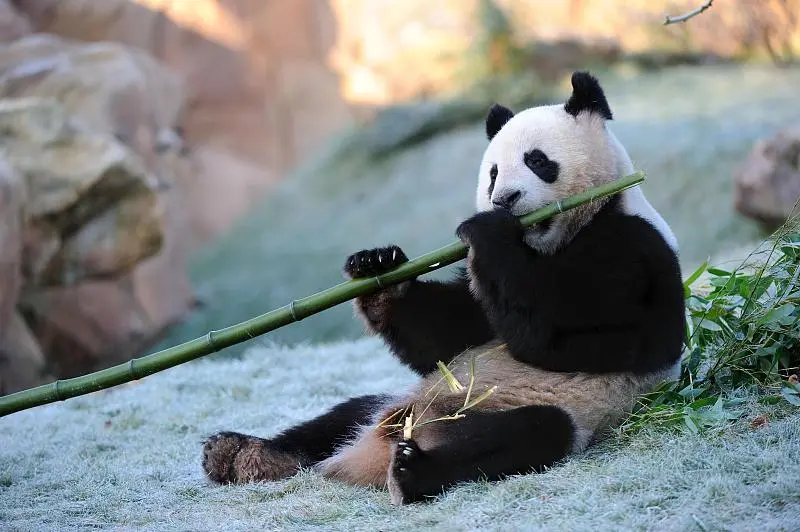
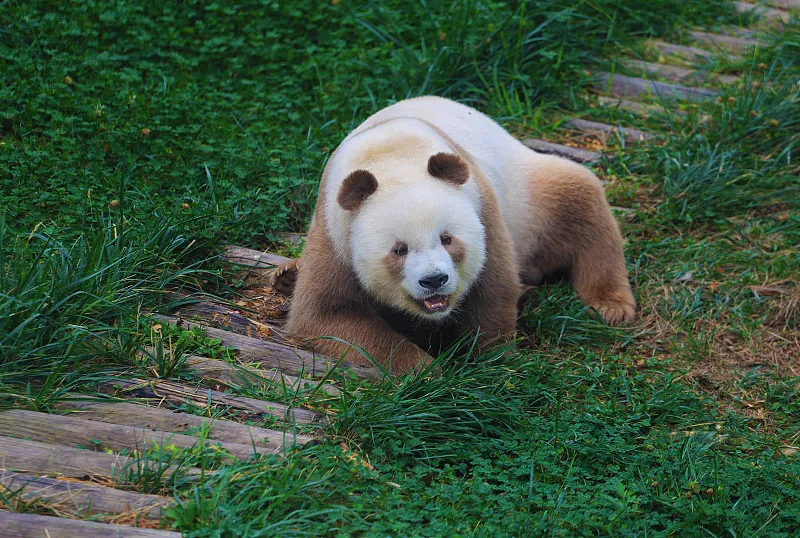
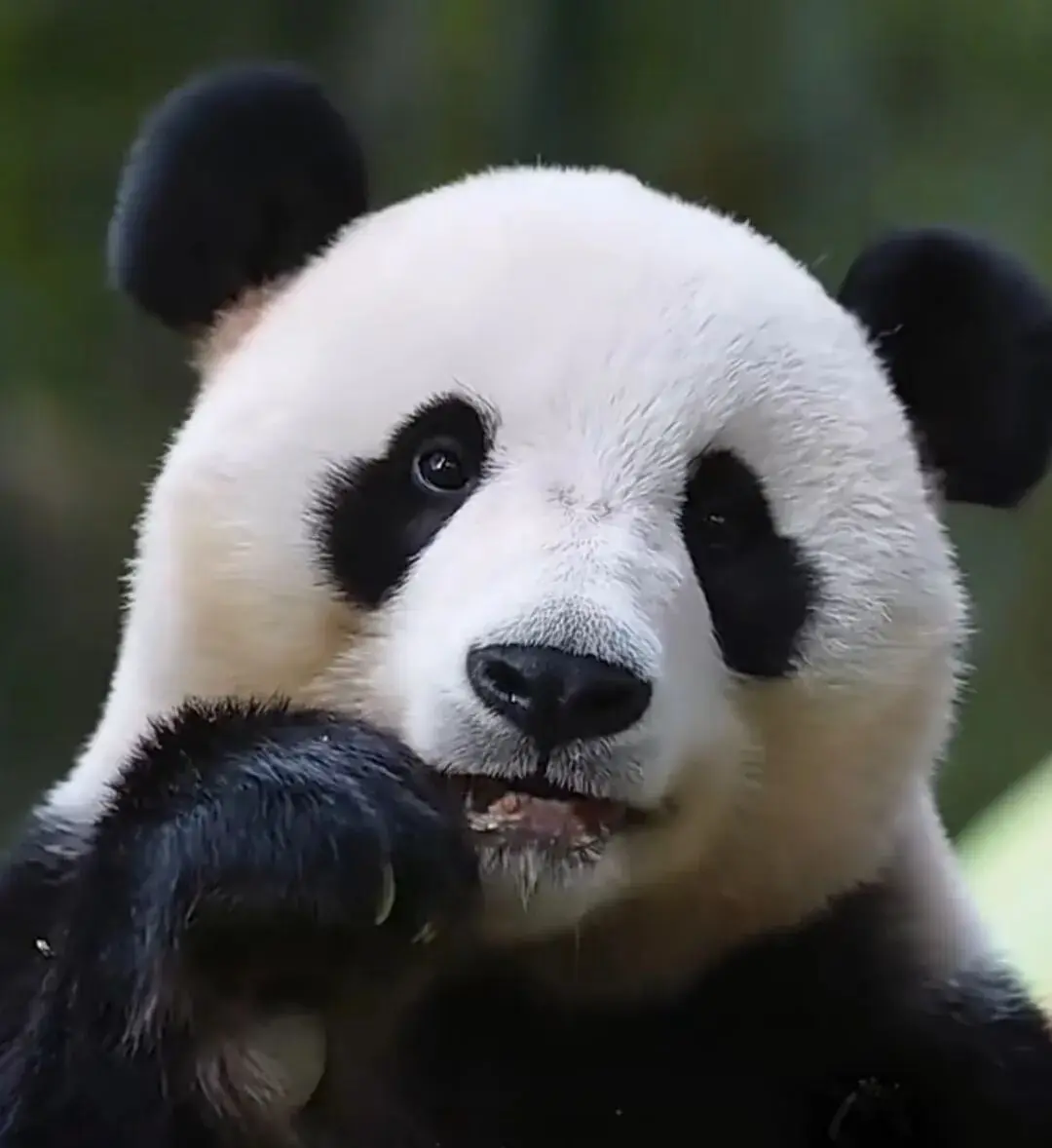
Rio, Indonesia's first giant panda cub, is in excellent health at six months old. Taman Safari Indonesia confirms all developmental indicators are stable under continuous veterinary monitoring.
Follow giant panda lives across places, family lines, and years through a reference archive built for careful browsing and long-term use.
Featured pandas
成和花
Cheng Hehua (Hua Hua, 花花), nicknamed "Fruit Lai" (果赖) because she responds to this Sichuan dialect call, is China's top internet celebrity panda born July 4, 2020 at Chengdu Base. Known for her round face, short limbs, and calm demeanor, she became an overnight sensation in 2023 when videos of her being outwitted by other pandas went viral. Appointed Honorary Director of Chengdu Culture and Tourism Bureau in 2024, she draws record crowds to the Chengdu Base.
得得
De De (得得), nicknamed "Xi Lao" (细佬 / Little Brother), is a male giant panda born August 15, 2024 at Ocean Park Hong Kong — one of the first giant pandas ever born in Hong Kong. He is the twin brother of Ga Ga (加加) and the son of Le Le and Ying Ying. His name "得得" means "to gain," paired with his sister's name "加加" (to add), forming the phrase "加加得得" — add and gain, symbolizing continuous growth and blessings. By May 2025, at approximately 9 months old, he moved with his mother and sister to an expanded habitat.
福宝
Fu Bao (福宝), studbook #1284, is a female giant panda born on July 20, 2020 at Everland Resort in South Korea — the first panda born in Korea. Her parents are Ai Bao (爱宝/华妮) and Le Bao (乐宝/园欣). Named "Lucky Treasure" through a public vote, she became one of the world's most famous pandas, with dedicated fan communities, bestselling photo books, and even a Samsung Galaxy Buds case inspired by her. She returned to China on April 3, 2024, and now resides at the Wolong Shenshuping Base.
加加
Ga Ga (加加), affectionately known as "Jia Jie" (家姐 / Big Sister), is a female giant panda born August 15, 2024 at Ocean Park Hong Kong — one of the first giant pandas ever born in Hong Kong. Daughter of Le Le and Ying Ying, she and her twin brother De De made history as the first "Hong Kong-made" pandas. Named through a public competition with over 35,700 entries, her name "加加" means "cheering on" and symbolizes encouragement and hope. By May 2025, at approximately 9 months old, she weighed over 21 kg and began exploring her expanded habitat.
乐乐
Le Le (乐乐), studbook #606, is a male giant panda born on August 8, 2005, at the Wolong China Conservation and Research Center for Giant Pandas. He arrived at Ocean Park Hong Kong on April 26, 2007, as part of the commemorative pair of giant pandas gifted to celebrate the 10th anniversary of Hong Kong's return to China. After 13 years of failed mating attempts with his partner Ying Ying (盈盈), Le Le successfully natural mated in March 2024, resulting in the birth of twin cubs Jia Jia (加加) and De De (得得) on August 15, 2024—the first giant pandas born in Hong Kong. At approximately 20 years old, Le Le continues his role as a conservation ambassador in Hong Kong.
妹珠
Mei Zhu (妹珠), nicknamed "Mei Zhu" (妹猪), is a female giant panda born June 18, 2024 at Guangzhou Chimelong Safari Park. She is the offspring of the world's only surviving giant panda triplets — her mother Meng Meng is the eldest of "Meng Shuai Ku" (萌帅酷). Weighing 178g at birth, she reached 27.1 kg by her first birthday. Awarded the "Miracle Continuation Award" for her role as the first descendant of the triplets, she began serving as a "National Treasure Tour Guide" at age one, sharing panda conservation knowledge through livestreams.
萌兰
Meng Lan, nicknamed "West Straight Gate Third Prince" (西直门三太子), is one of China's most famous giant pandas, born July 4, 2015 at Chengdu Base. Known for his round face, high intelligence, and playful escapes from his enclosure at Beijing Zoo, he has amassed hundreds of millions of online views. Son of overseas-born Mei Lan and "Beijing Zoo Oscar actress" Meng Meng, he survived juvenile osteomyelitis in 2017 before moving to Beijing where he became a national phenomenon.
梦想
Meng Xiang (梦想), studbook #1214, is a male giant panda born on September 1, 2019, at Berlin Zoo. He and his twin brother Meng Yuan (梦圆) were the first giant pandas born in Germany. Their parents Meng Meng (梦梦, studbook 868) and Jiao Qing (娇庆, studbook 824) arrived in Berlin in 2017 as part of a 15-year Sino-German conservation agreement. In December 2023, Meng Xiang returned to China and currently resides at the Chengdu Research Base of Giant Panda Breeding.
Start here
The archive works best when each entry point has a clear job: profiles for individual pandas, the timeline for chronology, the library for context, and places for geographic browsing.
Browse individual panda records, family links, and place history.
Track births, transfers, health notes, and other evidence-layer events.
Read long-form articles on biology, conservation, culture, and stories.
Browse zoos, breeding centers, and country context around each panda record.
Library now
culture
In May 2026, Guangzhou Chimelong Safari Park confirmed that Jia He (家和, studbook #972), a 10-year-old male giant panda, died from heart failure caused by a pulmonary chlamydia infection — a diagnosis so unusual that it may be the first documented fatal chlamydia case in a giant panda worldwide. This article examines the clinical timeline, the microbiology behind the infection, the investigation into possible transmission sources, and the broader implications for captive panda health management at one of China's largest panda facilities.
culture
A curated global guide to over 50 panda documentaries spanning seven decades, seven thematic categories, and ten countries — from Pan Wenshi's raw Qinling field recordings in the 1990s to the 2024 Korean theatrical release Goodbye, Grandpa. Every film is verified, reviewed, and linked to the real pandas, keepers, and breeding centers behind the footage.
May 22, 2026
nature
The giant panda's transition from omnivore to bamboo specialist is far more recent — and far less straightforward — than previously believed. Stable isotope analysis of fossil panda bones, led by Wei Fuwen's team at the Institute of Zoology, Chinese Academy of Sciences, has overturned the traditional narrative: until approximately 5,000 years ago, pandas were omnivores with a diet breadth three times wider than today's. This article traces the fossil evidence, the isotopic methodology, and the story of how the panda — a living contemporary of saber-tooth tigers and mammoths — survived by changing what it ate.
May 22, 2026
nature
Giant pandas are among the most solitary of all bear species — individuals maintain separate territories, meet only briefly to mate, and raise cubs in complete isolation. This article explores the behavioral ecology of panda solitude: why bamboo favors living alone, how pandas avoid each other through scent-marking, and what rare encounters reveal about the hidden social life of a famously solitary animal.
May 22, 2026
Why read here
The library connects profiles and updates to bigger ideas: biology, conservation systems, diplomacy, culture, and beginner-friendly explainers.
Recent archive activity
Rio, Indonesia's first giant panda cub, is in excellent health at six months old. Taman Safari Indonesia confirms all developmental indicators are stable under continuous veterinary monitoring.
Ting Zai showed loss of appetite, lethargy, coughing and fever. A multidisciplinary team including China Agricultural University and Sun Yat-sen Memorial Hospital treated him. His condition stabilized.
Where to branch next
Top places
Geography
Browse zoos, breeding centers, and other places connected to giant pandas, then move from geography into country pages and local timelines.
Reference reading
Use the library to add context to the data layer: biology, conservation, panda culture, and beginner-friendly explainers all sit alongside the archive.
Becoming a panda keeper is statistically harder than gaining admission to many elite universities — annual acceptance rates at the Chengdu Research Base are below 5%. This article explores the education, physical demands, emotional resilience, and daily realities of panda keeping, featuring interviews with keepers who describe their work as 'the most difficult, least glamorous, and most meaningful job in animal care.'
Nestled in the misty mountains above Ya'an, Sichuan, the Bifengxia Panda Base is the quiet epicenter of the global panda diaspora — the place every overseas-born panda first encounters when it returns to China. With its cool climate, abundant bamboo, and specialized quarantine facilities, Bifengxia has processed every major panda homecoming of the modern era, from Tai Shan in 2010 to Fu Bao in 2024.
In 2016, Ai Bao and Le Bao arrived at Everland in South Korea as diplomatic gifts. In 2020, they produced Fu Bao — the first panda born in Korea — and ignited a cultural phenomenon that transformed Korean panda keeping into a national obsession. This article traces how Everland's media strategy, the emotional bond between keeper Kang Cheol-won and Fu Bao, and the Korean public's embrace of 'panda parenting' created the most intense panda fandom outside China.
About the project
Pandacommon combines structured records, historical updates, and long-form reference writing so the site can function as both a browsing experience and a durable source of panda knowledge.