Jian Jian
健健
10 years old
chengdu_base
Jian Jian (健健, studbook #1001) is a male giant panda born June 26, 2016 at Macau's Seac Pai Van Park — one of the first ...
View profilePanda archive
康康
Kang Kang (康康, studbook #1002) is a male giant panda born June 26, 2016 at Macau's Seac Pai Van Park — the first pandas ever born in Macau. Twin of Jian Jian, he weighed just 53.8 g at birth, among the lightest cubs ever to survive. On 8 November 2026 he moved to the Chengdu Research Base for an open-ended stay, entering quarantine before settling into the Xingyun Pavilion.
How to use this page
This page brings together the core facts, timeline, family graph, media, place journey, and related reading for Kang Kang.
Profile snapshot
Birth date
June 26, 2016
Birth place
Macao Giant Panda Pavilion
Current location
Chengdu Research Base of Giant Panda Breeding
Status
Alive
Studbook
#1002Archive activity
3 updates · 0 media
Narrative
Start with a concise summary, then continue into the full narrative record for Kang Kang.
Short version
Kang Kang (康康, studbook #1002) is a male giant panda born June 26, 2016 at Macau's Seac Pai Van Park — the first pandas ever born in Macau. Twin of Jian Jian, he weighed just 53.8 g at birth, among the lightest cubs ever to survive. On 8 November 2026 he moved to the Chengdu Research Base for an open-ended stay, entering quarantine before settling into the Xingyun Pavilion.
Kang Kang (Chinese: 康康, “Healthy”), studbook number 1002, is a male giant panda born on June 26, 2016 at the Macau Seac Pai Van Park panda pavilion. He and his twin brother Jian Jian are the first giant pandas ever born in Macao.
His parents are Ya Lin (娅林/Kai Kai, studbook 726) and Shu Rong (蜀蓉/Xin Xin, studbook 667) — the pair gifted to Macao in 2015 for the 15th anniversary of Macao’s return to China. The family became known locally as the “Happy Family” (开心家族).
On November 8, 2026, at the age of ten, Kang Kang and Jian Jian flew from Macao to Chengdu and moved into the Chengdu Research Base of Giant Panda Breeding.
His twin brother is Jian Jian (健健, studbook 1001), the larger of the two.
Shu Rong’s twin delivery on 26 June 2016 produced two males of very different size: the first-born weighed 135 grams, while the second weighed only 53.8 grams — an extremely low birth weight that put him among the smallest giant panda cubs ever to survive. Hand-rearing at that size is difficult, and the Chengdu Research Base dispatched specialists to Macao within days. Working with the Macao husbandry team in 24-hour rotating shifts, they brought him through the critical first weeks.
That early frailty is part of why Kang Kang’s later growth mattered to his keepers. By the age of five he had reached 107 kg, close to full adult size.
On July 29, 2016, Macao’s Civic and Municipal Affairs Bureau launched a territory-wide naming contest, “Let’s think of names for the panda babies together” (大熊猫宝宝名字齐齐想), open to all Macao residents. By September 17 the bureau reported an enthusiastic response: more than 1,700 name pairs had been submitted. The bureau and the Chengdu Research Base shortlisted names from the public entries, and the SAR government made the final decision — “Jian Jian” (健健) and “Kang Kang” (康康), together forming “健康” (health).
The choice carries two meanings at once. It wishes the brothers a healthy upbringing, and it echoes their parents’ names “Kai Kai” (开开) and “Xin Xin” (心心), which together form “开心” (happy) — so that the whole family reads as “开开心心、健健康康” (happy and healthy).
Kang Kang has a pointed head, a narrow snout and forward-folding ears. Keepers describe him as the more affectionate of the twins, inclined to act cute and seek attention — a “mama’s boy” in contrast to the more boisterous Jian Jian.
The brothers were raised together at the Seac Pai Van Park pavilion in Coloane, alongside their parents — the four of them known to Macao residents as the “Happy Family” (开心家族).
June 26, 2020 — fourth birthday. By this point the twins had reached the sub-adult stage and were housed separately, a standard step so each animal could receive individual behavioural training. Husbandry staff reported both developing well. Keepers marked the day with ice cakes made from fruit; the brothers latched onto them and ate with obvious enthusiasm.
June 26, 2021 — fifth birthday. The bureau again made cooling fruit-and-seasonal-bamboo ice cakes. Kang Kang weighed 107 kg and was approaching adulthood. The husbandry team had begun monitoring his growth and development at regular intervals, adjusting his diet, building up muscle through exercise, and attending to psychological wellbeing — treating physical and mental development as one programme rather than focusing on weight alone.
June 26, 2024 — eighth birthday. Macao’s Civic and Municipal Affairs Bureau invited around 30 pupils and teachers from Seac Pai Van Public School to celebrate with the twins.
June 26, 2025 — ninth birthday. The bureau held a birthday party for the brothers and invited school pupils. Keepers prepared an ice cake from fresh fruit and vegetables, the pupils sang to the pair, and both pandas began eating as soon as the cake was set down.
June 26, 2026 — tenth birthday. Staff from the bureau marked the milestone for Kang Kang.
September 23, 2026 — the move is confirmed. With the agreement of the central government and the relevant Macao SAR departments, it was announced that Jian Jian would leave for Chengdu in early November, described officially as a learning-and-growing journey: strengthening environmental adaptation skills, experiencing a richer natural habitat, and supporting well-rounded physical and mental development.
In late June 2026 the Chengdu Research Base announced that the twin brothers would move to Chengdu — initially scheduled for October — while Macao’s own giant panda pavilion was upgraded and expanded in parallel. Both bases framed the move as a period of residence rather than a permanent handover: the stated aims were continued healthy growth, learning the adaptation skills a wild environment demands, and experiencing a richer natural life. No return date was announced, and the arrangement was described as open-ended.
On 8 November 2026 the transfer took place. From about 08:00 keepers guided the brothers into custom crates and drove them to Macao airport in two air-conditioned vehicles held at 15–20 °C, under police escort. A departure ceremony was held at the airport at 10:00, attended by the Macao SAR Secretary for Administration and Justice, 黄少泽, and a group of primary school pupils. Keepers packed bamboo and biscuits as in-flight food, and the chartered flight departed at 12:15, with Macao veterinary and husbandry staff and Chengdu specialists on board monitoring the pandas continuously.
At 14:25 Beijing time the aircraft landed at Chengdu Shuangliu International Airport. Veterinary and keeper checks confirmed both animals in good health, and they were driven to the Chengdu Research Base of Giant Panda Breeding to begin quarantine of at least one month.
After quarantine, Kang Kang and Jian Jian move into the Xingyun Pavilion (星云馆) inside the Chengdu Base. The building had been specially upgraded for their arrival, with Macao cultural elements worked into the design, habitat conditions simulated from the wild, and a full set of enrichment facilities installed.
Daily work at the pavilion went beyond feeding and cleaning. The husbandry team ran regular medical checks to track each animal’s condition, and the whole “Happy Family” — father Kai Kai, mother Xin Xin, and the twins — learned to cooperate with blood draws, blood pressure and heart-rate measurement, and palpation without anaesthesia.
Enrichment was built around making the pandas work for food. Keepers hid bamboo and favourite items under the water pool and inside burlap sacks, so the pandas had to search for them — a treasure-hunt game that gets them moving as well as thinking. When the brothers had worn themselves out and dirtied their fur, the team bathed them.
Their staple bamboo was sourced seasonally from Guangdong or Sichuan, and in bamboo-shoot season the pandas also got fresh shoots. These were supplemented with apples, pears and high-fibre biscuits. The Macao team stayed in close contact with specialists at the Chengdu Research Base, adjusting each family member’s menu according to that individual’s condition — which is why Kang Kang’s diet, and his muscle-building programme from age five onward, were handled as individual prescriptions rather than a group ration.
Gallery
Images and video connected to Kang Kang.
Images and video for Kang Kang will be added later.
Evidence
Key updates and milestone events tied to Kang Kang.
Knowledge graph
See the core family graph first, then continue through related pandas and archive themes.
Related profiles
These profiles are linked through place, lineage, and broader archive context.
健健
Jian Jian (健健, studbook #1001) is a male giant panda born June 26, 2016 at Macau's Seac Pai Van Park — one of the first ...
View profile蜀蓉
Shu Rong (蜀蓉, studbook #667), known in Macau as Xin Xin (心心), is a female giant panda born July 5, 2007 at Chengdu Base....
娅林
Ya Lin (娅林, studbook #726), known in Macau as Kai Kai (开开), is a male giant panda born August 24, 2008 at the Chengdu Re...
View profileJian Jian
Shu Rong
Ya Lin
Connected archive
This is the next layer around the profile: place journey, current geography, reading context, and nearby panda records.
Chengdu Research Base of Giant Panda Breeding
Chengdu, China
Kang Kang is currently linked to Chengdu Research Base of Giant Panda Breeding.
culture
Trace the transformation of giant panda diplomacy from 1941, when Soong Mei-ling gifted the first pandas to America, through the landmark 1972 Nixon-era exchange, to today's international research loan agreements that channel millions of dollars annually into wild habitat conservation. This is the untold story of how a reclusive mountain bear became the world's most powerful diplomatic animal.
culture
From the 1972 arrival of diplomatic gifts Kang Kang and Lan Lan to the January 2026 departure of Xiao Xiao and Lei Lei, this guide traces every giant panda that has lived in Japan across three institutions — Ueno Zoo, Adventure World in Wakayama, and Kobe Oji Zoo — and explains why Japan, for the first time since 1972, now has none.
Browse nearby, regional, and fast-moving panda profiles related to this archive entry.
阿宝
A Bao is a male giant panda born on September 7, 2010 at Madrid Zoo, the first giant panda conceived through artificial ...
View profile阿宝
A Bao is a male giant panda born on 2011-09-04 at the Chengdu Research Base of Giant Panda Breeding. He is the offspring...
View profile阿宝
A Bao (also known as Bao Lan) is a female giant panda born on November 3, 2010 at Atlanta Zoo. Initially mistaken for ma...
View profile阿宝
A Bao is a male giant panda born on September 7, 2010 at Madrid Zoo, the first giant panda conceived through artificial ...
View profile阿宝
A Bao is a male giant panda born on 2011-09-04 at the Chengdu Research Base of Giant Panda Breeding. He is the offspring...
View profile阿宝
A Bao (also known as Bao Lan) is a female giant panda born on November 3, 2010 at Atlanta Zoo. Initially mistaken for ma...
View profile冰星
Bing Xing is a male giant panda born on September 1, 2000 at Chengdu Research Base. He lived at Hangzhou Wildlife Park (...
View profile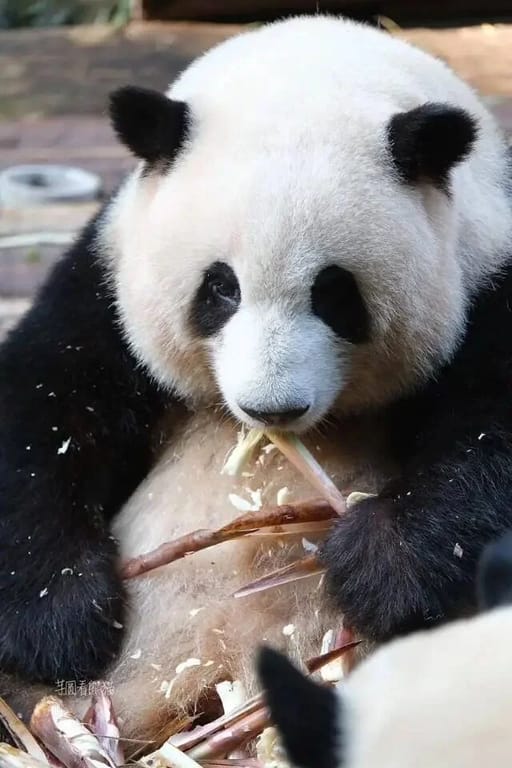
成和花
Cheng Hehua (Hua Hua, 花花), nicknamed "Fruit Lai" (果赖) because she responds to this Sichuan dialect call, is China's top...
Trust
Information on this page is compiled from conservation institutions, official panda records, media archives, and the wider PandaCommon research workflow.
No external reference links are attached yet.
Library
The three newest articles from the panda library, updated as the archive grows.
culture
At the 2026 Global Panda Partners Conference in Chengdu, China's forestry authority reported 830 giant pandas in captivity, 13 local populations reconnected by ecological corridors, and about 1,900 in the wild — a figure that has roughly doubled since the 1980s.
Nov 4, 2026
culture
Giant pandas have never been sold. What foreign zoos pay is an annual conservation fee, not a purchase price; the largest costs sit in long-term care rather than the fee itself; and the values that matter most — ecosystem protection, watershed stability, cultural significance — cannot be transacted at all. This article separates the three, and explains why collapsing them into a single number produces misleading answers.
Nov 3, 2026
nature
Giant pandas do not hunt people, but they are bears with a lion-range bite and sharp claws. Every documented attack has been defensive, triggered by a person crossing a barrier, cornering the animal, or approaching a cub. The risk is low probability and high consequence — and almost entirely avoidable.
Nov 3, 2026
Move from this profile into more pandas, place histories, and the wider library.
Explore our panda profiles, place links, and archive journeys.