Long Xin
龙欣
26 years old
yaan_bifengxia_base
Long Xin (龙欣, studbook #516) is a female giant panda born August 18, 2000 at the CCRCGP Hetaoping Base. Daughter of Pan ...
View profilePanda archive
雷雷
Lei Lei (雷雷, studbook #374) was a wild-born female giant panda rescued in 1992 in Leibo County, Liangshan, Sichuan with a severely injured paw that required amputation. Despite having only one front paw, she became an exceptional mother, raising 5 surviving offspring including Long Xin (龙欣), Zhu Yun (竹韵), Na Na (娜娜), Yuan Yuan (圆圆 — sent to Taiwan), and You You (友友). Dubbed the "Heroic Mother" and "Grandma Lei" (雷外婆), she died at ~31 years old in 2020 after complications from epilepsy.
How to use this page
This page brings together the core facts, timeline, family graph, media, place journey, and related reading for Lei Lei.
Profile snapshot
Birth date
January 1, 1989
Birth place
Wild (Sichuan)
Current location
China Conservation and Research Center for the Giant Panda
Status
Deceased
Studbook
#374Archive activity
4 updates · 0 media
Narrative
Start with a concise summary, then continue into the full narrative record for Lei Lei.
Short version
Lei Lei (雷雷, studbook #374) was a wild-born female giant panda rescued in 1992 in Leibo County, Liangshan, Sichuan with a severely injured paw that required amputation. Despite having only one front paw, she became an exceptional mother, raising 5 surviving offspring including Long Xin (龙欣), Zhu Yun (竹韵), Na Na (娜娜), Yuan Yuan (圆圆 — sent to Taiwan), and You You (友友). Dubbed the "Heroic Mother" and "Grandma Lei" (雷外婆), she died at ~31 years old in 2020 after complications from epilepsy.
Lei Lei (Chinese: 雷雷, studbook number 374) was a female giant panda born in the wild of Liangshan Prefecture, Sichuan around 1989. She was rescued in the winter of 1992 in Leibo County — the southernmost range of giant panda habitat — and brought to the China Conservation and Research Center for the Giant Panda (CCRCGP) at Wolong.
Her name “雷雷” derives from both her rescue location (Leibo County/雷波) and the surname of the caretaker who nursed her back to health — a rare honor for a wild-born panda, most of whom received only numerical designations.
In the winter of 1992, Lei Lei was found by local villagers in the Mamize Nature Reserve of Leibo County. She was emaciated and severely injured — a bamboo splinter had pierced her left front paw, causing a life-threatening infection. She was likely only in her first winter away from her mother and unable to fend for herself.
Rushed to the CCRCGP for emergency treatment, veterinarians determined that amputation of the infected paw was the only option to save her life. The surgery was successful, but it left her permanently disabled — a unique challenge for a future breeding female who would need to hold and nurse cubs.
Lei Lei reached sexual maturity in the mid-1990s but suffered from false pregnancies for six consecutive years (1994–1999). Despite annual mating and fertilization, no cubs survived to term. Scientists eventually diagnosed hormonal imbalances and began treatment.
Finally, in 2000, at approximately 11 years old, Lei Lei gave birth to her first cub — Long Xin (龙欣, sb516). From 2000 to 2005, she produced 5 litters with all 5 cubs surviving to adulthood — a perfect record:
Her motherhood was extraordinary given her physical limitation. With only one front paw, Lei Lei learned to:
Keepers described her as one of the most attentive and capable mothers in the program. Her cubs were never lost to accident despite her disability.
Lei Lei’s descendants extended her legacy far beyond her immediate offspring. Through her daughter Long Xin and granddaughter’s line, she is:
Through another branch, her daughter Yuan Yuan was sent to Taipei Zoo in December 2008 as a gift from mainland China, becoming one of the most politically and culturally significant pandas in the world.
Fan communities affectionately called her “雷外婆” (Grandma Lei) — celebrating her as the matriarch of a vast international panda family.
As Lei Lei entered her late 20s, she developed age-related health issues including cataracts and reduced mobility. She was cared for by a dedicated keeper nicknamed “Nanny Liu” (刘奶妈) — the same keeper who had cared for her decades earlier.
In June 2020, Lei Lei experienced her first epileptic seizure. The frequency increased through August. By September, she had lost the ability to move or eat independently despite round-the-clock veterinary care.
On September 9, 2020, Lei Lei suffered a prolonged series of seizures leading to respiratory and circulatory failure. At approximately 31 years old — equivalent to a human centenarian — she passed away at the CCRCGP. Her death was widely mourned across Chinese social media, with fans and conservationists paying tribute to the heroic one-pawed mother who overcame every obstacle.
Gallery
Images and video connected to Lei Lei.
Images and video for Lei Lei will be added later.
Evidence
Key updates and milestone events tied to Lei Lei.
Knowledge graph
See the core family graph first, then continue through related pandas and archive themes.
Related profiles
These profiles are linked through place, lineage, and broader archive context.
龙欣
Long Xin (龙欣, studbook #516) is a female giant panda born August 18, 2000 at the CCRCGP Hetaoping Base. Daughter of Pan ...
View profile娜娜
Na Na (娜娜, studbook #568) is a female giant panda born August 20, 2003 at the Wolong Hetaoping wild training base. Daugh...
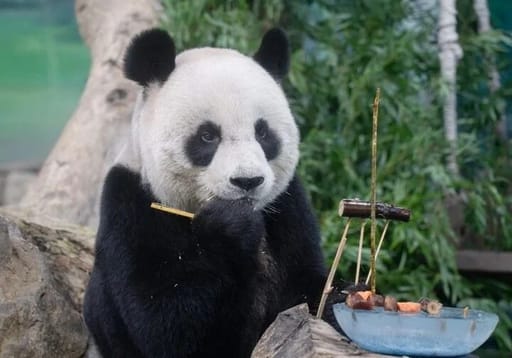
圆圆
Yuan Yuan (圆圆, studbook #587) is the female half of the famous cross-strait panda pair "Tuan Yuan" (团团圆圆), gifted to Tai...
View profile竹韵
Zhu Yun (竹韵), studbook #549, is a female giant panda born on July 17, 2002, at the Wolong Hetaoping Base. Known as one o...
Long Xin
Na Na
Yuan Yuan
Zhu Yun
Connected archive
This is the next layer around the profile: place journey, current geography, reading context, and nearby panda records.
China Conservation and Research Center for the Giant Panda
Dujiangyan, China
Lei Lei is currently linked to China Conservation and Research Center for the Giant Panda.
culture
In October 2026, nine-year-old Ran Ran was named to travel to Pairi Daiza in Belgium — stepping in for Hao Hao, who returned to China for medical care, and keeping alive a China–Belgium panda partnership that began in 2014. Hers is a story of wild training, wild-born twins, and a family tree that reaches from Sichuan to Seoul, Taipei and Brussels.
culture
The giant panda diaspora spans 58 locations across four continents — wild reserves in the Sichuan, Shaanxi and Gansu mountains, breeding centres in China, and host zoos from Tokyo to Washington. This report maps all 58, ranks them by country, and traces how the distribution has shifted from 1869 to today.
culture
From the 1972 arrival of diplomatic gifts Kang Kang and Lan Lan to the January 2026 departure of Xiao Xiao and Lei Lei, this guide traces every giant panda that has lived in Japan across three institutions — Ueno Zoo, Adventure World in Wakayama, and Kobe Oji Zoo — and explains why Japan, for the first time since 1972, now has none.
nature
Every captive giant panda on Earth has a unique studbook number that maps directly to its parents, grandparents, offspring, and location history. This guide teaches you how to use the PandaCommon database to trace any panda's lineage — from Fu Bao back to Pan Pan in three generations — and explains what the studbook numbers reveal about genetic relationships, breeding history, and the hidden family connections that link pandas across continents.
Browse nearby, regional, and fast-moving panda profiles related to this archive entry.
安安
An An is a male giant panda born on 2024-01-01 at the China Conservation and Research Center for the Giant Panda. His st...
View profile安宝
An Bao (安宝), nicknamed Ka Wa Yi, is a male giant panda born on August 14, 2022 at Wolong Shenshuping Base. At 14 months ...
View profile八八
Ba Ba is a male giant panda born on 2024-01-01 at the China Conservation and Research Center for the Giant Panda. He is ...
View profile阿宝
A Bao is a male giant panda born on September 7, 2010 at Madrid Zoo, the first giant panda conceived through artificial ...
View profile阿宝
A Bao is a male giant panda born on 2011-09-04 at the Chengdu Research Base of Giant Panda Breeding. He is the offspring...
View profile阿宝
A Bao (also known as Bao Lan) is a female giant panda born on November 3, 2010 at Atlanta Zoo. Initially mistaken for ma...
View profile冰星
Bing Xing is a male giant panda born on September 1, 2000 at Chengdu Research Base. He lived at Hangzhou Wildlife Park (...
View profile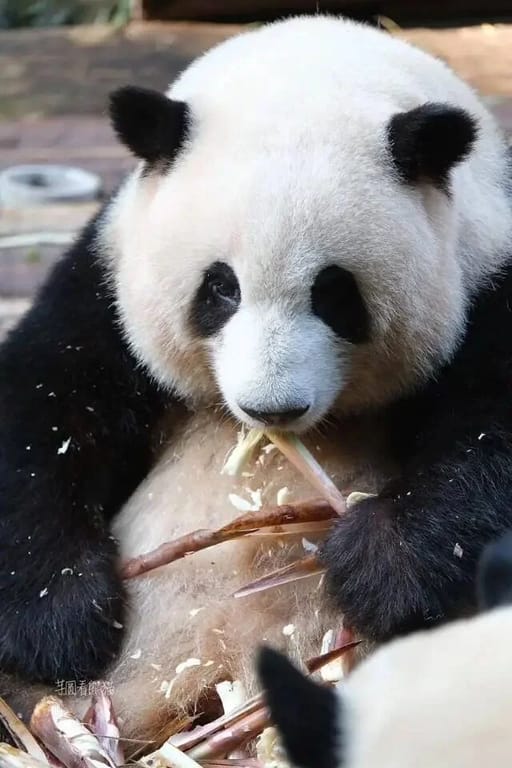
成和花
Cheng Hehua (Hua Hua, 花花), nicknamed "Fruit Lai" (果赖) because she responds to this Sichuan dialect call, is China's top...
Trust
Information on this page is compiled from conservation institutions, official panda records, media archives, and the wider PandaCommon research workflow.
No external reference links are attached yet.
Library
The three newest articles from the panda library, updated as the archive grows.
culture
At the 2026 Global Panda Partners Conference in Chengdu, China's forestry authority reported 830 giant pandas in captivity, 13 local populations reconnected by ecological corridors, and about 1,900 in the wild — a figure that has roughly doubled since the 1980s.
Nov 4, 2026
culture
Giant pandas have never been sold. What foreign zoos pay is an annual conservation fee, not a purchase price; the largest costs sit in long-term care rather than the fee itself; and the values that matter most — ecosystem protection, watershed stability, cultural significance — cannot be transacted at all. This article separates the three, and explains why collapsing them into a single number produces misleading answers.
Nov 3, 2026
nature
Giant pandas do not hunt people, but they are bears with a lion-range bite and sharp claws. Every documented attack has been defensive, triggered by a person crossing a barrier, cornering the animal, or approaching a cub. The risk is low probability and high consequence — and almost entirely avoidable.
Nov 3, 2026
Move from this profile into more pandas, place histories, and the wider library.
Explore our panda profiles, place links, and archive journeys.