Da Mao
大毛
18 years old
chengdu_base
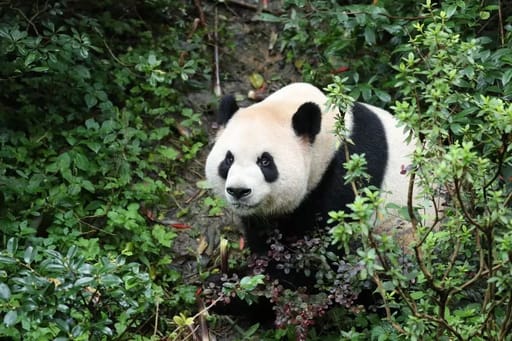
Da Mao (大毛), studbook #732, is a male giant panda born on September 1, 2008 at the Chengdu Research Base. His mother is ...
captive-bred canada overseas
+1
View profile
Panda archive
平平
Ping Ping (平平), nicknamed Re Gan Mian (热干面), studbook #1230, is a male giant panda born March 17, 2020 at the Chengdu Research Base — part of its first captive-born twin pair of 2020. Named as a Wuhan–Chengdu anti-epidemic tribute, he arrived at Zoo Atlanta with Fu Shuang (福双) on September 27, 2026, and made his public debut there on November 6, 2026, beginning a ten-year stay.
How to use this page
This page brings together the core facts, timeline, family graph, media, place journey, and related reading for Ping Ping.
Profile snapshot
Birth date
March 17, 2020
Birth place
Chengdu Research Base of Giant Panda Breeding
Current location
Zoo Atlanta
Status
Alive
Studbook
#1230Archive activity
8 updates · 16 media
Narrative
Start with a concise summary, then continue into the full narrative record for Ping Ping.
Short version
Ping Ping (平平), nicknamed Re Gan Mian (热干面), studbook #1230, is a male giant panda born March 17, 2020 at the Chengdu Research Base — part of its first captive-born twin pair of 2020. Named as a Wuhan–Chengdu anti-epidemic tribute, he arrived at Zoo Atlanta with Fu Shuang (福双) on September 27, 2026, and made his public debut there on November 6, 2026, beginning a ten-year stay.
⚠️ One of three pandas named Ping Ping This page is Ping Ping (平平), studbook #1230 — the male born at the Chengdu Research Base in 2020 who is heading to Zoo Atlanta with Fu Shuang (福双, #1250). Two other pandas share his name: Ping Ping (#704), a female born in 2008 now living at Shunan Bamboo Sea, and Ping Ping (#951), a male born in 2015 living at Nanjing Hongshan Forest Zoo — neither is going to the United States.
Ping Ping (Chinese: 平平), whose nickname is Re Gan Mian (热干面, “hot dry noodles”), is a male giant panda born on March 17, 2020, at the Sunlight Nursery (太阳产房) of the Chengdu Research Base of Giant Panda Breeding. He holds the global studbook number 1230.
His birth weight was 159.8 grams (his twin brother weighed 119.5 grams) — the earliest birth time recorded in the base’s history, and the pair were the base’s first captive-born giant panda twins of 2020.
Ping Ping is stocky and well-built, with large, dark, boldly defined eye rings that make him easy to recognize. He is agile and an especially good climber, and often rests up in the forks of tree branches.
| Relation | Name | Studbook |
|---|---|---|
| Mother | Mao Mao (毛毛, 福娃) | 570 |
| Father | Xiong Bang (雄浜) | 540 |
| Younger twin brother | Dan Hong Gao (蛋烘糕) | — |
| Brothers | Mao Zhu (毛竹), Mao Tao (毛桃), Da Mao (大毛), Mao Dou (毛豆) | — |
| Older sister | Mao Sun (毛笋) | — |
| Maternal grandfather | Ha Lan (哈兰) | — |
| Maternal grandmother | Ya Ya (娅娅) | — |
On April 17, 2020, when the twins were one month old, the Chengdu Base announced their names together with the Sichuan medical teams that had worked in Hubei during the COVID-19 outbreak, through a live video link:
At one month old, Re Gan Mian already weighed over 1,000 grams and Dan Hong Gao over 800 grams. The base presented adoption certificates and custom panda culture gift packages for the twins to the medical teams of Chengdu Medical College Second Affiliated Hospital · CNNC 416 Hospital (成医附二院·核工业四一六医院) and The First Affiliated Hospital of Chengdu Medical College (成都医学院第一附属医院).
In 2025, the China Wildlife Conservation Association signed a new giant panda cooperation agreement with Zoo Atlanta. On April 24, 2026, the association announced that Ping Ping (male) and Fu Shuang (female) — both from the Chengdu Research Base of Giant Panda Breeding — would travel to the United States for a 10-year conservation partnership.
The same day, Chinese Ministry of Foreign Affairs spokesperson Guo Jia Kun (郭嘉昆) answered a press question about the pair’s departure timing, saying that the new round of China-US giant panda conservation cooperation would contribute to panda welfare, endangered-species conservation capacity, global biodiversity protection, and friendship between the two peoples. No departure date was given.
On September 24, 2026, during a White House welcome ceremony, the arrival of Ping Ping and Fu Shuang at Zoo Atlanta was announced as due “in a few days.” The full timeline is covered in Ping Ping and Fu Shuang: The 2026 Return of Giant Pandas to Atlanta.
At 02:55 on September 27, 2026, Ping Ping and Fu Shuang (福双, #1250) boarded a charter flight at Chengdu Shuangliu Airport bound for Zoo Atlanta, beginning their 10-year conservation stay. Before the flight, the Chengdu Research Base of Giant Panda Breeding held a send-off ceremony for the two pandas.
To keep the intercontinental flight safe and comfortable, the Chinese team drew up a detailed transport plan: fresh bamboo shoots, bamboo, apples and emergency medicines were loaded, and the pair had completed transport-acclimation training in advance to reduce stress. During the flight, cabin temperature and humidity were held within the pandas’ comfort range. A senior American veterinarian and keeper accompanied the pair on the plane, monitoring their condition and caring for their health and diet in real time, while two batches of Chinese veterinarians and keepers had already traveled to the zoo in advance to prepare.
After arrival at Zoo Atlanta, Ping Ping and Fu Shuang will undergo quarantine and inspection; Chinese personnel will remain at the zoo through the quarantine period, running stress-adaptation and behavior training to help them settle into their new environment.
Since December 2025, Chinese experts and Zoo Atlanta had held a series of online and offline meetings on upgrading the panda enclosures, with the Chinese side providing technical guidance on facilities, husbandry, food supply and health-care standards. In mid-September 2026, Chinese experts carried out on-site acceptance of the remodeled exhibits: significantly expanded indoor activity space, new climbing frames, rock platforms and pools, and an upgraded monitoring system covering both indoor and outdoor areas. Thanks to Atlanta’s climate similarity to Chengdu, the zoo can source a variety of edible bamboo locally, harvested fresh year-round.
Zoo Atlanta and its Chinese counterparts have now cooperated on giant panda conservation research for more than 20 years — over 30 joint research projects, 50+ published papers, and technical breakthroughs in breeding and cub-rearing, behavior research and disease control, with 5 litters and 7 cubs surviving — the best result achieved by China’s panda breeding cooperation with Europe and the United States.
At 08:55 US Eastern time on September 27, 2026 (20:55 Beijing time) — the same day as their departure — Ping Ping and Fu Shuang landed safely at Zoo Atlanta. Immediately after the charter touched down, Chinese and American veterinarians and keepers carried out a joint inspection, and both pandas were found to be in good health. Following quarantine-clearance and customs formalities, they were transferred into Zoo Atlanta to begin their quarantine and inspection period.
Chinese veterinarians and keepers will remain at the zoo for three months, caring for the pair through quarantine, running stress-adaptation and behavior training, and helping them settle into their new home.
On October 6, 2026, Zoo Atlanta announced that Ping Ping and Fu Shuang will make their public debut on Friday, November 6, 2026, in the zoo’s new Arthur M. Blank Panda Grove, which opens to visitors the same day. The habitat is named for a philanthropist whose support of Zoo Atlanta’s panda program dates to the arrival of Lun Lun and Yang Yang in 1999; its $6 million renovation was funded by a grant from the Robert W. Woodruff Foundation. Ping Ping and Fu Shuang remain in quarantine and acclimatisation until the debut.
On November 6, 2026, Ping Ping and Fu Shuang met the public for the first time, ending a little over a month of quarantine and acclimatisation. Queues formed at the zoo entrance before opening; visitors came through a panda-themed inflatable arch and followed a walkway lined with posters of the pair, many running the last stretch to the panda house.
Keepers gave Ping Ping a housewarming gift before he went out — a toy ball stuffed with apples and an apple ice pop. Fed and played out, he alternated between napping and crunching through bamboo, to the visible delight of the crowd.
Zoo Atlanta’s president and CEO Raymond B. King told Chinese reporters that both pandas had adapted extremely well, were already comfortable with the local bamboo, were gaining weight, and were exploring the new habitat.
An opening ceremony for the Arthur M. Blank Panda Grove was held that morning, with close to 100 guests from both countries. Speakers included Xie Feng (谢锋), Chinese Ambassador to the United States, Sonny Perdue, former Governor of Georgia, and Berks, Chief Operating Officer of the City of Atlanta. The Chinese Embassy set up calligraphy, rubbing print and panda quiz stations, which drew steady participation.
Ambassador Xie read the names politically as well as affectionately — “Ping Ping” (平平) as a wish for enduring peace and secure livelihoods, “Fu Shuang” (福双) as a wish for mutual benefit and lasting good fortune for ordinary people in both countries.
Both pandas were born in 2020; at six they are the human equivalent of 18 to 20 — young adults. Under the arrangement agreed by both sides, they will live at Zoo Atlanta for ten years.
King described the panda programme as a bond between peoples: “Often we lack understanding of each other, but affection for giant pandas is a shared joy, and a shared commitment to conservation. The past 25 years have been an incredible partnership — we are proud of it, and we are excited about the future.”
Gallery
Images and video connected to Ping Ping.
Evidence
Key updates and milestone events tied to Ping Ping.
Knowledge graph
See the core family graph first, then continue through related pandas and archive themes.
Related profiles
These profiles are linked through place, lineage, and broader archive context.
大毛
Da Mao (大毛), studbook #732, is a male giant panda born on September 1, 2008 at the Chengdu Research Base. His mother is ...
毛毛
Mao Mao (毛毛), officially named Fu Wa (福娃), studbook #570, is a female giant panda born September 6, 2003 at the Chengdu ...
毛笋
Mao Sun (毛笋), studbook #919, is a female giant panda born on July 26, 2014 at the Chengdu Research Base. Her parents are...
毛桃
Mao Tao (毛桃, studbook #1017) is a male giant panda born July 26, 2016 at Chengdu Base. Son of Mao Mao (晶晶原型) and Xiong B...
毛竹
Mao Zhu (毛竹) is a male giant panda born July 26, 2014 at the Chengdu Research Base. Son of Mao Mao — the panda who serve...
View profile雄浜
Yu Hin (雄浜, studbook #540) is a male giant panda born December 17, 2001 at Adventure World, Japan — the world's first ca...
View profile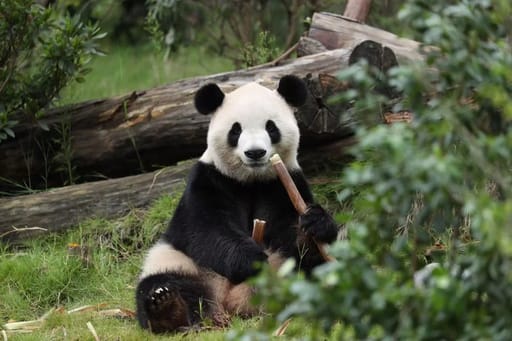
福双
Fu Shuang (福双, nickname Huluwa/葫芦娃, also adopted name Xi Bao/汐宝), studbook #1250, is a female giant panda born October 1...
Da Mao
Mao Mao
Mao Sun
Mao Tao
Connected archive
This is the next layer around the profile: place journey, current geography, reading context, and nearby panda records.
Chengdu, China
2020 to 2026
Breeding center
Atlanta, United States
2026 to present
Zoo
Atlanta, United States
2026
Zoo
Chengdu, China
2026
Breeding center
Atlanta, United States
2026 to present
Zoo
Zoo Atlanta
Atlanta, United States
Ping Ping is currently linked to Zoo Atlanta.
culture
On September 27, 2026 at 02:55, Ping Ping and Fu Shuang boarded a charter flight from Chengdu Shuangliu Airport and landed safely at Zoo Atlanta at 08:55 US time the same day, opening a 10-year conservation stay with a three-month quarantine overseen by Chinese staff — the closing chapter of a timeline that opened with Zoo Atlanta's April 2026 agreement and the September 24 White House announcement. This is the next chapter of a panda story that began at the zoo in 1999: 25 years of cooperation, seven Atlanta-born cubs, the 2024 homecoming, and now a new partnership.
culture
Trace the transformation of giant panda diplomacy from 1941, when Soong Mei-ling gifted the first pandas to America, through the landmark 1972 Nixon-era exchange, to today's international research loan agreements that channel millions of dollars annually into wild habitat conservation. This is the untold story of how a reclusive mountain bear became the world's most powerful diplomatic animal.
Browse nearby, regional, and fast-moving panda profiles related to this archive entry.
福双
Fu Shuang (福双, nickname Huluwa/葫芦娃, also adopted name Xi Bao/汐宝), studbook #1250, is a female giant panda born October 1...
宝力
Bao Li (宝力), studbook #1365, is a male giant panda born on August 4, 2021, at the Wolong Shenshuping Base. His mother Ba...
福双
Fu Shuang (福双, nickname Huluwa/葫芦娃, also adopted name Xi Bao/汐宝), studbook #1250, is a female giant panda born October 1...
星星
Hsing Hsing (星星, studbook #127) was a male giant panda captured in the wild of Sichuan in 1971. He and female Ling Ling ...
View profile 福双
Fu Shuang (福双, nickname Huluwa/葫芦娃, also adopted name Xi Bao/汐宝), studbook #1250, is a female giant panda born October 1...
冰星
Bing Xing is a male giant panda born on September 1, 2000 at Chengdu Research Base. He lived at Hangzhou Wildlife Park (...
View profileTrust
Information on this page is compiled from conservation institutions, official panda records, media archives, and the wider PandaCommon research workflow.
No external reference links are attached yet.
Library
The three newest articles from the panda library, updated as the archive grows.
culture
At the 2026 Global Panda Partners Conference in Chengdu, China's forestry authority reported 830 giant pandas in captivity, 13 local populations reconnected by ecological corridors, and about 1,900 in the wild — a figure that has roughly doubled since the 1980s.
Nov 4, 2026
culture
Giant pandas have never been sold. What foreign zoos pay is an annual conservation fee, not a purchase price; the largest costs sit in long-term care rather than the fee itself; and the values that matter most — ecosystem protection, watershed stability, cultural significance — cannot be transacted at all. This article separates the three, and explains why collapsing them into a single number produces misleading answers.
Nov 3, 2026
nature
Giant pandas do not hunt people, but they are bears with a lion-range bite and sharp claws. Every documented attack has been defensive, triggered by a person crossing a barrier, cornering the animal, or approaching a cub. The risk is low probability and high consequence — and almost entirely avoidable.
Nov 3, 2026
Move from this profile into more pandas, place histories, and the wider library.
Explore our panda profiles, place links, and archive journeys.