Bing Xing
冰星
26 years old
chengdu_base
Bing Xing is a male giant panda born on September 1, 2000 at Chengdu Research Base. He lived at Hangzhou Wildlife Park (...
View profilePanda archive
屏屏
Ping Ping (屏屏) was a Wild-born Qinling male giant panda, rescued in 1991 at Sanguanmiao in Foping County, Shaanxi, and registered as studbook 377. Known as a "heroic father", he sired 13-14 cubs across the Shaanxi, Chengdu and Wolong populations and died around 2015 at Louguantai.
How to use this page
This page brings together the core facts, timeline, family graph, media, place journey, and related reading for Ping Ping.
Profile snapshot
Birth date
September 1, 1991
Birth place
Wild (Sichuan)
Current location
Unknown
Status
Deceased
Studbook
#377Archive activity
0 updates · 0 media
Narrative
Start with a concise summary, then continue into the full narrative record for Ping Ping.
Short version
Ping Ping (屏屏) was a Wild-born Qinling male giant panda, rescued in 1991 at Sanguanmiao in Foping County, Shaanxi, and registered as studbook 377. Known as a "heroic father", he sired 13-14 cubs across the Shaanxi, Chengdu and Wolong populations and died around 2015 at Louguantai.
Ping Ping (Chinese: 屏屏, also written 坪坪 / 平平 in early records) was a male giant panda registered under studbook number 377. He was a wild-born Qinling individual — born in 1991 at Sanguanmiao, Foping County, Shaanxi, and taken into care that year. His exact birth date is unknown; the archive stores 1991-09-01 as the institutional default.
He came from the same village as the well-known panda Qi Zai (七仔), and is regarded as one of the first-generation founding pandas of the Qinling captive line.
In his younger years Ping Ping was repeatedly sent to Sichuan — first to the Chengdu Research Base of Giant Panda Breeding, then to the China Conservation and Research Center — to breed. In doing so he injected rare Qinling wild genes into the captive population, which had been dominated by Sichuan lineages.
This is why his descendants are spread across the Shaanxi, Chengdu and Wolong populations.
At around 19 years old he returned from Sichuan to Huayang, Shaanxi, where he lived out his retirement at Louguantai together with the female Xue Xue (雪雪). The pair were nicknamed the “Lord and Lady of Huayang” (华阳君 / 华阳夫人). He died at Louguantai around 2015, aged about 24.
Sources put his confirmed adult offspring at 13–14, including:
Lou Sheng (楼生), Hua Zui Ba (花嘴巴), Yong Yong (勇勇), Yuan Zi (园子), Jin Ke (津柯), Qi Fu (奇福), Wen Li (文莉), Ya Li (雅莉), Zhi Zhi (芝芝), Ya Lin (娅林), Qin Chuan (秦川) and Ya Le Le (娅乐乐).
His descendants reach into the second and third generations: Beijing Zoo’s popular twins Meng Da (萌大) and Meng Er (萌二) are his grandsons through Yong Yong; France’s Yuan Meng (圆梦) and the twins Huan Li Li (欢黎黎) and Yuan Du Du (圆嘟嘟) are further descendants.
Records elsewhere in this archive name Ping Ping (#377) as the father of Jin Ke (金科, 743), Ya Lin (娅琳, 726) and Yong Yong (勇勇, 584), and as the maternal grandfather line through Kang Kang (康康, 635) and Qing Qing (庆庆).
This profile was created on 2026-11-12 to close a dangling reference: five panda records in this archive carry fatherStudbook: 377, and no profile for 377 existed.
Not to be confused with ping-ping-wild — that is a separate wild female panda found in Tangjiahe in 2014 and dead the same year.
Caveat on birthDate: the schema requires a date, so 1991-09-01 is stored. He was a wild rescue; the true birth date is unknown.
Gallery
Images and video connected to Ping Ping.
Images and video for Ping Ping will be added later.
Evidence
Key updates and milestone events tied to Ping Ping.
Check back later for updates about Ping Ping.
Knowledge graph
See the core family graph first, then continue through related pandas and archive themes.
Connected archive
This is the next layer around the profile: place journey, current geography, reading context, and nearby panda records.
Current location information is not available yet.
culture
Trace the transformation of giant panda diplomacy from 1941, when Soong Mei-ling gifted the first pandas to America, through the landmark 1972 Nixon-era exchange, to today's international research loan agreements that channel millions of dollars annually into wild habitat conservation. This is the untold story of how a reclusive mountain bear became the world's most powerful diplomatic animal.
culture
On September 27, 2026 at 02:55, Ping Ping and Fu Shuang boarded a charter flight from Chengdu Shuangliu Airport and landed safely at Zoo Atlanta at 08:55 US time the same day, opening a 10-year conservation stay with a three-month quarantine overseen by Chinese staff — the closing chapter of a timeline that opened with Zoo Atlanta's April 2026 agreement and the September 24 White House announcement. This is the next chapter of a panda story that began at the zoo in 1999: 25 years of cooperation, seven Atlanta-born cubs, the 2024 homecoming, and now a new partnership.
Browse nearby, regional, and fast-moving panda profiles related to this archive entry.
冰星
Bing Xing is a male giant panda born on September 1, 2000 at Chengdu Research Base. He lived at Hangzhou Wildlife Park (...
View profile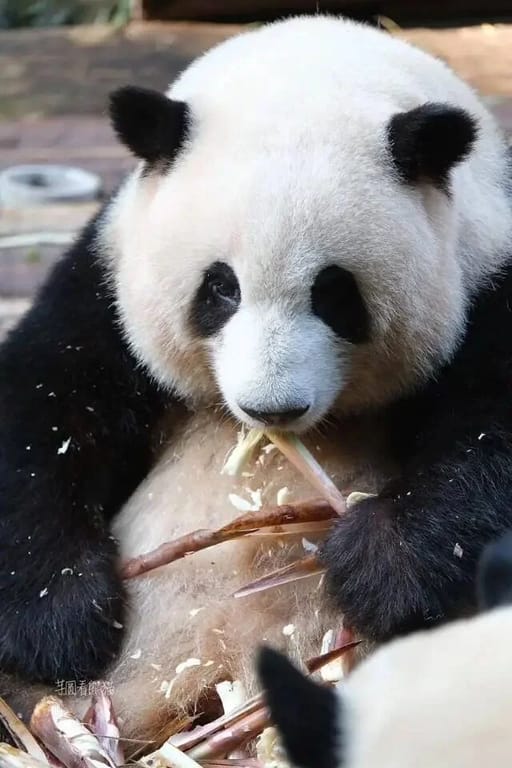
成和花
Cheng Hehua (Hua Hua, 花花), nicknamed "Fruit Lai" (果赖) because she responds to this Sichuan dialect call, is China's top...
Trust
Information on this page is compiled from conservation institutions, official panda records, media archives, and the wider PandaCommon research workflow.
No external reference links are attached yet.
Library
The three newest articles from the panda library, updated as the archive grows.
culture
At the 2026 Global Panda Partners Conference in Chengdu, China's forestry authority reported 830 giant pandas in captivity, 13 local populations reconnected by ecological corridors, and about 1,900 in the wild — a figure that has roughly doubled since the 1980s.
Nov 4, 2026
culture
Giant pandas have never been sold. What foreign zoos pay is an annual conservation fee, not a purchase price; the largest costs sit in long-term care rather than the fee itself; and the values that matter most — ecosystem protection, watershed stability, cultural significance — cannot be transacted at all. This article separates the three, and explains why collapsing them into a single number produces misleading answers.
Nov 3, 2026
nature
Giant pandas do not hunt people, but they are bears with a lion-range bite and sharp claws. Every documented attack has been defensive, triggered by a person crossing a barrier, cornering the animal, or approaching a cub. The risk is low probability and high consequence — and almost entirely avoidable.
Nov 3, 2026
Move from this profile into more pandas, place histories, and the wider library.
Explore our panda profiles, place links, and archive journeys.