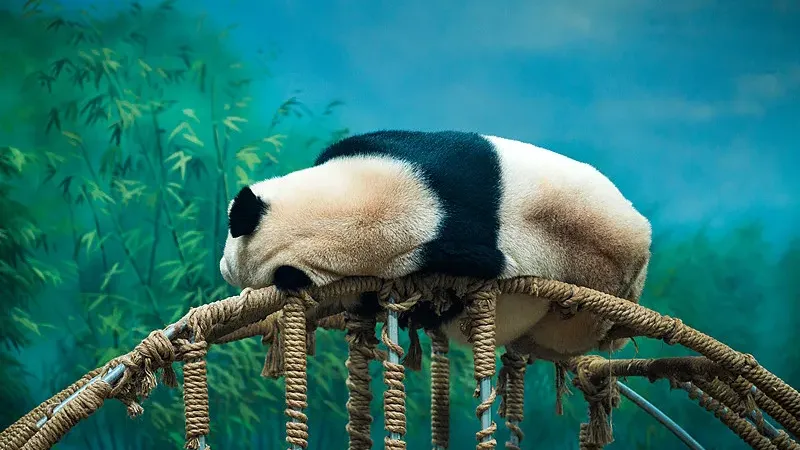
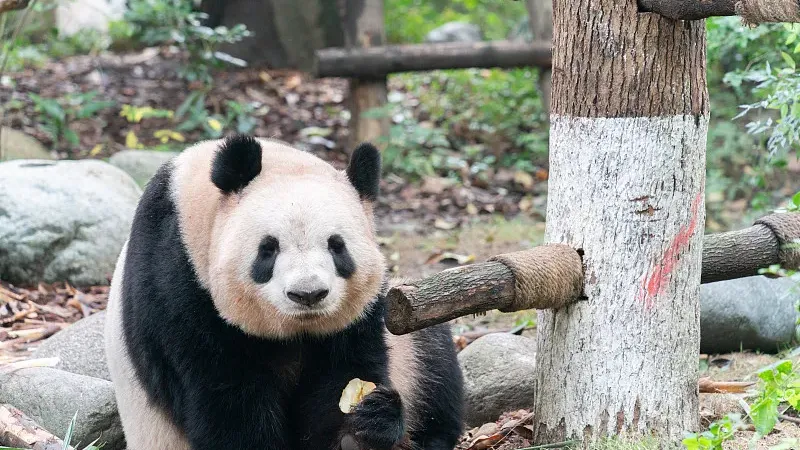
Zhang Ka
张卡
Zhang Ka (张卡, studbook #505) is a female giant panda rescued from Baoxing County in 2001. She set two world records with...
Place archive
The Wolong Hetaoping Base (核桃坪基地) is the original research center of the China Conservation and Research Center for the Giant Panda, located in the Hetaoping area of the Wolong National Nature Reserve at an elevation of approximately 1,820 m. Established in 1981 through a partnership between the Chinese government and WWF, it opened in 1983 and was the world's first large-scale giant panda research and breeding facility. For over two decades, Hetaoping was the epicenter of global panda conservation — pioneering artificial insemination techniques, developing cub-rearing protocols, and producing the majority of captive-born pandas. The 2008 Wenchuan earthquake devastated the facility, prompting a relocation of breeding operations to the Shenshuping base in Gengda. Hetaoping was subsequently rebuilt as a dedicated wild reintroduction training center, using the "mother-raises-cub" (母兽带仔) method to prepare captive-born pandas for life in the wild. It remains closed to the public and functions exclusively as a research and rewilding facility.
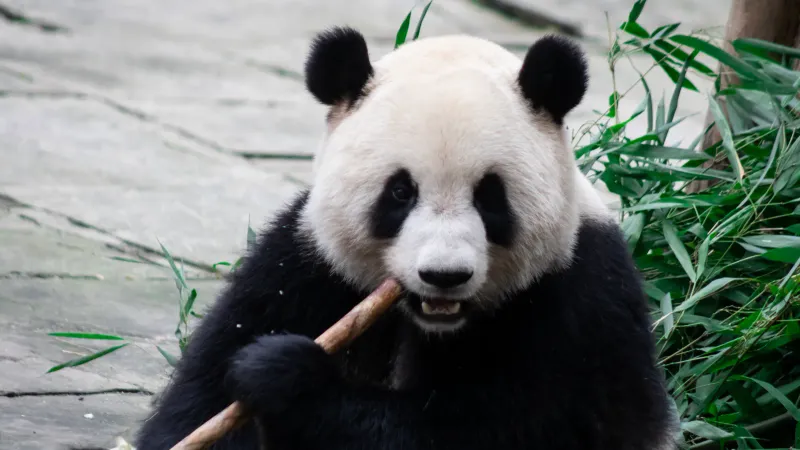
Wolong Hetaoping Base of China Conservation and Research Center for the Giant Panda conducts research on giant panda population genetics, reproductive biology, and habitat ecology as part of the global ex-situ and in-situ conservation framework.
Pandas here, not open to the public
A working wild-training base that holds pandas but admits no public visitors.
Checked 28 October 2026· Source
How this page is organized
This page gathers the residents linked to Wolong Hetaoping Base of China Conservation and Research Center for the Giant Panda, the key moments recorded here, nearby institutions, and the articles that add context.
Resident archive
2 pandas recorded
The pandas currently recorded at this institution.
张卡
Zhang Ka (张卡, studbook #505) is a female giant panda rescued from Baoxing County in 2001. She set two world records with...
Pandas that were once linked to this institution.
迎迎
Ying Ying (迎迎), studbook #369, was a male giant panda born on August 15, 1991, at Beijing Zoo. He became the second male...
Gallery
Images and video connected to Wolong Hetaoping Base of China Conservation and Research Center for the Giant Panda.
Images and video for Wolong Hetaoping Base of China Conservation and Research Center for the Giant Panda will be added later.
Recorded moments
Twin cubs Yuan Fu and Chun Xiao were born inside Zhi Chun's wild-training enclosure at Hetaoping — both raised from their first breath in the simulated-wild environment.
Read updateXiu Qiu was born at Wolong Hetaoping Base, daughter of Shui Xiu and Xiang Ge.
Read updateBa Xi (八喜, sb956) was born at Wolong Hetaoping Base to mother Xi Mei (喜妹, sb511) and father Lu Lu (芦芦, sb503). He is a half-brother of the famous rewilded panda Tao Tao (淘淘).
Read updateXue Xue (雪雪, sb850) was born at Wolong Hetaoping Base to mother Si Xue (思雪, sb625) and father Lu Lu (芦芦, sb503). She was the fourth panda selected for the second-phase rewilding program.
Read updateYong Ba passed away at approximately 28 years old from organ failure at the CCRCGP Hetaoping base.
Read updateCui Cui (#643), twin of Lang Lang (#642) and daughter of Ye Ye (#495), was born at Wolong Hetaoping. The "Olympic panda" now lives at the Wolong Shenshuping Base.
Read updateLang Lang (#642), twin of Cui Cui (#643) and son of Ye Ye (#495), was born at Wolong Hetaoping. He later lived at Nanjing Zoo, where he died of illness on December 16, 2010.
Read updateIn the library
In October 2026, nine-year-old Ran Ran was named to travel to Pairi Daiza in Belgium — stepping in for Hao Hao, who returned to China for medical care, and keeping alive a China–Belgium panda partnership that began in 2014. Hers is a story of wild training, wild-born twins, and a family tree that reaches from Sichuan to Seoul, Taipei and Brussels.
A planning guide to seeing giant pandas in China, centred on Chengdu. Compare the main panda bases — Chengdu, Dujiangyan Panda Valley, Wolong Shenshuping, Ya'an Bifengxia, Qinling and Beijing Zoo — with ticket types, booking windows and travel times, then plan around the animals' own schedule: when to go, how to book with a passport, realistic itineraries, and what responsible panda tourism actually looks like.
The bamboo forests protected for pandas store an estimated 2-3 billion tons of carbon across the Giant Panda National Park's 27,000 square kilometers — an ecosystem service worth $200-750 million annually in carbon sequestration alone. This article examines how panda conservation doubles as climate action, why bamboo forests rival tropical rainforests in per-hectare carbon storage, and how China's carbon market is creating new economic incentives for habitat protection.
World map
Coordinates: 30.8500 N, 102.8800 E
Archive notes
The Wolong Hetaoping Base (核桃坪基地) is the original research center of the China Conservation and Research Center for the Giant Panda, located in the Hetaoping area of the Wolong National Nature Reserve at an elevation of approximately 1,820 m. Established in 1981 through a partnership between the Chinese government and WWF, it opened in 1983 and was the world's first large-scale giant panda research and breeding facility.
For over two decades, Hetaoping was the epicenter of global panda conservation — pioneering artificial insemination techniques, developing cub-rearing protocols, and producing the majority of captive-born pandas. The 2008 Wenchuan earthquake devastated the facility, prompting a relocation of breeding operations to the Shenshuping base in Gengda. Hetaoping was subsequently rebuilt as a dedicated wild reintroduction training center, using the "mother-raises-cub" (母兽带仔) method to prepare captive-born pandas for life in the wild. It remains closed to the public and functions exclusively as a research and rewilding facility.