Table of contents (9 sections)
The Fu Bao Effect: Why Watching Pandas Heals Modern Anxiety
Key Fact: In April 2024, Fu Bao made her final public appearance at Everland Resort in South Korea. Three million people watched the livestream. Tears were shed across the country. News anchors used the word “national mourning.” The object of this collective emotion was not a departing celebrity or a retiring athlete. It was a 100-kilogram bear who had spent four years eating bamboo, sleeping, and occasionally rolling over. The South Korean public’s intense emotional investment in Fu Bao — the “Fu Bao Effect” — is the most dramatic example of a global phenomenon: watching pandas produces measurable psychological healing. The neuroscience is real. The cultural impact is deepening. And the commercialization of panda-induced calm is becoming a significant industry.
Key Takeaways
-
Panda viewing produces measurable physiological relaxation — reduced cortisol, increased oxytocin, and parasympathetic nervous system activation — mediated by the same neural circuitry that bonds parents to infants.
-
The Fu Bao Effect in South Korea demonstrates that panda healing can scale to a national level — 3 million livestream viewers, multi-year parasocial relationships, and genuine collective grief at the panda’s departure.
-
A panda livestream economy has emerged — worth millions annually — that monetizes the panda’s unique ability to induce calm in stressed humans.
The Neuroscience of Cute
Sit in front of a panda enclosure for 20 minutes. Not to take photographs. Not to check items off a zoo list. Just to watch. The panda — let us say it is Fu Bao at Everland, on a quiet weekday morning — is eating bamboo. She grasps a stalk with her pseudo-thumb, rotates it between her paws, strips the leaves with her incisors, chews with the slow, rhythmic grinding of her massive molars. She does not hurry. She does not appear to be thinking about anything except the bamboo in her paws.
Something happens to the watcher during these 20 minutes. The shoulders drop slightly. The breathing slows. The mental chatter quiets.
This is not magic. It is neurobiology.
The visual features that make pandas “cute” are evolutionarily significant triggers for the human caregiving response. In 1943, ethologist Konrad Lorenz identified the Kindchenschema (baby schema): a set of features — large head relative to body, round face, large eyes, small nose and mouth — that elicit caregiving behavior across mammal species.
The panda amplifies this schema in three ways. First, its dark eye patches create the illusion of much larger eyes — the same visual principle that makes human eye makeup effective. Second, its round face and soft-looking fur trigger tactile empathy — we imagine touching it, and the imagined sensation is pleasant. Third, its slow, slightly clumsy movements (falling off logs, rolling downhill) activate the same protective neural circuitry that responds to a toddler’s unsteady walking.
When these features are processed by the brain, a cascade of neurochemical events follows: oxytocin (bonding, calm) is released, cortisol (stress) is suppressed, and the parasympathetic nervous system — the body’s “rest and digest” mode — is activated. The watcher feels calmer not because they have made a conscious decision to relax but because their brain has been evolutionarily programmed to respond to certain visual stimuli with calm.
The Slow Life Cure
Beyond visual cuteness, pandas offer something increasingly rare in modern life: permission to be slow.
A panda’s natural pace of life — eating for hours, sleeping for hours, moving deliberately when it moves at all — is the exact opposite of the speed demanded by contemporary human existence. This slowness is adaptive: bamboo provides minimal energy, and pandas have evolved to conserve what little they get. But the evolutionary reason does not diminish the psychological effect. Watching a panda is like watching a masterclass in not rushing.
Psychologists describe the result as parasympathetic activation. Slow, rhythmic, repetitive visual stimuli — waves on a shore, flames in a fireplace, a panda chewing bamboo — are particularly effective at inducing this state. They require no cognitive effort. They do not demand interpretation or response. They simply occupy the visual field with predictable, non-threatening input.
The COVID-19 pandemic provided a natural experiment. When zoos closed, the Smithsonian National Zoo’s Giant Panda Cam — which had been streaming since 2000 — experienced a 1,200% increase in viewership. Viewers reported leaving the stream running for hours while working from home, describing the pandas’ oblivious continuity as “the only thing that calmed me down.” The pandas were unaware of the pandemic. They continued eating and sleeping as they always had — and their unchanging normalcy provided psychological anchoring in a world that had stopped making sense.
The Fu Bao Phenomenon
Fu Bao’s story begins in July 2020 at Everland Resort, South Korea, where she was born to Ai Bao and Le Bao — two pandas lent to Korea under the China-Korea conservation agreement. From her first weeks, her daily life was documented by keeper Kang Cheol-won, whose gentle, affectionate interactions with the cub became a defining feature of the Fu Bao narrative.
What followed was unprecedented in panda cultural history. Korean media covered Fu Bao’s growth milestones as national news: her first steps, her first solid food, her first independent play session. Fan communities analyzed her behavior with the intensity of sports fans analyzing a star athlete. Merchandise — plush toys, stationery, clothing — sold out within hours of release. “Fu Bao Day” at Everland drew crowds that rivaled the park’s peak season attendance.
The term “Fu Bao Effect” emerged in Korean media to describe the aggregate phenomenon: a national-scale emotional investment in a single non-human animal. Psychologists analyzing the effect identified several components:
Parasocial relationship. The one-sided emotional bond that viewers formed with Fu Bao was similar to the bond that fans form with media personalities — except the object of the bond was a panda that never acknowledged the viewer’s existence. The daily updates, the keeper’s narration, the consistent filming schedule all created the illusion of a relationship developing over time.
Collective emotional narrative. The Fu Bao story had a built-in dramatic arc: birth, growth, flourishing, and — inevitably — departure. Knowing that Fu Bao would return to China at age 4 created a countdown that intensified emotional engagement. The farewell was not unexpected. It was anticipated for years, which made it no less painful when it arrived.
Bittersweet healing. Korean culture has a specific word, jeong (정), that describes the warm attachment that develops through sustained exposure to someone or something. The Fu Bao Effect was, in essence, a national-scale jeong for a panda — a healing connection that was beautiful precisely because it was temporary.
The Global Panda Healing Economy
The psychological demand for panda-induced calm has created a commercial ecosystem:
| Channel/Platform | Content | Monthly Viewers (est.) | Revenue Model |
|---|---|---|---|
| iPanda (China) | 24/7 livestream from Chengdu Base | 10M+ | Advertising, sponsorship |
| Smithsonian Panda Cam (US) | Livestream from National Zoo | 3M+ | Donation-supported |
| Everland Panda Channel (Korea) | Fu Bao highlight videos | 5M+ | Park marketing, merch |
| Panda YouTube aggregators | Compiled videos | 2M+ | Ad revenue |
| Wellness apps (Calm, Headspace) | Panda meditation videos | — | Subscription add-on |
| Country | Cultural Frame | Dominant Emotion | Primary Platform |
|---|---|---|---|
| China | ”National treasure” pride | Joy, wonder | iPanda, Weibo |
| South Korea | Healing (힐링) | Parasocial attachment | YouTube, Naver |
| Japan | Iyashi (癒し) | Calm, restoration | TV, YouTube |
| United States | Wellness/self-care | Relaxation | Zoo cams, YouTube |
| Europe | Nature appreciation | Awe, education | Zoo websites |
Animal Livestream Comparison
Pandas are not the only animals with healing potential — but they appear to be the most effective:
| Animal | Typical Response | Why It Works | Limitations |
|---|---|---|---|
| Panda | Calm, centered | Neoteny + slowness + rhythmic eating | Low energy (not engaging for all) |
| Otter | Joy, amusement | Playfulness, speed | Can overstimulate anxious viewers |
| Cat | Comfort, warmth | Familiarity, domestic association | Less visually distinctive |
| Tiger | Excitement, awe | Power, beauty | Activates alertness, not calm |
| Fish tank | Meditation | Repetitive movement, color | Less engaging over time |
Pandas occupy a unique position: they trigger the caregiving response (like viewing a baby) without requiring the emotional labor of actual caregiving, and they induce calm (like meditation) without requiring the discipline of meditation.
Did You Know?
The term iyashi (癒し) was applied to pandas in Japan as early as the 1990s, before the concept of “animal healing” became mainstream. Japanese television producers noticed that panda segments consistently tested highest for viewer-reported relaxation.
Fu Bao’s keeper Kang Cheol-won became a celebrity in his own right, publishing a bestselling book about his experience raising Fu Bao and appearing on Korean variety shows. His emotional farewell to Fu Bao — captured in a photograph that went viral — became one of the most shared panda images in internet history.
The longest continuous viewing session recorded on the Smithsonian Panda Cam is 14 hours. The viewer, interviewed by National Geographic, described the session as “a mental health day.”
Some South Korean companies have installed panda video screens in employee break rooms as part of workplace wellness programs, citing reduced stress and improved morale.
Frequently Asked Questions
Why do pandas produce a stronger effect than other ‘cute’ animals?
Pandas combine multiple relaxation triggers that most animals possess individually but few possess simultaneously: neotenous features (shared with many baby animals), slow movement (shared with sloths, but pandas are more visually engaging), rhythmic repetitive behavior (shared with many herbivores), and non-threatening demeanor (pandas are not predators). The combination is unusually effective at inducing the parasympathetic response.
Is the panda effect universal or culturally specific?
The biological component — oxytocin release in response to neotenous features — appears universal. The cultural component — how the response is interpreted, named, and integrated into daily life — varies significantly. Japan has iyashi, Korea has healing, and the West has wellness — each framing the same biological response through different cultural lenses.
Can watching pandas have negative effects?
The primary risk is emotional distress when the panda the viewer has bonded with is transferred or dies — a phenomenon observed during the Fu Bao farewell and during the deaths of beloved pandas at various zoos. Some viewers report that panda watching becomes a form of avoidance — a way to escape stress rather than address its causes. As a coping mechanism, it is healthy in moderation and problematic when it replaces other forms of mental health support.
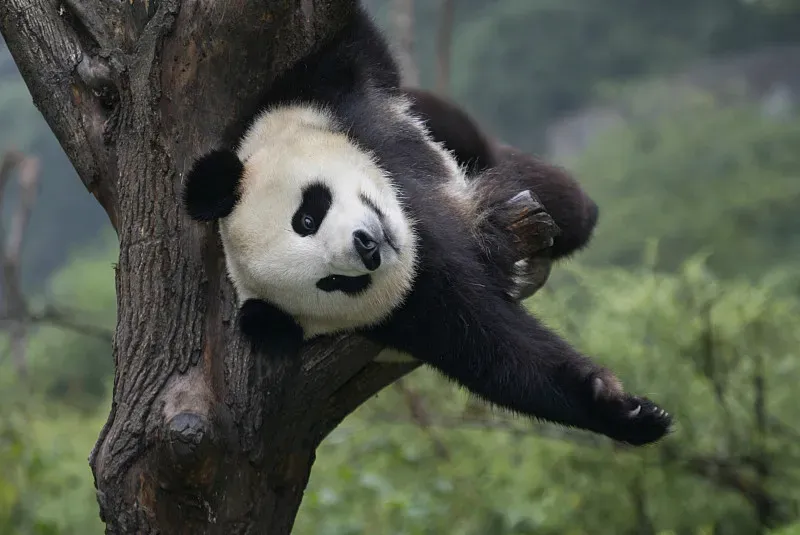
The panda in the enclosure does not know it is healing anyone. It simply eats bamboo, sleeps, and occasionally rolls over with all four paws in the air. The healing is not something the panda does — it is something the panda is. And in a world that often feels too fast, too loud, too much, simply being in the presence of something that moves at bamboo speed may be among the gentlest medicines available.
Call to Action
Explore the story of Fu Bao’s journey to China, learn about the cultural phenomenon of K-Panda Fever at Everland, or scroll the iPanda livestream for your daily dose of bamboo-speed calm.

Dr. Sarah Hartwell
Habitat & Ecology Editor
Conservation biologist specializing in habitat assessment, climate change impacts, GIS-based conservation planning, and bamboo corridor restoration. Reviews all habitat and ecology content.
View full profile →Tags in this article
Questions readers often ask
Why do pandas make people feel calm?
Multiple psychological mechanisms converge. The panda's neotenous (baby-like) facial features — large head, round face, dark eye patches that make the eyes appear larger — trigger the human caregiving response, releasing oxytocin, the bonding hormone that promotes calm and connection. Their slow, deliberate movements provide a visual contrast to the speed and urgency of modern life, inducing a parasympathetic (relaxation) response. Watching a panda eat bamboo — a repetitive, unhurried, rhythmic activity — functions similarly to mindfulness meditation: it anchors attention in the present moment.
Is the panda's healing effect scientifically studied?
Yes, though the research is still developing. A 2017 study at the Chengdu Research Base found that visitors who spent 15+ minutes observing pandas showed significant reductions in salivary cortisol compared to pre-visit levels. The effect was stronger for pandas than for other zoo animals. Functional MRI studies on cute-image viewing — while not panda-specific — show that neotenous features activate the orbitofrontal cortex, a brain region associated with reward and pleasure. Japanese research on the concept of iyashi (healing) has identified pandas as particularly effective 'iyashi animals' — creatures whose observation produces measurable relaxation responses across cultural groups.
What is the 'Fu Bao Effect'?
The Fu Bao Effect refers to the intensive parasocial (one-sided emotional) relationship that South Korean audiences developed with Fu Bao, the first giant panda born in Korea at Everland Resort. Born in 2020 to parents Ai Bao and Le Bao, Fu Bao's daily life was documented extensively by keeper Kang Cheol-won. Korean media coined the term 'Fu Bao Effect' to describe the national-scale emotional investment in the panda's growth, health, and eventual return to China. When Fu Bao made her final public appearance in April 2024 before leaving for China, 3 million people watched the livestream. South Korean news outlets treated it as a national farewell.
Can panda videos help with anxiety?
Anecdotal evidence strongly suggests they can, and the neurobiological mechanisms — oxytocin release, cortisol reduction, parasympathetic activation — provide a plausible scientific basis. During the COVID-19 pandemic, the Smithsonian's Giant Panda Cam experienced a 1,200% increase in viewership, with viewers reporting that watching pandas was 'the only thing that calmed me down.' Panda videos are not a substitute for professional mental health treatment, but as a stress-management tool, they are harmless, accessible, and effective for many people.
Is the panda effect the same across cultures?
The neotenous-feature response (cute = caregiving) appears to be cross-cultural and likely has a biological basis. However, cultural factors shape how the response is expressed and interpreted. The Japanese iyashi (癒し) framework frames panda viewing as a recognized form of stress relief. South Korea's healing (힐링) narrative around Fu Bao emphasizes emotional connection and bittersweet attachment (knowing the panda will eventually leave). In the United States and Europe, panda cams are marketed as wellness tools — 'Zen moments' — stripped of the cultural narratives that give them meaning in East Asia.
Is there a commercial panda healing industry?
Yes, and it is growing rapidly. The global panda livestream economy includes dedicated channels (iPanda, with millions of subscribers), zoo webcam subscriptions, paid virtual panda experiences, and merchandise that extends the emotional connection beyond the screen. A study of panda cam viewers found that 30% watched for stress relief, 22% for companionship, and 18% for entertainment. The commercial potential has not gone unnoticed: wellness apps have begun incorporating panda videos into their meditation libraries, and several hotels have added panda cam channels to their in-room entertainment systems.