Library step 1

Long-form panda knowledge, organized for browsing

The library turns the archive into context: biology, conservation systems, cultural history, and beginner-friendly introductions that help users move beyond isolated facts.

Articles

121

across all tracks

Featured

6

editorial picks

Categories

3

clear reading tracks

RSS

1

feed for new posts

Library step 2

Follow what is worth reading next

Start with the freshest long-form articles, then use RSS only if you want a lightweight subscription path.

Culture

A Rare Infection, A Sudden Death: The Chlamydia Case at Chimelong

In May 2026, Guangzhou Chimelong Safari Park confirmed that Jia He (家和, studbook #972), a 10-year-old male giant panda, died from heart failure caused by a pulmonary chlamydia infection — a diagnosis so unusual that it may be the first documented fatal chlamydia case in a giant panda worldwide. This article examines the clinical timeline, the microbiology behind the infection, the investigation into possible transmission sources, and the broader implications for captive panda health management at one of China's largest panda facilities.

Culture

The Ultimate Panda Documentary Guide: 50+ Films Every Panda Lover Needs to Watch

A curated global guide to over 50 panda documentaries spanning seven decades, seven thematic categories, and ten countries — from Pan Wenshi's raw Qinling field recordings in the 1990s to the 2024 Korean theatrical release Goodbye, Grandpa. Every film is verified, reviewed, and linked to the real pandas, keepers, and breeding centers behind the footage.

Nature

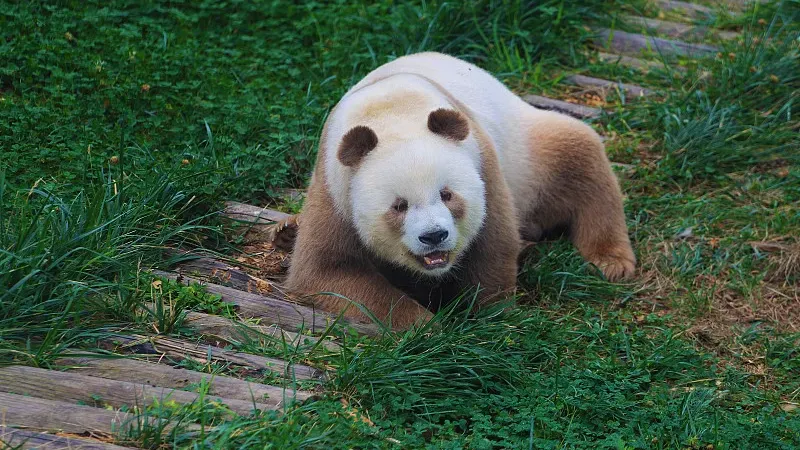
How Pandas Became Bamboo Eaters: Stable Isotopes Rewrite the Diet Evolution Story

The giant panda's transition from omnivore to bamboo specialist is far more recent — and far less straightforward — than previously believed. Stable isotope analysis of fossil panda bones, led by Wei Fuwen's team at the Institute of Zoology, Chinese Academy of Sciences, has overturned the traditional narrative: until approximately 5,000 years ago, pandas were omnivores with a diet breadth three times wider than today's. This article traces the fossil evidence, the isotopic methodology, and the story of how the panda — a living contemporary of saber-tooth tigers and mammoths — survived by changing what it ate.

Library step 4

Read by theme, not just by category

Continue into the archive

Nature

Panda Biology

Body, behavior, diet, and adaptation

View category

general

The Bamboo Switch: How Giant Pandas Evolved From Carnivores to Plant-Eaters

Approximately 2-3 million years ago, an ancestral bear made one of the most dramatic dietary transitions in mammalian history — abandoning meat for a diet consisting almost entirely of bamboo. This article traces the evolutionary timeline, the ecological pressures, and the genetic changes that transformed a carnivore into the world's most specialized herbivorous bear.

advanced

The Panda's Sixth Finger: Evolution of the Radial Sesamoid Bone

The giant panda's thumb is not a thumb at all — it is an enlarged wrist bone that evolved 6-7 million years ago. This deep-dive anatomy article traces the radial sesamoid's evolutionary origins, its precise gripping mechanics, and why this adaptation represents one of the most extraordinary examples of vertebrate morphological innovation.

advanced

Gut Microbiome: How Giant Pandas Digest Bamboo as Carnivores

The giant panda retains the digestive anatomy of a carnivore, yet survives on a 99% bamboo diet. This article explores the unique gut microbial community that makes this possible — the specialized bacteria that break down cellulose, the seasonal shifts in microbiome composition, and what fecal transplants have revealed about the relationship between panda digestion and panda survival.

general

Why Are Pandas Black and White? Camouflage and Social Communication

The giant panda's iconic black-and-white coloration is not random — it solves two distinct evolutionary problems simultaneously. White fur provides camouflage against snow, black patches break up the body outline in forest shade, and dark eye markings serve as individual recognition signals. This article examines the 2017 behavioral ecology study that finally decoded the panda's color pattern.

advanced

Panda Bamboo: The Species That Sustain a Super-Specialist

Of the approximately 1,400 bamboo species on Earth, giant pandas reliably eat only 25-30 — all from the mountain forests of central China. This article provides a deep-dive into the bamboo species that sustain pandas: the dominant Bashania and Fargesia genera, their nutritional profiles, their seasonal availability, and why protecting bamboo diversity is synonymous with protecting pandas.

Nature

Conservation Systems

Protection, habitat, and reintroduction

View category

general

China's Giant Panda National Park: The Six Mountain Range Habitats

The Giant Panda National Park, established in 2021, spans 27,000 square kilometers across Sichuan, Shaanxi, and Gansu provinces. This article maps the six mountain ranges — Minshan, Qionglai, Daxiangling, Xiaoxiangling, Liangshan, and Qinling — that form the panda's last wild strongholds, exploring how each range's distinct microclimate, bamboo diversity, and elevation profile shapes the pandas that live there.

general

From Endangered to Vulnerable: The Science Behind the IUCN Status Change

In September 2016, the International Union for Conservation of Nature (IUCN) announced that the giant panda had been downgraded from 'Endangered' to 'Vulnerable' — a declaration that the species was no longer at imminent risk of extinction. This article examines the population data, the habitat recovery statistics, and the conservation investments that made the reclassification possible, while exploring why 'Vulnerable' still demands vigilance.

general

Shattered Homes: Why Wildlife Corridors Are Vital for Wild Pandas

Roads, railways, and farmland have carved the giant panda's forest habitat into 33 isolated fragments. In the smallest of these fragments, with fewer than 30 pandas, inbreeding has already begun. This article explains how ecological corridors — strips of reforested land connecting isolated populations — are the single most important infrastructure investment in wild panda survival, and why the Giant Panda National Park's corridor program represents a globally significant experiment in reconnecting a fragmented species.

general

The Umbrella Effect: Protecting Pandas Protects Thousands of Species

When you protect a giant panda's bamboo forest, you're not just saving pandas — you're sheltering golden monkeys, takin, red pandas, clouded leopards, and over 10,000 plant species that share the same habitat. This article explains the 'umbrella species' concept through the panda's ecosystem, showing how conservation investments in one charismatic animal ripple outward to protect entire mountain ecosystems.

advanced

2°C Warmer: Climate Change Threats to Panda Habitats by 2050

Climate models project that the bamboo forests pandas depend on could shrink by 35-80% by 2070 under high-emissions scenarios, with lower-elevation habitats becoming unsuitable as temperatures rise. This article examines the specific mechanisms by which climate change threatens pandas — bamboo species migration, habitat compression, and seasonal disruption — and the conservation strategies being developed to protect pandas in a warming world.

Culture

History and Culture

Diplomacy, symbolism, and global attention

View category

general

80 Years of Panda Diplomacy: From Wartime Gifts to Global Research Loans

Trace the transformation of giant panda diplomacy from 1941, when Soong Mei-ling gifted the first pandas to America, through the landmark 1972 Nixon-era exchange, to today's international research loan agreements that channel millions of dollars annually into wild habitat conservation. This is the untold story of how a reclusive mountain bear became the world's most powerful diplomatic animal.

general

The Great Return: Why Overseas-Born Pandas Must Come Home

Every panda born outside China must return by age four — a clause that shapes the emotional landscape of international panda cooperation. From Tai Shan (2005) to Fu Bao (2024), this article traces the biological, legal, and emotional dimensions of the panda homecoming, examining what happens when an overseas-born panda lands in Chengdu and must learn to be a Chinese panda.

general

Behind Every Name: The Art and Meaning of Naming Giant Pandas

From 'Tuan Tuan and Yuan Yuan' (symbolizing reunion) to 'Fu Bao' (lucky treasure), every giant panda name carries layers of cultural meaning, political significance, and public sentiment. This article explores the naming traditions, the global naming contests, and how panda nicknames — like Hua Hua's 'Guo Lai' — have become a unique form of modern Chinese internet folk culture.

general

From WWF Logo to Olympic Mascot: How Panda Became the World's Strongest IP

The giant panda is the most recognizable animal symbol on Earth — the logo of the World Wildlife Fund since 1961, the face of the 2008 Beijing Olympics, and the star of a Hollywood film franchise that has grossed over $1.8 billion. This article traces the panda's journey from obscure mountain bear to global cultural icon, examining the design choices, the diplomatic moments, and the universal psychological appeal that make the panda an unmatched visual brand.

general

Pandas in Art: From Ancient Ink to Modern Street Murals

Long before pandas appeared on stamps, coins, and Olympic mascots, they inhabited Chinese visual culture — tentatively at first, as strange bears in the margins of imperial bestiaries, and then, explosively, as the subject of 20th-century ink paintings, propaganda posters, contemporary installations, and global street art. This article traces the panda's journey through art history: how visual artists across cultures have interpreted, mythologized, and commercialized the panda's image.

Kids

Young Reader Path

Simple explanations and family-friendly starts

View category

Library step 5

High-signal pieces worth reading first

Cover image for "How to Become a Panda Keeper: More Than Just Shoveling Poo"
Featured
Culture 📚 general

How to Become a Panda Keeper: More Than Just Shoveling Poo

Becoming a panda keeper is statistically harder than gaining admission to many elite universities — annual acceptance rates at the Chengdu Research Base are below 5%. This article explores the education, physical demands, emotional resilience, and daily realities of panda keeping, featuring interviews with keepers who describe their work as 'the most difficult, least glamorous, and most meaningful job in animal care.'

career keeper job +2
Read article
Cover image for "Bifengxia Base: The First Stop for Every Returning Overseas Panda"
Featured
Culture 📚 general

Bifengxia Base: The First Stop for Every Returning Overseas Panda

Nestled in the misty mountains above Ya'an, Sichuan, the Bifengxia Panda Base is the quiet epicenter of the global panda diaspora — the place every overseas-born panda first encounters when it returns to China. With its cool climate, abundant bamboo, and specialized quarantine facilities, Bifengxia has processed every major panda homecoming of the modern era, from Tai Shan in 2010 to Fu Bao in 2024.

bifengxia homecoming quarantine +2
Read article
Cover image for "K-Panda Fever: How Everland Turned Fu Bao Into a Korean National Icon"
Featured
Culture 📚 general

K-Panda Fever: How Everland Turned Fu Bao Into a Korean National Icon

In 2016, Ai Bao and Le Bao arrived at Everland in South Korea as diplomatic gifts. In 2020, they produced Fu Bao — the first panda born in Korea — and ignited a cultural phenomenon that transformed Korean panda keeping into a national obsession. This article traces how Everland's media strategy, the emotional bond between keeper Kang Cheol-won and Fu Bao, and the Korean public's embrace of 'panda parenting' created the most intense panda fandom outside China.

korea everland fu-bao +2
Read article
Cover image for "Global Panda Distribution Index: A 58-Location Spatiotemporal Report"
Featured
Culture 📚 general

Global Panda Distribution Index: A 58-Location Spatiotemporal Report

The giant panda's global distribution spans 58 locations across continents — from the bamboo forests of Sichuan to climate-controlled enclosures in Singapore. This article provides an overview of the panda diaspora: where pandas live, why they're there, and what the geographic distribution reveals about panda diplomacy, conservation, and the species' remarkable adaptability.

distribution global locations +2
Read article
Cover image for "The Great Return: Why Overseas-Born Pandas Must Come Home"
Featured
Culture 📚 general

The Great Return: Why Overseas-Born Pandas Must Come Home

Every panda born outside China must return by age four — a clause that shapes the emotional landscape of international panda cooperation. From Tai Shan (2005) to Fu Bao (2024), this article traces the biological, legal, and emotional dimensions of the panda homecoming, examining what happens when an overseas-born panda lands in Chengdu and must learn to be a Chinese panda.

1 panda
homecoming return-clause overseas-pandas +2
Read article
Cover image for "Pan Pan's Dynasty: The Hero Father Behind 25% of All Captive Pandas"
Featured
Culture 📚 general

Pan Pan's Dynasty: The Hero Father Behind 25% of All Captive Pandas

Studbook #001. 130+ descendants. 25% of the global captive population. Pan Pan was the most genetically prolific giant panda in history — rescued from the wild as a cub, he became the founding sire who rescued the captive breeding program from collapse. This is the story of the panda who became a dynasty, the genetic legacy that now defines a quarter of all captive pandas, and the complex management challenge his extraordinary reproductive success created.

1 panda
pan-pan dynasty breeding +2
Read article

Library step 6

Recent articles added to the archive

Showing 1-12 of 121 articles

Cover image for "A Rare Infection, A Sudden Death: The Chlamydia Case at Chimelong"
Culture 📚 general

A Rare Infection, A Sudden Death: The Chlamydia Case at Chimelong

In May 2026, Guangzhou Chimelong Safari Park confirmed that Jia He (家和, studbook #972), a 10-year-old male giant panda, died from heart failure caused by a pulmonary chlamydia infection — a diagnosis so unusual that it may be the first documented fatal chlamydia case in a giant panda worldwide. This article examines the clinical timeline, the microbiology behind the infection, the investigation into possible transmission sources, and the broader implications for captive panda health management at one of China's largest panda facilities.

2 pandas
chlamydia chimelong health-crisis +5
Read article
Cover image for "The Ultimate Panda Documentary Guide: 50+ Films Every Panda Lover Needs to Watch"
Featured
Culture 📚 general

The Ultimate Panda Documentary Guide: 50+ Films Every Panda Lover Needs to Watch

A curated global guide to over 50 panda documentaries spanning seven decades, seven thematic categories, and ten countries — from Pan Wenshi's raw Qinling field recordings in the 1990s to the 2024 Korean theatrical release Goodbye, Grandpa. Every film is verified, reviewed, and linked to the real pandas, keepers, and breeding centers behind the footage.

documentary film guide +2
Read article
Cover image for "How Pandas Became Bamboo Eaters: Stable Isotopes Rewrite the Diet Evolution Story"
Nature 📚 general

How Pandas Became Bamboo Eaters: Stable Isotopes Rewrite the Diet Evolution Story

The giant panda's transition from omnivore to bamboo specialist is far more recent — and far less straightforward — than previously believed. Stable isotope analysis of fossil panda bones, led by Wei Fuwen's team at the Institute of Zoology, Chinese Academy of Sciences, has overturned the traditional narrative: until approximately 5,000 years ago, pandas were omnivores with a diet breadth three times wider than today's. This article traces the fossil evidence, the isotopic methodology, and the story of how the panda — a living contemporary of saber-tooth tigers and mammoths — survived by changing what it ate.

diet evolution stable-isotope +4
Read article
Cover image for "Why Pandas Live Alone: The Ecology of Solitary Bears"
Featured
Nature 📚 general

Why Pandas Live Alone: The Ecology of Solitary Bears

Giant pandas are among the most solitary of all bear species — individuals maintain separate territories, meet only briefly to mate, and raise cubs in complete isolation. This article explores the behavioral ecology of panda solitude: why bamboo favors living alone, how pandas avoid each other through scent-marking, and what rare encounters reveal about the hidden social life of a famously solitary animal.

2 pandas
solitary social-structure territory +2
Read article
Cover image for "How Much to Adopt a Panda? Corporate Sponsorship and CSR Guide"
Culture 📚 general

How Much to Adopt a Panda? Corporate Sponsorship and CSR Guide

Panda adoption and corporate sponsorship programs fund millions in conservation annually. This article explains how panda adoptions work, what they cost, what sponsors receive in return, and how corporate panda partnerships function as both conservation funding and brand strategy.

adoption sponsorship corporate +2
Read article
Cover image for "ZooParc de Beauval and Yuan Meng: France's Intimate Panda Love Affair"
Culture 📚 general

ZooParc de Beauval and Yuan Meng: France's Intimate Panda Love Affair

When Yuan Meng was born at ZooParc de Beauval in 2017 — the first panda cub ever born in France — it was a national event. First Lady Brigitte Macron became his godmother. Millions of French visitors have since made the pilgrimage to the Loire Valley to see him. This article tells the story of France's panda program and the cub who became a French cultural phenomenon.

france beauval yuan-meng +2
Read article
Cover image for "How to Become a Panda Keeper: More Than Just Shoveling Poo"
Featured
Culture 📚 general

How to Become a Panda Keeper: More Than Just Shoveling Poo

Becoming a panda keeper is statistically harder than gaining admission to many elite universities — annual acceptance rates at the Chengdu Research Base are below 5%. This article explores the education, physical demands, emotional resilience, and daily realities of panda keeping, featuring interviews with keepers who describe their work as 'the most difficult, least glamorous, and most meaningful job in animal care.'

career keeper job +2
Read article
Cover image for "Bifengxia Base: The First Stop for Every Returning Overseas Panda"
Featured
Culture 📚 general

Bifengxia Base: The First Stop for Every Returning Overseas Panda

Nestled in the misty mountains above Ya'an, Sichuan, the Bifengxia Panda Base is the quiet epicenter of the global panda diaspora — the place every overseas-born panda first encounters when it returns to China. With its cool climate, abundant bamboo, and specialized quarantine facilities, Bifengxia has processed every major panda homecoming of the modern era, from Tai Shan in 2010 to Fu Bao in 2024.

bifengxia homecoming quarantine +2
Read article
Cover image for "Chengdu's Fan Economy: How One Panda Fuels an Entire City's Tourism"
Culture 📚 general

Chengdu's Fan Economy: How One Panda Fuels an Entire City's Tourism

Hua Hua's celebrity has transformed the Chengdu Research Base from a conservation facility into one of China's most popular tourist destinations. This article examines the 'panda economy' — how a single charismatic animal drives millions in ticket sales, hotel bookings, merchandise revenue, and social media engagement, and what this phenomenon reveals about the economic power of animal celebrity.

1 panda
economy tourism fan-culture +2
Read article
Cover image for "Chiang Mai's Panda Memory: The 20-Year Love Story of Chuang Chuang and Lin Hui"
Culture 📚 general

Chiang Mai's Panda Memory: The 20-Year Love Story of Chuang Chuang and Lin Hui

For two decades, Chuang Chuang and Lin Hui were Thailand's only giant pandas — beloved national figures whose lives were followed by millions through a dedicated 24-hour panda television channel. This article remembers their story, the birth of their daughter Lin Bing, and the profound grief that swept Thailand when both pandas died.

thailand chiang-mai southeast-asia +2
Read article
Cover image for "Four National Surveys: Mapping China's Wild Panda Population Growth"
Culture 📚 general

Four National Surveys: Mapping China's Wild Panda Population Growth

Since 1974, China has conducted four national giant panda surveys — the most comprehensive wildlife censuses ever undertaken for a single species. From the first survey's crude 'bite-size' method to the fourth survey's sophisticated fecal DNA analysis, this article traces the evolution of panda census science and the population story the numbers tell.

census survey population +2
Read article
Cover image for "China's Wildlife Protection Law: The Legal Shield for Giant Pandas"
Culture 📚 general

China's Wildlife Protection Law: The Legal Shield for Giant Pandas

China's Wildlife Protection Law designates the giant panda as a Category I protected species — the highest level of legal protection — carrying penalties of 10+ years imprisonment for poaching. This article examines the legal framework that protects pandas and how enforcement has transformed the species' survival prospects.

law protection legal +2
Read article