Nature

Nature and Science

Biology, ecology, conservation science, and habitat systems that explain how giant pandas live and survive.

Articles

38

in this track

Latest

4

fresh reading entries

Reading path

1

category lens

Library

121

total archive articles

How to use it

Use this category as a focused reading path

1. Start with the category lens

Stay inside one subject area long enough to build context instead of jumping article to article.

2. Open the featured or newest pieces

Use the lead article first, then continue through the most recent additions in this category.

3. Branch back into the archive

After reading, return to panda profiles, places, and the wider library from a stronger base of understanding.

Lead article

A strong place to begin in Nature and Science

Back to library home

Start here

Why Pandas Live Alone: The Ecology of Solitary Bears

Giant pandas are among the most solitary of all bear species — individuals maintain separate territories, meet only briefly to mate, and raise cubs in complete isolation. This article explores the behavioral ecology of panda solitude: why bamboo favors living alone, how pandas avoid each other through scent-marking, and what rare encounters reveal about the hidden social life of a famously solitary animal.

Continue within this track

general

How Pandas Became Bamboo Eaters: Stable Isotopes Rewrite the Diet Evolution Story

The giant panda's transition from omnivore to bamboo specialist is far more recent — and far less straightforward — than previously believed. Stable isotope analysis of fossil panda bones, led by Wei Fuwen's team at the Institute of Zoology, Chinese Academy of Sciences, has overturned the traditional narrative: until approximately 5,000 years ago, pandas were omnivores with a diet breadth three times wider than today's. This article traces the fossil evidence, the isotopic methodology, and the story of how the panda — a living contemporary of saber-tooth tigers and mammoths — survived by changing what it ate.

general

Why Pandas Live Alone: The Ecology of Solitary Bears

Giant pandas are among the most solitary of all bear species — individuals maintain separate territories, meet only briefly to mate, and raise cubs in complete isolation. This article explores the behavioral ecology of panda solitude: why bamboo favors living alone, how pandas avoid each other through scent-marking, and what rare encounters reveal about the hidden social life of a famously solitary animal.

general

Under the Southern Cross: How Adelaide Zoo Handles Reversed Panda Seasons

In Adelaide, Australia, when it's summer in China, it's winter — and vice versa. For giant pandas Wang Wang and Fu Ni, this meant their biological clocks were completely inverted. This article examines how Australia's only pandas adapted to life in the Southern Hemisphere, and what their experience reveals about panda behavioral flexibility.

Full category

All articles in Nature and Science

Showing 1-12 of 38 articles

Cover image for "How Pandas Became Bamboo Eaters: Stable Isotopes Rewrite the Diet Evolution Story"
Nature 📚 general

How Pandas Became Bamboo Eaters: Stable Isotopes Rewrite the Diet Evolution Story

The giant panda's transition from omnivore to bamboo specialist is far more recent — and far less straightforward — than previously believed. Stable isotope analysis of fossil panda bones, led by Wei Fuwen's team at the Institute of Zoology, Chinese Academy of Sciences, has overturned the traditional narrative: until approximately 5,000 years ago, pandas were omnivores with a diet breadth three times wider than today's. This article traces the fossil evidence, the isotopic methodology, and the story of how the panda — a living contemporary of saber-tooth tigers and mammoths — survived by changing what it ate.

diet evolution stable-isotope +4
Read article
Cover image for "Why Pandas Live Alone: The Ecology of Solitary Bears"
Featured
Nature 📚 general

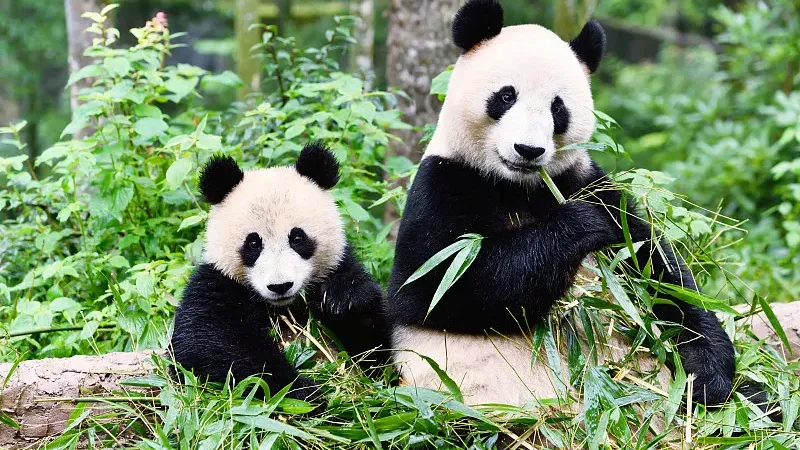
Why Pandas Live Alone: The Ecology of Solitary Bears

Giant pandas are among the most solitary of all bear species — individuals maintain separate territories, meet only briefly to mate, and raise cubs in complete isolation. This article explores the behavioral ecology of panda solitude: why bamboo favors living alone, how pandas avoid each other through scent-marking, and what rare encounters reveal about the hidden social life of a famously solitary animal.

2 pandas
solitary social-structure territory +2
Read article
Cover image for "Under the Southern Cross: How Adelaide Zoo Handles Reversed Panda Seasons"
Nature 📚 general

Under the Southern Cross: How Adelaide Zoo Handles Reversed Panda Seasons

In Adelaide, Australia, when it's summer in China, it's winter — and vice versa. For giant pandas Wang Wang and Fu Ni, this meant their biological clocks were completely inverted. This article examines how Australia's only pandas adapted to life in the Southern Hemisphere, and what their experience reveals about panda behavioral flexibility.

australia southern-hemisphere climate +2
Read article
Cover image for "AI Face Recognition and Satellites: High-Tech Panda Protection"
Nature 📚 general

AI Face Recognition and Satellites: High-Tech Panda Protection

From AI algorithms that identify individual pandas by their eye patches to satellites that monitor bamboo forest health from orbit, technology is transforming panda conservation. This article explores the digital tools that are making panda monitoring faster, cheaper, and more accurate.

technology ai satellites +2
Read article
Cover image for "When Bamboo Flowers: The 1980s Crisis That Nearly Starved Wild Pandas"
Nature 📚 general

When Bamboo Flowers: The 1980s Crisis That Nearly Starved Wild Pandas

In 1983, vast areas of arrow bamboo in the Minshan Mountains entered their natural flowering cycle — and died. For wild giant pandas, whose diet is 99% bamboo, this was catastrophic. This article tells the story of the bamboo flowering crisis, the international rescue effort that saved hundreds of starving pandas, and the lasting changes the crisis forced in panda conservation philosophy.

1 panda
bamboo-flowering crisis famine +2
Read article
Cover image for "Why Are Pandas Black and White? Camouflage and Social Communication"
Featured
Nature 📚 general

Why Are Pandas Black and White? Camouflage and Social Communication

The giant panda's iconic black-and-white coloration is not random — it solves two distinct evolutionary problems simultaneously. White fur provides camouflage against snow, black patches break up the body outline in forest shade, and dark eye markings serve as individual recognition signals. This article examines the 2017 behavioral ecology study that finally decoded the panda's color pattern.

1 panda
camouflage fur-coloration evolution +2
Read article
Cover image for "Brown Pandas: Unlocking the Genetic Mystery of Qi Zai"
Featured
Nature 🔬 advanced

Brown Pandas: Unlocking the Genetic Mystery of Qi Zai

Qi Zai is the world's only captive brown giant panda — a chocolate-colored anomaly discovered as a two-month-old cub in the Qinling Mountains in 2009. This article explores the recessive genetic mutation behind his unique coloration, the distinct Qinling subspecies he belongs to, and what brown pandas reveal about coat color genetics, habitat adaptation, and the hidden diversity within the giant panda population.

1 panda
brown-panda qi-zai qinling-subspecies +2
Read article
Cover image for "2°C Warmer: Climate Change Threats to Panda Habitats by 2050"
Nature 🔬 advanced

2°C Warmer: Climate Change Threats to Panda Habitats by 2050

Climate models project that the bamboo forests pandas depend on could shrink by 35-80% by 2070 under high-emissions scenarios, with lower-elevation habitats becoming unsuitable as temperatures rise. This article examines the specific mechanisms by which climate change threatens pandas — bamboo species migration, habitat compression, and seasonal disruption — and the conservation strategies being developed to protect pandas in a warming world.

climate-change global-warming bamboo +2
Read article
Cover image for "Feeding Pandas Across Europe: The Transnational Bamboo Supply Chain"
Nature 📚 general

Feeding Pandas Across Europe: The Transnational Bamboo Supply Chain

Every panda in a European zoo eats bamboo — but where does it come from? This article traces the hidden logistics of panda nutrition abroad: the bamboo plantations in southern France that supply zoos across the continent, the weekly refrigerated truck deliveries, and the challenges of feeding bamboo specialists in climates where bamboo does not naturally grow.

europe bamboo supply-chain +2
Read article
Cover image for "China's Giant Panda National Park: The Six Mountain Range Habitats"
Featured
Nature 📚 general

China's Giant Panda National Park: The Six Mountain Range Habitats

The Giant Panda National Park, established in 2021, spans 27,000 square kilometers across Sichuan, Shaanxi, and Gansu provinces. This article maps the six mountain ranges — Minshan, Qionglai, Daxiangling, Xiaoxiangling, Liangshan, and Qinling — that form the panda's last wild strongholds, exploring how each range's distinct microclimate, bamboo diversity, and elevation profile shapes the pandas that live there.

national-park habitat six-mountain-ranges +2
Read article
Cover image for "The International Studbook: How Big Data Prevents Panda Inbreeding"
Featured
Nature 🔬 advanced

The International Studbook: How Big Data Prevents Panda Inbreeding

Every captive giant panda on Earth is recorded in a single global database — the International Studbook — which tracks lineage, calculates genetic relatedness, and determines each year's breeding recommendations. This article explains how studbook managers use population genetics software to maintain 90% genetic diversity across 700 captive pandas, making the panda breeding program one of the most mathematically sophisticated conservation efforts in history.

1 panda
studbook genetics breeding +2
Read article
Cover image for "Minshan vs. Qinling: How Two Mountain Ranges Shape Different Pandas"
Nature 📚 general

Minshan vs. Qinling: How Two Mountain Ranges Shape Different Pandas

The giant panda exists in two distinct forms across two mountain ranges: the larger, darker Sichuan subspecies in the Minshan and Qionglai ranges, and the rounder-faced, browner Qinling subspecies isolated for 10,000 years in Shaanxi. This comparative ecology article maps the habitat differences — elevation, climate, bamboo, snowfall — that have driven subtle but significant divergence between the two panda populations.

1 panda
subspecies habitat-comparison qinling +2
Read article

Keep moving through the library

Use this category as one route through the archive, then return to the broader library or continue into panda profiles and place pages.