Tong Tong
童童
40 years old
Ueno Zoo
Tong Tong (童童) was the first giant panda conceived and raised entirely in Japan. Born June 1, 1986 at Ueno Zoo to Fei Fe...
View profilePlace archive
Ueno Zoo, located in Taito Ward, Tokyo, is Japan’s oldest operating zoological park, housing over 2,600 individual animals representing 450+ species including *Ailuropoda melanoleuca* (giant panda), *Gorilla gorilla gorilla* (western lowland gorilla), *Panthera tigris altaica* (Siberian tiger), and *Grus japonensis* (red-crowned crane). It operates under the governance of the Tokyo Metropolitan Government Bureau of Environment, holds full accreditation from the Japanese Association of Zoos and Aquariums (JAZA) and World Association of Zoos and Aquariums (WAZA
Ueno Zoo houses giant pandas under international loan agreement with the China Conservation and Research Center, as part of the cooperative panda diplomacy and ex-situ conservation network.
How this page is organized
This page gathers the residents linked to Ueno Zoo, the key moments recorded here, nearby institutions, and the articles that add context.
Resident archive
3 pandas recorded
Pandas whose birth place is recorded as Ueno Zoo.
童童
Tong Tong (童童) was the first giant panda conceived and raised entirely in Japan. Born June 1, 1986 at Ueno Zoo to Fei Fe...
View profilePandas that were once linked to this institution.
康康
Kang Kang (康康, studbook #122) was a male giant panda discovered in the wild of Baoxing, Sichuan in February 1972 and gif...
View profile兰兰
Lan Lan (兰兰, studbook #123) was a female giant panda gifted by China to Japan in 1972 to mark the normalization of diplo...
View profile童童
Tong Tong (童童) was the first giant panda conceived and raised entirely in Japan. Born June 1, 1986 at Ueno Zoo to Fei Fe...
View profileGallery
Images and video connected to Ueno Zoo.
Images and video for Ueno Zoo will be added later.
Recorded moments
Ueno Zoo began demolishing the East Garden panda enclosure, which once housed 10 pandas including Xiang Xiang, Xiao Xiao, and Lei Lei. The building had deteriorated with age. Fans gathered the day before for a final farewell.
Read updateUeno Zoo separated the twin pandas Xiao Xiao and Lei Lei for individual display, as both exceeded 70 kg and required separate enclosures.
Read updateLei Lei began independent living at Ueno Zoo, separated from mother Shin Shin following standard panda management protocol for sub-adults.
Read updateXiao Xiao began independent living at Ueno Zoo, separated from mother Shin Shin following standard panda management protocol for sub-adults.
Read updateXiao Xiao ate his first apple cube at Ueno Zoo, marking the start of his transition from mother's milk to solid foods like bamboo and fruit.
Read updateLei Lei made her public debut at Ueno Zoo via lottery — only 1 in 348 applicants won admission. The zoo opened 2 hours daily for 1,080 visitors.
Read updateXiao Xiao made his public debut at Ueno Zoo via lottery — only 1 in 348 applicants won admission. The zoo opened 2 hours daily for 1,080 visitors.
Read updateLei Lei was named from 192,712 public submissions. Her name (蕾蕾, "Budding Flower") was announced alongside twin Xiao Xiao's on Oct 8, 2021.
Read updateXiao Xiao was named from 192,712 public submissions. His name (晓晓, "Dawn") was announced alongside twin Lei Lei's on Oct 8, 2021.
Read updateIn the library
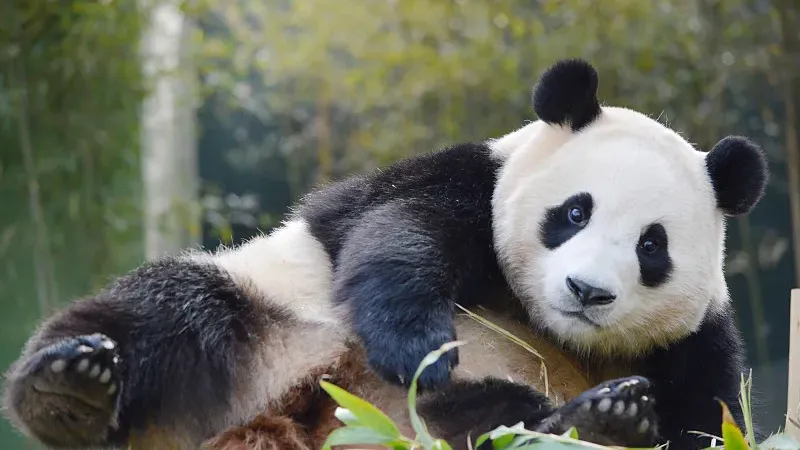
The giant panda diaspora spans 58 locations across continents — from the misty bamboo forests of Sichuan to climate-controlled enclosures in Singapore, from mountain reserves that shelter free-ranging pandas to urban zoos that host celebrities. This article provides the definitive guide to panda geography: where they live, why they're there, what the distribution reveals about conservation history, and how the map has changed from 1869 to today.
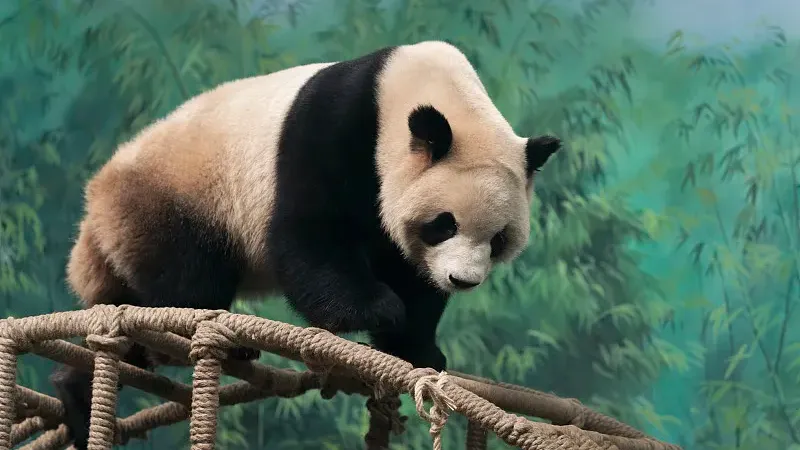
From the 1972 arrival of diplomatic gifts Kang Kang and Lan Lan to the January 2026 departure of Xiao Xiao and Lei Lei, this guide traces every giant panda that has lived in Japan across three institutions — Ueno Zoo, Adventure World in Wakayama, and Kobe Oji Zoo — and explains why Japan, for the first time since 1972, now has none.
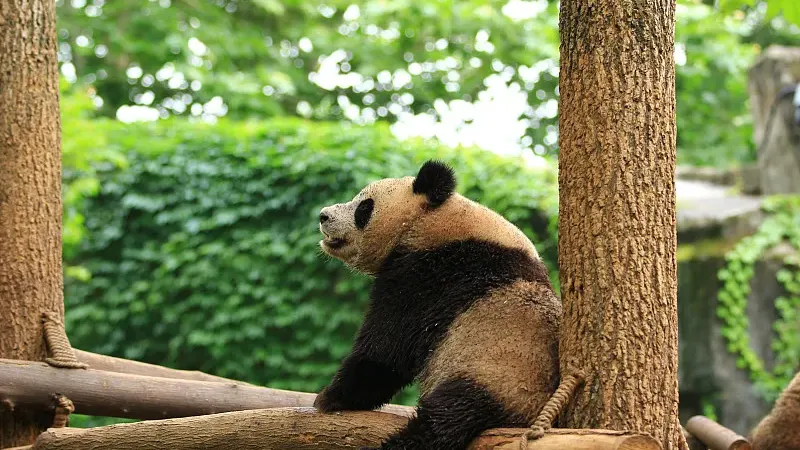
When a panda falls ill in a zoo thousands of miles from China, the response is not local — it is global. Chinese veterinary teams fly to foreign zoos within 48 hours. Foreign keepers travel to China for specialized training. Video consultations connect specialists across continents in real time. This article explores the hidden international medical network that keeps the global panda diaspora healthy — from emergency surgeries in Europe to chronic disease management in Asia, and the shared medical knowledge that saves panda lives everywhere.
World map
Coordinates: 35.7161 N, 139.7711 E
Archive notes
Ueno Zoo, located in Taito Ward, Tokyo, is Japan’s oldest operating zoological park, housing over 2,600 individual animals representing 450+ species including Ailuropoda melanoleuca (giant panda), Gorilla gorilla gorilla (western lowland gorilla), Panthera tigris altaica (Siberian tiger), and Grus japonensis (red-crowned crane). It operates under the governance of the Tokyo Metropolitan Government Bureau of Environment, holds full accreditation from the Japanese Association of Zoos and Aquariums (JAZA) and World Association of Zoos and Aquariums (WAZA