Table of contents (10 sections)
Chengdu’s Fan Economy: How One Panda Fuels an Entire City’s Tourism
Key Fact: The Chengdu Research Base of Giant Panda Breeding attracts over 10 million visitors annually — more than the Louvre, more than the Eiffel Tower — generating an estimated ¥8-12 billion ($1.1-1.7 billion) in annual economic impact. At the center of this phenomenon is Hua Hua, panda #1237, whose viral fame in 2023 triggered a 30-40% surge in attendance. She is not merely a zoo animal. She is a tourism economy in black-and-white fur — the most commercially valuable individual animal in China, and arguably the world.
Key Takeaways
-
The Chengdu Research Base is one of China’s top tourist attractions — 10M+ annual visitors driving ¥8-12B in economic impact, comparable to the Forbidden City or the Great Wall.
-
Hua Hua’s celebrity created measurable tourism surges — the “Hua Hua effect” demonstrates the economic power of individual animal fame in the digital age.
-
The panda fan economy supports thousands of jobs — from keepers and veterinarians to hotel staff, souvenir vendors, livestreamers, and tour guides — creating a self-reinforcing cycle of attention and investment.
Who Visits?
The Chengdu Research Base’s visitor profile tells a revealing story about the demographics of panda fandom.
| Visitor Group | Share | Average Spend | Average Visit Duration | Primary Motivation |
|---|---|---|---|---|
| Young women (18–35) — domestic | ~45% | ¥300–800 ($42–112) | 3–5 hours | Hua Hua, social media content |
| Families with children | ~25% | ¥500–1,200 ($70–168) | 4–6 hours | General panda experience, education |
| Domestic tourists 35+ | ~22% | ¥200–500 ($28–70) | 2–3 hours | General sightseeing |
| International visitors | ~8% | ¥800–2,000 ($112–280) | 4–8 hours | Organized panda tourism, conservation interest |
The most striking finding is the dominance of young women — nearly half of all visitors. This is the demographic group most active on platforms like Douyin, Xiaohongshu, and Weibo, where panda videos generate billions of views. For many young women, visiting the base is an extension of their online fandom — a pilgrimage to see in person the pandas they have watched on their phones.
The queue for Hua Hua viewing begins forming at 5:00 AM — three hours before the Chengdu Research Base opens. The most dedicated fans have traveled from Beijing, Shanghai, Guangzhou — some from Japan, Korea, Thailand — arriving the night before to claim their place. When the gates open at 8:00 AM, the rush toward the nursery enclosure is orderly but intense. By 9:00 AM, the viewing area is at capacity. Late arrivals wait two hours for a ninety-second glimpse.
One fan from Shanghai holds a Hua Hua plush toy. She has traveled 1,800 kilometers for ninety seconds of a panda she has watched on social media for two years. She does not think about the economic impact — the hotel room she booked, the taxi she took, the souvenirs she will buy. She only knows that Hua Hua makes her happy.
The Hua Hua Effect
Hua Hua — born August 2020 to Cheng Gong (successful mother) and Mei Lan — became an internet sensation in early 2023 when videos of her unusually round, fluffy appearance went viral. Her distinctive shape — observers described her as “a sesame ball with legs” — combined with her deliberate, unhurried manner of eating created a perfect recipe for social media success.
The numbers are staggering:
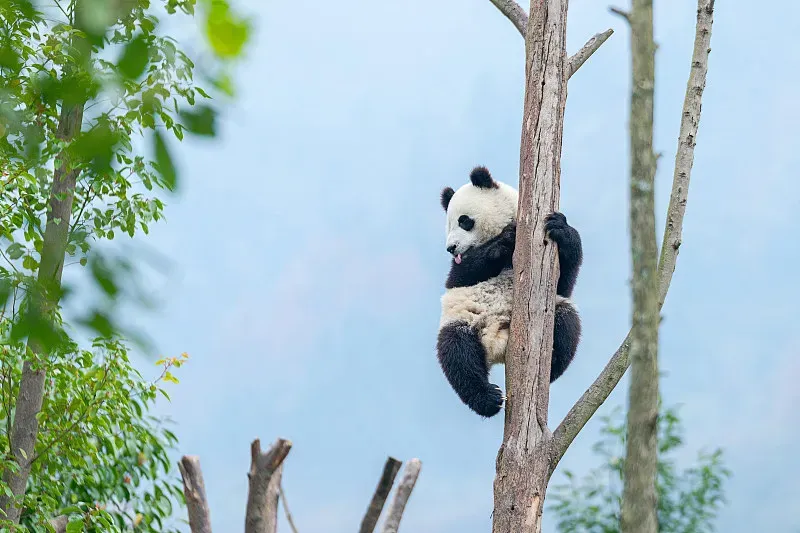
- 200+ million views on her most-watched video (eating bamboo while sitting in a tree fork)
- 15+ million followers on her dedicated Douyin fan accounts
- ¥2–3 billion ($280–420 million) in estimated additional annual economic activity attributed to her celebrity
- 30–40% attendance surge at the Chengdu Research Base from 2022 to 2023
Hua Hua’s fame operates differently from earlier panda celebrities. Tai Shan (National Zoo, 2005) was famous through a panda cam. Bao Bao (National Zoo, 2013) was famous through birth announcements. But Hua Hua is famous because short-form video platforms distribute her moment-by-moment existence to millions of devices simultaneously.
The keeper places a fresh bundle of bamboo inside Hua Hua’s enclosure. She approaches it slowly, selects a single stalk, and sits down to eat. That is all. She does not perform. She does not acknowledge the crowd behind the glass. She simply eats bamboo — methodically, deliberately, with an almost meditative focus. For three hours, the crowd watches her eat. No one leaves.
The “Hua Hua effect” has been studied by tourism economists as a case study in “charismatic species economics” — the measurable economic value generated by individual animals that capture public affection. Comparable cases include:
- Jaws (shark tourism) — individual great white sharks generate $2–3 million per year in cage-diving tourism revenue
- Cecil the Lion (wildlife icon) — generated $6 million in tourism revenue for Zimbabwe in the year after his death
- M Migaloo (white whale) — estimated $10 million per year in Australian whale-watching revenue
Hua Hua’s economic footprint — ¥2–3 billion ($280–420 million) annually — exceeds all documented individual animal economic impacts in history by a wide margin.
Seasonal Visitor Patterns
Panda tourism in Chengdu follows a predictable seasonal cycle:
| Season | Monthly Visitors | Visitor Experience | Recommended For |
|---|---|---|---|
| Spring (Mar–May) | 800K–1M | Mild temps, pandas active in outdoor enclosures, cubs from previous year visible | Best overall — moderate crowds, good panda activity |
| Summer (Jun–Aug) | 1–1.2M | Hot and humid — pandas in air-conditioned enclosures midday | Hua Hua birthday (early Aug) creates spike; early morning visits essential |
| Autumn (Sep–Nov) | 900K–1M | Cool, pandas active, golden bamboo scenery | Second-best season — lower humidity than spring |
| Winter (Dec–Feb) | 400K–600K | Cold but clear — pandas active in snow | Lowest crowds, but some outdoor viewing reduced |
The “sweet spot” for visitors is midweek during April, May, October, and November — when weather is mild, crowds are manageable, and pandas are most active.
The Economic Ecosystem Around the Base
The Chengdu Research Base is not an isolated attraction. It anchors an entire economic ecosystem that extends kilometers in every direction.
Hotels and Accommodation
Hotels within 3 kilometers of the base report:
- 95% occupancy during peak season (March–June, September–November)
- Average nightly rate: ¥400–800 ($56–112) during peak, vs ¥200–400 ($28–56) during winter
- Premium pricing for rooms with panda-themed decoration or panda-view packages
- Brand hotels: Major international chains (Hilton, Marriott) operate near the base alongside dozens of local boutique hotels with panda-themed rooms
A single new hotel opened in 2024 — the “Panda Resort Chengdu” — with 288 rooms, a panda-shaped swimming pool, and a dedicated panda live-streaming lounge. Average nightly rate: ¥1,200 ($168). Occupancy in first year: 87%.
Restaurants and Food Service
- On-site dining: The base’s own restaurants serve ¥50–100 per person
- Nearby restaurants: Hundreds of restaurants in the surrounding neighborhoods, many with panda-themed dishes (panda-shaped dumplings, panda-patterned rice, bamboo shoot specialties)
- Delivery economy: Pinduoduo and Meituan report elevated orders near the base during peak hours
Merchandise and Souvenirs
- Official merchandise: ¥500–2,000 ($70–280) average spend per visitor on Hua Hua-branded items
- Licensed vs unlicensed: The base’s official shop sells authenticated merchandise; surrounding street vendors sell unofficial panda items at lower prices
- Premium items: Limited-edition Hua Hua plush toys — ¥298 ($42) — sell out within hours of new batches
The Livestream Economy
Perhaps the most distinctive feature of the Chengdu panda economy is the live-streaming ecosystem that has grown up around the base.
On any given day, 20–30 livestreamers set up tripods outside the panda enclosures at the Chengdu Research Base. They arrive at 6:00 AM to secure the best positions. Their phones broadcast the pandas — eating, climbing, sleeping, yawning — to audiences across China. Each streamer has commentary, insider knowledge of individual pandas, and a direct line to their viewers via chat.
The economics of panda livestreaming are surprisingly substantial:
| Tier | Number of Streamers | Monthly Income | Revenue Sources |
|---|---|---|---|
| Top tier | 5–10 | ¥50,000–200,000 ($7,000–28,000) | Virtual gifts, brand partnerships, paid subscriptions |
| Mid tier | 30–50 | ¥5,000–20,000 ($700–2,800) | Virtual gifts, product endorsements |
| Entry | 100+ | ¥1,000–5,000 ($140–700) | Occasional gifts, base salary from streaming platforms |
Total estimated annual value of the Chengdu panda livestream economy: ¥100–300 million ($14–42 million).
Big Sister Li has been streaming pandas from the base for two years. She arrives at 6:30 AM, sets up her tripod at the cub enclosure, and broadcasts until 4:00 PM. Her audience peaks at 50,000 concurrent viewers. She knows each panda by name and studbook number, follows their family trees, and explains their behavior to her viewers. ‘Hua Hua is about to wake up,’ she tells her stream. ‘Watch — she stretches her left paw first, then her right.’ Viewers send virtual gifts. The gifts convert to real money. Li has quit her office job to stream pandas full-time.
Comparing Panda Tourism Worldwide
Chengdu is the center of the panda tourism universe, but it is not the only panda tourism destination.
| Destination | Annual Visitors | Ticket Price | Key Attraction | Economic Impact |
|---|---|---|---|---|
| Chengdu Research Base | 10M+ | ¥55 ($7.70) | Hua Hua, largest panda population | ¥8–12B ($1.1–1.7B) |
| Bifengxia Panda Base | 1.5–2M | ¥100 ($14) | Returned overseas pandas, forest setting | ¥1–2B ($140–280M) |
| Dujiangyan Panda Base | 1–1.5M | ¥58 ($8) | Retired pandas, nursing home focus | ¥500M–1B ($70–140M) |
| Wolong Nature Reserve | 200–400K | ¥100 ($14) | Wild panda habitat, research center | ¥200–400M ($28–56M) |
| Beauval Zoo (France) | 1.5–2M | €35 ($38) | Yuan Meng, European panda birth | €200–400M ($220–440M) |
| Ueno Zoo (Japan) | 4–5M | ¥600 ($4) | Xiang Xiang, Rei Rei, panda pair | ¥10–20B ($70–140M)* |
| Everland (Korea) | 5–6M | ₩54,000 ($40) | Fu Bao, Bao family | ₩300–500B ($225–375M)* |
*Note: Ueno and Everland figures represent total zoo impact, not panda-only attribution.
Chengdu dominates both in absolute visitors and in per-visitor economic multiplier. The base’s low admission price (¥55) relative to the experience creates extremely high visitor satisfaction and encourages ancillary spending. It also keeps the base accessible to domestic tourists from all economic backgrounds — an important factor in the base’s public support mission.
Can One Panda Create a Local Economy?
The question at the heart of the Chengdu panda economy — can one animal generate a self-sustaining local economy? — has implications far beyond panda conservation.
The tentative answer is yes, but with qualifications.
Yes, because: Hua Hua’s celebrity has created demand that supports multiple industries (tourism, hospitality, streaming, merchandise) employing thousands of people. This demand is currently robust and growing.
With qualifications, because: The economy depends on continued public interest in a specific animal. Pandas are not permanent — they age, they die, and their successor’s popularity is uncertain. Moreover, the economy is geographically concentrated — it benefits a narrow zone around the base but may not spread equitably to broader Chengdu.
The base’s diversification strategy — research partnerships, international collaborations, digital content — aims to reduce dependence on visitor numbers. But the fundamental economic model remains: people come to see pandas, they spend money, and the money supports jobs.
The Psychological Economy of Joy
There is one more dimension to the Chengdu panda economy that deserves attention: the emotional value it produces.
Study after study of panda tourism finds that visitors self-report “joy,” “calm,” “wonder,” and “connection” as their primary emotions after visiting. These are not consumer responses — they are psychological outcomes.
The mother from Shanghai, who traveled 1,800 kilometers, waited three hours in the queue, and saw Hua Hua for ninety seconds — she cries. Not from frustration. From relief. ‘I’ve been watching her on my phone for two years,’ she explains. ‘Every day. It got me through the pandemic. Through work stress. Through a breakup. She was the only thing that consistently made me happy. And now I’m here. I’m in the same space as her.’
The economy of happiness is the most powerful economy of all. And it may be the hardest to measure — and the hardest to argue with.
Frequently Asked Questions
How does the economic impact of panda tourism compare to the economic value of pandas in the wild?
Pandas in the wild generate economic value through ecosystem services (bamboo forest carbon sequestration, watershed protection) and research value. Panda tourism in Chengdu alone generates ¥8-12B annually — far exceeding any measurable wild panda economic value. This creates an economic argument for conservation: protected pandas, both wild and captive, generate measurable human economic benefit.
Is the panda tourism economy sustainable?
The economic model depends on continued public interest, which depends on continued panda celebrity — a fragile foundation. The Chengdu Base is diversifying its revenue streams (research partnerships, international collaborations, digital content) to reduce dependence on visitor numbers. The panda tourism economy is currently booming; whether it remains so depends on factors — panda health, public taste, competition from other attractions — that are difficult to predict.
How does admission revenue support conservation?
A portion of ticket revenue flows to the Chengdu Panda Breeding Research Foundation, which funds habitat conservation, veterinary research, and community programs. However, the base operates primarily as a self-funded institution — ticket sales cover the base’s operating costs, while the conservation foundation receives additional support from government funding and corporate sponsorships.
Do international visitors contribute significantly to the economy?
International visitors represent only 5-8% of total visitors but contribute disproportionately to revenue (¥800-2,000 per person vs ¥300-800 for domestic visitors). The base is actively developing international tourism infrastructure, including multilingual signage, international ticketing partnerships, and coordinated visits with overseas panda zoos.
Has any other animal created a comparable tourism economy?
Individual animal tourism economies exist — whale sharks in Oslob (Philippines), swimming pigs in the Bahamas, gorilla trekking in Rwanda — but none operates at the scale of Chengdu’s panda economy. The closest parallel is arguably the Thailand elephant tourism industry, which generates approximately $20B annually across the country — but that is a multi-species, multi-venue industry, not a single-species, single-venue phenomenon.
Your Turn
The next time you watch a panda video on your phone — perhaps Hua Hua eating bamboo, or Meng Lan climbing a tree, or Fu Bao rolling in the snow — remember that the simple pleasure of watching has economic consequences. It supports streamers, souvenir makers, hotel staff, and zoo keepers. It funds conservation. It creates jobs. It builds a city’s identity.
The panda fan economy is powered by the most fundamental human instinct: the desire to watch something beautiful and feel better for it. Long may it run.

Dr. Mei Zhang
Spatial Ecology & Conservation Editor
Spatial ecologist using GIS, remote sensing, and satellite imagery to study panda population dynamics, habitat connectivity, and conservation effectiveness at landscape scales.
View full profile →Tags in this article
Questions readers often ask
How much economic impact do pandas generate for Chengdu?
The Chengdu Research Base attracts over 10 million visitors annually, generating an estimated ¥8-12 billion ($1.1-1.7 billion) in annual economic impact for the Chengdu region through tickets, merchandise, food and beverage, hotels, transportation, and related tourism spending. Hua Hua alone is credited with a measurable increase in visitor numbers — the 'Hua Hua effect' documented a 30-40% attendance surge after her viral fame in 2023.
Who visits the Chengdu Research Base?
The visitor base is diverse but dominated by young Chinese women aged 18-35 (approximately 45% of visitors). Families with children represent about 25%. International tourists make up only 5-8%, though this proportion is growing. The remaining visitors are domestic tourists aged 35+ (22%). Notable trends include solo female travelers from other Chinese provinces and organized 'panda tours' from Japan, South Korea, and Thailand.
How does panda tourism in Chengdu compare to other famous animal tourism sites?
Chengdu's panda tourism operates at a scale that exceeds most comparable animal tourism economies globally. While a whale-watching town in Iceland might attract 50,000 visitors per year, or a gorilla trekking permit generates $1,500 per person in Rwanda, Chengdu sees 10 million visitors annually with per-person spending of ¥500-1,500 ($70-210). The scale difference is dramatic — no other single animal species generates comparable tourism revenue.
Does Hua Hua know she is famous?
No. Pandas do not have a concept of fame or celebrity. Hua Hua lives a normal panda life — eating bamboo, sleeping, occasionally interacting with keepers and other pandas. Her economic impact is entirely a human construction. She does not perform for cameras or pose for photos. She simply exists, and that existence generates billions of yuan in economic activity.
What seasonal patterns affect panda tourism in Chengdu?
The Chengdu Research Base experiences strong seasonal variation. Peak season is March-June and September-November — mild weather months when pandas are most active outdoors. Summer (July-August) is high volume but lower satisfaction, as pandas retreat to air-conditioned indoor enclosures during midday heat. Winter (December-February) sees the lowest visitor numbers. Hua Hua's birthday in early August creates an annual spike regardless of weather.
How much does it cost to visit the Chengdu Research Base?
As of 2026, general admission is ¥55 ($7.70) for adults and ¥27 ($3.80) for children/seniors. VIP experiences — including early-access guided tours, keeper briefing, and behind-the-scenes access — range from ¥500-2,000 ($70-280) per person. The low admission price relative to the experience creates extremely high satisfaction rates and encourages ancillary spending on merchandise, food, and nearby hotels.