Ba Xi
八喜
11 years old
wild
Ba Xi (八喜, studbook #956) is a male giant panda born July 26, 2015, at Wolong Hetaoping Base. Son of Xi Mei (喜妹) and Lu ...
wild-release rewilding mother-reared
+1
View profile
Panda archive
祥祥
Xiang Xiang (祥祥, studbook #531) was the world's first captive-born giant panda released into the wild. Born August 25, 2001 at Wolong alongside twin brother Fu Fu (福福), he underwent 3 years of rewilding training. On April 28, 2006, he walked free into Wolong's Wuyipeng forest. He survived for 10 months before dying in a territorial fight with wild pandas in February 2007. His sacrifice reshaped China's rewilding program.
How to use this page
This page brings together the core facts, timeline, family graph, media, place journey, and related reading for Xiang Xiang.
Profile snapshot
Birth date
August 25, 2001
Birth place
China Conservation and Research Center for the Giant Panda
Current location
Wild (Sichuan)
Status
Deceased
Studbook
#531Archive activity
5 updates · 0 media
Narrative
Start with a concise summary, then continue into the full narrative record for Xiang Xiang.
Short version
Xiang Xiang (祥祥, studbook #531) was the world's first captive-born giant panda released into the wild. Born August 25, 2001 at Wolong alongside twin brother Fu Fu (福福), he underwent 3 years of rewilding training. On April 28, 2006, he walked free into Wolong's Wuyipeng forest. He survived for 10 months before dying in a territorial fight with wild pandas in February 2007. His sacrifice reshaped China's rewilding program.
Xiang Xiang (Chinese: 祥祥, studbook number 531) was a male giant panda born on August 25, 2001 at the China Conservation and Research Center for the Giant Panda (CCRCGP) in Wolong, Sichuan. He had a twin brother, Fu Fu (福福, sb532).
His mother was Quan Quan (泉泉/20号/龙古, sb414) — the famous “wild-born beauty” known as the most beautiful panda at Wolong. His father was Da Di (大地, sb394), a prolific sire and brother of San Diego’s Bai Yun.
Xiang Xiang was selected from hundreds of pandas for the historic rewilding experiment. Physically, he was described as robust, agile, and an excellent learner — the only panda in his cohort to never fall ill during captivity. At release, he weighed 80 kg, above average for a wild panda of his age.
In 2003, CCRCGP launched the world’s first captive-to-wild rewilding program. Xiang Xiang was chosen because:
His selection marked a historic turning point: China’s panda conservation strategy was shifting from “captive breeding for survival” to “rewilding for population recovery.”
From July 8, 2003 to April 2006, Xiang Xiang underwent phased rewilding training:
Unlike the later “mother-rearing” method (used for Tao Tao, Zhang Xiang, etc.), Xiang Xiang was human-reared. Keepers taught him survival skills directly, and he never learned from a panda mother. This critical difference would prove fatal.
On April 28, 2006, at 10:00 AM, Xiang Xiang’s enclosure gate was opened at the Dengsheng release site in Wolong Nature Reserve. In front of dozens of scientists, officials, and journalists, he ran out without looking back, disappearing into the Wuyipeng forest area — a 36 km² tract of prime panda habitat.
He was fitted with a GPS tracking collar and radio transmitter. The release was declared a milestone: “China’s panda protection has entered a new phase — from captive breeding to wild release.”
For the first several months, Xiang Xiang appeared to adapt successfully:
However, unlike wild-born pandas who learned combat and territorial skills from their mothers, Xiang Xiang had no experience fighting other pandas. The Wuyipeng area was home to a dense population of wild pandas — and territorial disputes were inevitable.
On February 19, 2007, after 10 months in the wild, Xiang Xiang’s GPS collar transmitted a mortality signal. Search teams found his body at the base of a cliff in a rocky area.
Autopsy revealed: massive trauma consistent with an intra-species fight. Xiang Xiang had engaged in a territorial battle with wild male pandas, was driven off a cliff, and died from his injuries. He was just 5 years and 6 months old.
Xiang Xiang’s death was a devastating but invaluable lesson. The post-mortem analysis identified three critical failures:
These lessons reshaped the entire rewilding program:
Xiang Xiang is remembered as the “rewilding pioneer” — a courageous panda whose sacrifice paved the way for all future releases.
Evidence
Key updates and milestone events tied to Xiang Xiang.
Knowledge graph
See the core family graph first, then continue through related pandas and archive themes.
Gallery
Images and video connected to Xiang Xiang.
Images and video for Xiang Xiang will be added later.
Connected archive
This is the next layer around the profile: place journey, current geography, reading context, and nearby panda records.
Wild (Sichuan)
Sichuan, China
Xiang Xiang is currently linked to Wild (Sichuan).
culture
The ultimate goal of panda conservation is not more pandas in cages — it is more pandas in forests. Since 2006, China has been training captive-born pandas for release into the wild through a program that requires keepers to wear panda suits, mothers to teach cubs survival skills without human contact, and released pandas to navigate a world their ancestors knew but they have never seen. This is the story of the rewilding program — its heartbreaking early failures, its hard-won successes, and the panda mothers and cubs who are slowly learning to be wild again.
culture
Nestled in the misty mountains above Ya'an, Sichuan, the Bifengxia Panda Base is the quiet epicenter of the global panda diaspora — the place every overseas-born panda first encounters when it returns to China. With its cool climate, abundant bamboo, and specialized quarantine facilities, Bifengxia has processed every major panda homecoming of the modern era, from Tai Shan in 2010 to Fu Bao in 2024.
culture
Hua Hua's celebrity has transformed the Chengdu Research Base from a conservation facility into one of China's most popular tourist destinations. This article examines the 'panda fan economy' — how a single charismatic animal drives millions in ticket sales, hotel bookings, merchandise revenue, and social media engagement, and what this phenomenon reveals about the economic power of animal celebrity.
culture
The giant panda diaspora spans 58 locations across continents — from the misty bamboo forests of Sichuan to climate-controlled enclosures in Singapore, from mountain reserves that shelter free-ranging pandas to urban zoos that host celebrities. This article provides the definitive guide to panda geography: where they live, why they're there, what the distribution reveals about conservation history, and how the map has changed from 1869 to today.
Browse nearby, regional, and fast-moving panda profiles related to this archive entry.
八喜
Ba Xi (八喜, studbook #956) is a male giant panda born July 26, 2015, at Wolong Hetaoping Base. Son of Xi Mei (喜妹) and Lu ...
华姣
Hua Jiao (华姣, studbook #866) is a female giant panda born July 6, 2013 at Wolong's rewilding training base to mother Cao...
华妍
Hua Yan (华妍, studbook #888) is a female giant panda born August 14, 2013 at Wolong Hetaoping Base. Daughter of Ye Ye and...
阿宝
A Bao is a male giant panda born on September 7, 2010 at Madrid Zoo, the first giant panda conceived through artificial ...
View profile阿宝
A Bao is a male giant panda born on 2011-09-04 at the Chengdu Research Base of Giant Panda Breeding. He is the offspring...
View profile阿宝
A Bao (also known as Bao Lan) is a female giant panda born on November 3, 2010 at Atlanta Zoo. Initially mistaken for ma...
View profile冰星
Bing Xing is a male giant panda born on September 1, 2000 at Chengdu Research Base. He lived at Hangzhou Wildlife Park (...
View profile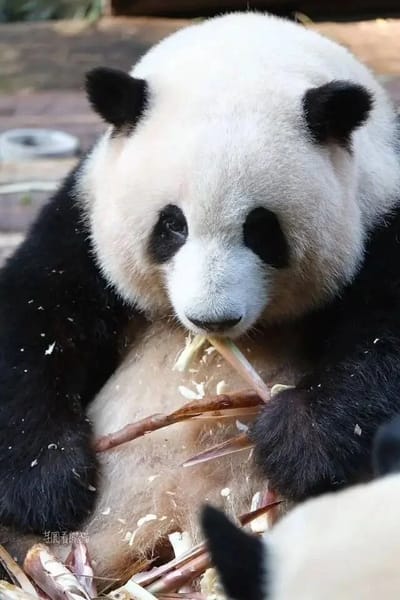
成和花
Cheng Hehua (Hua Hua, 花花), nicknamed "Fruit Lai" (果赖) because she responds to this Sichuan dialect call, is China's top...
Trust
Information on this page is compiled from conservation institutions, official panda records, media archives, and the wider PandaCommon research workflow.
No external reference links are attached yet.
Move from this profile into more pandas, place histories, and the wider library.
Explore over 762 panda profiles, place links, and archive journeys.