Table of contents (10 sections)
Historic Wild Panda Rescues: Basi, Qi Zai, and Other Survivors
Key Fact: Some of the most important pandas in conservation history were not born in captivity — they were found dying in the wild and saved by human intervention. Basi, pulled from an icy river by villagers in 1984, lived to become the oldest panda of her era and the model for the 1990 Asian Games mascot. Qi Zai, discovered as an abandoned brown cub in 2009, became the world’s only captive brown panda and a living genetics laboratory. These rescue stories are not just dramatic anecdotes — they are the foundation narratives of panda conservation, moments when individual human compassion intersected with species survival.
Key Takeaways
-
Wild panda rescues have supplied critical genetic diversity to the captive population — rescued pandas like Qi Zai represent bloodlines that are absent from or underrepresented in the existing captive gene pool.
-
Each rescue is made possible by a deliberately built infrastructure — community awareness programs, ranger networks, and veterinary facilities that can respond within hours.
-
Rescued pandas become conservation ambassadors — Basi’s longevity story, Qi Zai’s uniqueness, and similar cases personalize the abstract goal of species survival for the public.
Rescue Timeline
| Year | Panda | Location | Condition | Rescuers | Outcome | Significance |
|---|---|---|---|---|---|---|
| 1984 | Basi (sb376) | Ba River, Fujian | Starving, hypothermic | Local villagers | Lived to 37, Pan Pan mascot model | Symbol of rescue potential |
| 2009 | Qi Zai | Foping, Qinling | Abandoned cub, underweight | Nature reserve rangers | Thriving at Shaanxi center | Only captive brown panda |
| 2010 | Wild adult | Tangjiahe | Bamboo flowering starvation | Reserve patrol team | Released after 6 months | Successful rehab release |
| 2016 | Elderly female | Minshan | Injured by falling tree | GPNB patrol | Dujiangyan permanent resident | Geriatric care case |
| 2022 | Young male | Qionglai | Trap injury | Patrol team + vets | Released after recovery | Anti-poaching success |
Basi: The Panda Who Became a Legend
The Ba River in Fujian Province runs cold in winter — snowmelt from the Wuyi Mountains, gray-green and fast. In March 1984, villagers near the town of Baodingshan spotted something struggling in the current: a young panda, emaciated, barely keeping its head above water. They pulled the animal from the river, wrapped it in blankets, and called the authorities.
The cub — later named Basi, after the river that nearly killed her — was starving, hypothermic, and suffering from multiple infections. She was a victim of the 1983-85 bamboo flowering crisis that had devastated wild panda populations across multiple mountain ranges. Transported to the Fuzhou Panda Research Center, a veterinary team worked for weeks to stabilize her.
She survived. She thrived. She lived to age 37.
Basi’s life after rescue was extraordinary. She became the star attraction at the Fuzhou Panda Center, a beloved public figure whose birthdays were celebrated with national media coverage. Her longevity — 37 years, far exceeding the typical captive panda lifespan of 25-30 — was attributed to exceptional senior care and, her veterinarians speculated, a naturally robust constitution.
In 1990, Basi was selected as the model for Pan Pan, the mascot of the Beijing Asian Games. The selection was both practical (she was the most photographed panda in China) and symbolic: a rescued panda representing hope and resilience. Her image, stylized into the smiling cartoon that became the template for all subsequent Chinese panda mascots, was seen by billions.
Basi died in 2017. Her body was preserved and is displayed at the Fuzhou Panda World museum. She proved that a rescued panda could not only survive but thrive — and that individual rescue, repeated across decades, could meaningfully contribute to species survival.
Qi Zai: The Brown Cub Alone in the Forest
In November 2009, rangers in the Foping Nature Reserve in the Qinling Mountains of Shaanxi Province made a discovery: a two-month-old cub, alone in the forest, abandoned by its mother. The cub was underweight, hypothermic, and would have died within days without intervention.
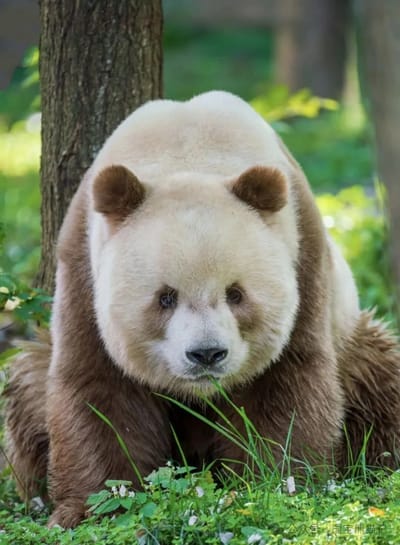
And the cub was brown. Where a typical panda carries black fur, this cub carried a warm cinnamon brown — the same color mutation seen in a small number of wild Qinling pandas. The rangers named him Qi Zai — “the seventh son” — and carried him to the Shaanxi Rare Wildlife Rescue Center.
Qi Zai’s rescue was genetically significant beyond his striking color. As a wild-born Qinling panda from a population genetically distinct from the main Sichuan captive population, he represented genetic diversity that the broader captive studbook lacked. His unique coloration — the result of a recessive mutation in the melanin production pathway, specifically in the MC1R gene — made him a living genetics laboratory, revealing how coat color is inherited in pandas.
Researchers have studied Qi Zai extensively to understand the brown-color mechanism. The mutation appears to be unique to the Qinling subspecies and may be linked to other genetic traits that differentiate Qinling pandas from their Sichuan relatives. He remains the only living brown panda in any captive facility worldwide.
Rescue Before vs After
| Condition | At Rescue | After Rehabilitation |
|---|---|---|
| Weight | 25-50% below healthy weight | Full recovery to normal weight |
| Hydration | Severely dehydrated | Normal |
| Body temperature | Hypothermic (if winter) | Normal |
| Infection risk | High (open wounds, malnutrition) | Resolved |
| Survival prognosis | Days to weeks | Years to decades |
The Rescue Infrastructure
Wild panda rescues are not random acts of heroism. They are enabled by infrastructure built over decades:
Community awareness. Villagers in panda-adjacent communities are educated to recognize pandas in distress and to contact authorities rather than intervening directly. This awareness, cultivated through decades of conservation outreach, is the first link in the rescue chain.
Ranger networks. Reserve rangers — the men and women described in our article on forest guardians — are the first responders to panda emergencies. They are trained in wildlife capture, basic veterinary assessment, and transport protocols for distressed pandas.
Veterinary facilities. Rescue centers like the Dujiangyan Giant Panda Rescue Center, the Bifengxia quarantine facility, and the Shaanxi Rare Wildlife Rescue Center provide the medical infrastructure for rehabilitation. The Dujiangyan center, described in our article on the world’s only panda nursing home, handles the most complex rescue cases.
Release decision framework. Pandas that are healthy, behaviorally wild, and young enough to adapt are released back into the wild after veterinary clearance. The decision is made case by case, balancing individual welfare with the genetic needs of the wild population.
Did You Know?
Basi’s bamboo consumption was legendary among her keepers. At her peak, she consumed 20-30 kilograms of bamboo daily — on the high end even for a panda of her size. Her keepers attributed her extraordinary longevity partly to her appetite.
Qi Zai’s mother was never identified. Despite genetic analysis of the Foping population, researchers have been unable to determine which wild panda gave birth to the brown cub. The possibility that his mother died before he was found — leaving him abandoned — remains open.
The most expensive panda rescue operation in history was the 2008 Wolong earthquake evacuation, in which 62 pandas were carried out of the devastated reserve by rangers. The operation, which involved helicopters, improvised stretchers, and three weeks of continuous effort, is described in our article on Wolong’s reconstruction after the earthquake.
Entity Hub
| Panda | Significance | Current Status |
|---|---|---|
| Basi (sb376) | Oldest panda of her era; Asian Games mascot model | Deceased 2017 (age 37); preserved at Fuzhou |
| Qi Zai | Only captive brown panda; Qinling genetics research | Living at Shaanxi Rare Wildlife Rescue Center |
| Wolong 62 | Largest single rescue operation in history | 62 pandas evacuated after 2008 earthquake |
Frequently Asked Questions
What should I do if I find a wild panda in distress?
Do not approach the animal. A distressed panda is a wild bear and can be dangerous. Contact local authorities, a wildlife rescue hotline, or the nearest panda reserve. In China, the ranger network is the appropriate first contact.
Are rescued pandas ever released back to the wild?
Yes — approximately 30% of rescued pandas are eventually released. Candidates must be: healthy (fully recovered from the condition that led to rescue), behaviorally wild (not habituated to humans), and young enough to adapt to wild conditions. Pandas that fail any of these criteria remain in captivity. The rewilding program is described in our article on panda rewilding.
How has the rescue rate changed over time?
The number of annual rescues has declined significantly since the 1980s, when bamboo flowering events caused widespread starvation. As the wild panda population has stabilized and habitat protection has improved, rescues have become less frequent. Most rescues today involve isolated incidents — injury, illness, or orphaned cubs — rather than population-level crises.
The river in Fujian still runs cold in March. The forest in Qinling still holds brown cubs that may or may not be found. The rescue stories are not finished — they continue, each winter, in the mountains of Sichuan and Shaanxi, wherever a villager notices something struggling in the snow or a ranger on patrol finds a cub alone. The infrastructure is in place. The knowledge is accumulated. The next Basi, the next Qi Zai, is simply waiting to be found.
Call to Action
Explore the rescue infrastructure at Dujiangyan, learn about the rangers who respond to emergencies, or read about Qi Zai’s Qinling subspecies.

Dr. James Thornton
Wildlife Ecology Editor
Wildlife ecologist specializing in forest ecology, protected area effectiveness, mammal community conservation, and human-wildlife coexistence in panda habitats.
View full profile →Tags in this article
Questions readers often ask
Who was Basi and why was she famous?
Basi was a female giant panda rescued as a starving cub from the icy waters of the Ba River in Fujian Province in 1984. She was nursed back to health and lived to age 37 — one of the oldest pandas ever recorded, equivalent to over 110 human years. She became a national celebrity in China, was the model for the 1990 Asian Games mascot Pan Pan, and her longevity made her a powerful symbol of panda conservation. Her preserved body is displayed at the Fuzhou Panda World museum.
How was Qi Zai rescued?
Qi Zai, the world's only captive brown panda, was discovered in November 2009 as a two-month-old cub in the Qinling Mountains of Shaanxi Province. He was alone, abandoned by his mother, underweight, and would have died within days without intervention. Rangers from the Foping Nature Reserve carried him to safety, and he was raised at the Shaanxi Rare Wildlife Rescue Center. His unique brown coloration — the result of a recessive mutation in the melanin production pathway — has made him a subject of genetic research and the most famous panda in the Qinling subspecies.
How many wild pandas are rescued each year?
The number varies considerably — from zero to perhaps a dozen annually. Most rescues occur in winter and early spring, when food is scarcer and young or elderly pandas are more vulnerable. The rescue rate has declined as the wild population has become more stable and panda habitat more protected. During bamboo flowering crises — such as the 1983-85 event — rescue rates spike dramatically as starving pandas descend from the mountains into human settlements.
What happens to pandas after they are rescued?
Rescued pandas are transported to a veterinary facility — typically Dujiangyan, Bifengxia, or the Shaanxi Rare Wildlife Rescue Center in the Qinling region — for health assessment and treatment. Pandas that recover fully and are young enough to adapt are released back into the wild after veterinary clearance. Pandas with permanent disabilities, advanced age, or excessive habituation to humans remain in captivity, joining the managed population as breeding or display animals.
Do rescued pandas remember their rescuers?
Anecdotal evidence suggests that pandas can form lasting positive associations with specific humans who cared for them during vulnerable periods. However, for pandas being prepared for wild release, keepers deliberately minimize positive human association through the use of panda suits and limited direct contact — preventing the panda from approaching humans after release.