Place archive

China Conservation and Research Center for the Giant Panda Dujiangyan Base

breeding center Dujiangyan, China

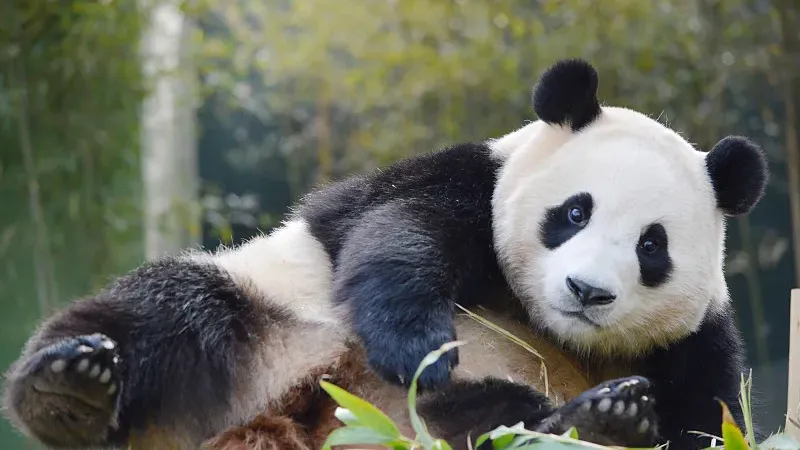
The CCRCGP Dujiangyan Base, also known as the Dujiangyan Panda Park (熊猫乐园) or Dujiangyan Zhonghua Giant Panda Garden (都江堰中华大熊猫苑), is located in Qingchengshan Town, Dujiangyan City, Sichuan Province. Built with funding from the Hong Kong SAR government following the devastating 2008 Wenchuan earthquake, the base was completed in 2013 and spans 760 mu (approximately 50.7 hectares). It was the first facility in China designed specifically for giant panda rescue, disease prevention, and quarantine purposes. The base is divided into seven functional zones including disease control research, quarantine isolation, rehabilitation training, public education, and natural landscape areas. It serves as a retirement home for elderly pandas—including the legendary Pan Pan (the world's most prolific breeding male)—and as the primary quarantine station for pandas returning from overseas conservation programs.
How this page is organized

Start with the pandas, then move outward into the surrounding archive

This page gathers the residents linked to China Conservation and Research Center for the Giant Panda Dujiangyan Base, the key moments recorded here, nearby institutions, and the articles that add context.

Resident archive

Pandas connected to this place

8 pandas recorded

Currently at China Conservation and Research Center for the Giant Panda Dujiangyan Base

The pandas currently recorded at this institution.

8 active

Bai Yun

白云

Alive
34 years old
China Conservation and Research Center for the Giant Panda Dujiangyan Base

Bai Yun (白云, "White Cloud"), studbook #371, is a female giant panda born September 7, 1991 at Wolong Hetaoping Base. She...

View profile

Cheng Feng

成风

Alive
6 years old
China Conservation and Research Center for the Giant Panda Dujiangyan Base

Cheng Feng (成风), studbook #1172, is a female giant panda born on June 11, 2019, at the Chengdu Research Base of Giant Pa...

captive-bred chengdu-base twin +1
View profile

He Yu

和雨

Alive
9 years old
China Conservation and Research Center for the Giant Panda Dujiangyan Base

He Yu (和雨, studbook #1029) is a female giant panda born August 9, 2016 at the Chengdu Research Base. Twin sister of He F...

View profile

Le Le

叻叻

Alive
4 years old
China Conservation and Research Center for the Giant Panda Dujiangyan Base

Le Le (叻叻), studbook #1074, is the first giant panda ever born in Singapore. Born August 14, 2021 at River Wonders to Ka...

captive-bred singapore overseas-born +2
View profile

Lin Yang

林阳

Alive
24 years old
China Conservation and Research Center for the Giant Panda Dujiangyan Base

Lin Yang (林阳, studbook #538) is a male giant panda born September 28, 2001 at Wolong Hetaoping Base. Son of Tang Tang an...

captive-bred wolong fuzhou +1
View profile
Photo of Qing Zai

Qing Zai

青仔

Alive
4 years old
China Conservation and Research Center for the Giant Panda Dujiangyan Base

Qing Zai (青仔/美年达), studbook #1374, is a male giant panda born September 12, 2021 at Wolong Shenshuping Base. Twin brothe...

captive-bred twin wolong-shenshuping +1
View profile

Recorded moments

Archive timeline at China Conservation and Research Center for the Giant Panda Dujiangyan Base

View full timeline →
2025
Aug 24

Zhu Yun Returns to Sichuan

Zhu Yun returned to Sichuan.

Read update
2024
Jan 16

Le Le Returns to China

Le Le departed Singapore aboard a Singapore Airlines cargo flight at 7:15 PM, arriving in Chengdu that same evening. After quarantine at Huaying Mountain, he moved to the Dujiangyan Base in February 2024.

Read update
2022
Apr 21

Cheng Feng Moves to Dujiangyan Panda Valley

Cheng Feng moved to Dujiangyan Panda Valley.

Read update
2018
Dec 6

He Yu Transferred to Daxiangling Wild Release Base

He Yu and Xing Chen were officially transferred to the Daxiangling Wild Release Research Base for advanced wild adaptation training, achieving full natural food conversion.

Read update
2018
Nov 1

Gao Gao Returns to China

Gao Gao returned to Sichuan after 15 years at San Diego Zoo, beginning a month-long quarantine at Dujiangyan Base. He made his first public appearance on December 3.

Read update
2017
Nov 5

Nuan Nuan Returns to China

Nuan Nuan returned to China from Malaysia.

Read update
2017
Apr 6

He Yu Begins Semi-Wild Training

He Yu moved to Dujiangyan Panda Valley for semi-wild training, beginning her preparation for potential wild release under the human-assisted soft release method.

Read update
2015
Dec 30

Yuan Run moves to Dujiangyan Panda Valley

Yuan Run was transferred to the Dujiangyan Breeding and Wild Research Center, where she lived with siblings Ao Li Ao and Miao Miao, often playing in mud.

Read update
2015
Jun 25

Ya Xing transferred to Dujiangyan for wild training

Ya Xing was transferred to Dujiangyan Panda Valley along with her twins Xing Yu and Xing Yuan for wild training, spending two years learning survival skills before returning to Chengdu Base in 2017.

Read update
2014
Mar 20

Long Sheng Recalled After Zhengzhou Controversy

After the death of Jin Yi at Zhengzhou Zoo triggered a national inspection that found unsanitary conditions, Long Sheng was recalled to CCRCGP Dujiangyan Base for quarantine.

Read update

In the library

Further reading on China Conservation and Research Center for the Giant Panda Dujiangyan Base

Browse library →
Cover image for "Dujiangyan Panda Nursing Home: Where Hero Pandas Retire"
Culture 📚 general

Dujiangyan Panda Nursing Home: Where Hero Pandas Retire

In the quiet foothills outside Chengdu, the Dujiangyan Giant Panda Rescue and Disease Control Center serves as both a state-of-the-art panda hospital and a peaceful retirement community for aging pandas. Mei Xiang, Tian Tian, and other retired breeding pandas and overseas returnees spend their final years here, receiving specialized geriatric care and living in quiet forested enclosures far from the crowds.

retirement geriatric nursing-home +2
Read article
Cover image for "The Bamboo Grinder: Panda Dental Health and Worn Teeth"
Nature 📚 general

The Bamboo Grinder: Panda Dental Health and Worn Teeth

A panda's molars crush bamboo for 12-16 hours daily, accumulating decades of abrasive wear from silica-rich plant fiber. By age 20, the enamel may be gone entirely. This article examines panda dental anatomy, the pathology of tooth wear, the veterinary dentistry that repairs broken teeth, and why dental health is the single greatest determinant of panda lifespan in the wild.

1 panda
dental teeth wear +2
Read article
Cover image for "Common Panda Diseases: From Gut Blockages to Parasite Prevention"
Nature 🔬 advanced

Common Panda Diseases: From Gut Blockages to Parasite Prevention

The giant panda's specialized bamboo diet and carnivore digestive anatomy make it vulnerable to a specific set of diseases: mucus diarrhea from microbiome disruption, intestinal blockages from bamboo fiber impaction, ascariasis from roundworm parasites, and dental infections from worn teeth. This article examines each major panda health threat, its causes, and the veterinary protocols that keep captive pandas healthy.

diseases veterinary health +2
Read article

World map

Where this place sits in the wider panda world

View full map →

📍 All Locations

Coordinates: 30.9200 N, 103.5700 E

Archive notes

About China Conservation and Research Center for the Giant Panda Dujiangyan Base

The CCRCGP Dujiangyan Base, also known as the Dujiangyan Panda Park (熊猫乐园) or Dujiangyan Zhonghua Giant Panda Garden (都江堰中华大熊猫苑), is located in Qingchengshan Town, Dujiangyan City, Sichuan Province. Built with funding from the Hong Kong SAR government following the devastating 2008 Wenchuan earthquake, the base was completed in 2013 and spans 760 mu (approximately 50.7 hectares). It was the first facility in China designed specifically for giant panda rescue, disease prevention, and quarantine purposes. The base is divided into seven functional zones including disease control research, quarantine isolation, rehabilitation training, public education, and natural landscape areas. It serves as a retirement home for elderly pandas—including the legendary Pan Pan (the world's most prolific breeding male)—and as the primary quarantine station for pandas returning from overseas conservation programs.