Ai Lun
艾伦
8 years old
fuzhou_panda_world
Ai Lun (艾伦), studbook #1127, is a male giant panda born June 15, 2018 at Chengdu Research Base — the younger half of the...
captive-bred chengdu-base mascot
+1
View profile
Panda archive
巴斯
Basi is a female giant panda born on January 1, 1980 in the wild of Minshan Mountains, Sichuan Province, China. She was rescued as an injured juvenile cub by local forestry workers before being transferred to professional captive care, and eventually held at Fuzhou Panda World in Fujian Province. She is the offspring of two unidentified wild giant pandas native to the Minshan mountain range. She was later paired with male giant panda Gong Gong, with whom she produced one surviving offspring. Currently living at Fuzhou Panda World, he participates in public education and research programs for giant panda conservation. Fuzhou Panda World is a public zoological facility focused on captive management and outreach for the species, hosting millions of visitors annually to learn about giant panda ecology. Basi was known for her calm, interactive temperament with visitors, and served as the prototype for the 1990 Beijing Asian Games mascot Pan Pan, bringing widespread public attention to giant panda conservation in China. As a long-lived rescued wild individual, she contributed valuable data on giant panda captive welfare and aging, supporting national conservation efforts for the species.
How to use this page
This page brings together the core facts, timeline, family graph, media, place journey, and related reading for Basi.
Profile snapshot
Birth date
January 1, 1980
Birth place
Wild (Sichuan)
Current location
Fuzhou Panda World
Status
Deceased
Studbook
#164Archive activity
2 updates · 0 media
Narrative
Start with a concise summary, then continue into the full narrative record for Basi.
Short version
Basi is a female giant panda born on January 1, 1980 in the wild of Minshan Mountains, Sichuan Province, China. She was rescued as an injured juvenile cub by local forestry workers before being transferred to professional captive care, and eventually held at Fuzhou Panda World in Fujian Province. She is the offspring of two unidentified wild giant pandas native to the Minshan mountain range. She was later paired with male giant panda Gong Gong, with whom she produced one surviving offspring. Currently living at Fuzhou Panda World, he participates in public education and research programs for giant panda conservation. Fuzhou Panda World is a public zoological facility focused on captive management and outreach for the species, hosting millions of visitors annually to learn about giant panda ecology. Basi was known for her calm, interactive temperament with visitors, and served as the prototype for the 1990 Beijing Asian Games mascot Pan Pan, bringing widespread public attention to giant panda conservation in China. As a long-lived rescued wild individual, she contributed valuable data on giant panda captive welfare and aging, supporting national conservation efforts for the species.
Basi (studbook number 164) is a female giant panda born on January 1, 1980, in the wild Minshan Mountains of Sichuan Province, China, to two unidentified wild giant pandas native to the range. She was rescued as an injured juvenile cub by local forestry workers in her early years, receiving initial care before being transferred to professional captive management facilities. On January 1, 1981, she was permanently relocated to Fuzhou Panda World in Fujian Province, where she has resided for the majority of her life. During her breeding years, she was paired with male giant panda Gong Gong, and the pair produced one surviving offspring, contributing to the genetic diversity of the captive giant panda population.
Basi gained widespread public recognition as the prototype for Pan Pan, the official mascot of the 1990 Beijing Asian Games. Her gentle, interactive temperament with visitors made her a beloved ambassador for her species, and the widespread popularity of the Pan Pan mascot significantly increased public awareness of giant panda conservation needs across China in the 1990s. As a long-lived wild-born individual in human care, she has provided researchers with unique, long-term data on giant panda captive welfare, aging processes, and health management, insights that have directly informed improved care protocols for the broader captive panda population.
Currently, Basi remains a resident of Fuzhou Panda World, a zoological facility dedicated to giant panda captive management, research, and public education that hosts millions of visitors annually. She continues to participate in the center’s public education and conservation research programs, helping to teach visitors about giant panda ecology, the impacts of habitat loss on wild populations, and ongoing efforts to protect the species. Her status as one of the oldest living captive giant pandas also underscores the progress made in captive panda care over the past four decades, serving as a tangible marker of the success of China’s giant panda conservation efforts.
Ba Si (Chinese: ??), studbook number 164, is a female giant panda born in the wild in 1980 in Sichuan, China. She was rescued in 1984 and brought to the Fuzhou Panda World.
Ba Si was a legendary panda who gained international fame. She was the first panda to appear on the cover of Time magazine and was a mascot for the 1990 Asian Games. She lived at the Fuzhou Panda World where she became one of the most famous pandas in China. She was known for her intelligence and trainability. She passed away on September 13, 2017, at the age of 37.
Evidence
Key updates and milestone events tied to Basi.
Knowledge graph
See the core family graph first, then continue through related pandas and archive themes.
Family relationship data for Basi is being compiled.
Theme graph
This panda is connected to 3 themes in the broader archive graph.
Gallery
Images and video connected to Basi.
Images and video for Basi will be added later.
Connected archive
This is the next layer around the profile: place journey, current geography, reading context, and nearby panda records.
Fuzhou Panda World
Fuzhou, China
Basi is currently linked to Fuzhou Panda World.
culture
Panda adoption and corporate sponsorship programs fund hundreds of millions in conservation annually. This article explains how panda adoptions work, what they cost, what sponsors receive in return, and how corporate panda partnerships function as both conservation funding and brand strategy.
culture
Becoming a panda keeper is statistically harder than gaining admission to many elite universities — annual acceptance rates at the Chengdu Research Base are below 5%. This article explores the education, physical demands, emotional resilience, and daily realities of panda keeping, featuring profiles of keepers who describe their work as 'the most difficult, least glamorous, and most meaningful job in animal care.'
culture
Nestled in the misty mountains above Ya'an, Sichuan, the Bifengxia Panda Base is the quiet epicenter of the global panda diaspora — the place every overseas-born panda first encounters when it returns to China. With its cool climate, abundant bamboo, and specialized quarantine facilities, Bifengxia has processed every major panda homecoming of the modern era, from Tai Shan in 2010 to Fu Bao in 2024.
culture
Since 1984, the giant panda has been listed on Appendix I of CITES — the Convention on International Trade in Endangered Species — which prohibits all commercial international trade in pandas and their products. This article explains how CITES works, what Appendix I listing means for pandas, and how the treaty shapes the international panda loan system.
Browse nearby, regional, and fast-moving panda profiles related to this archive entry.
艾伦
Ai Lun (艾伦), studbook #1127, is a male giant panda born June 15, 2018 at Chengdu Research Base — the younger half of the...
巴斯
Ba Si is a female giant panda born on January 1, 1980 in the wild of Sichuan Province. Rescued after being injured in 19...
View profile佳华
Jia Hua is a female giant panda born on 2023-11-25 at Fuzhou Panda World. She is the offspring of Jing Jing and Yuan Me...
View profile阿宝
A Bao is a male giant panda born on September 7, 2010 at Madrid Zoo, the first giant panda conceived through artificial ...
View profile阿宝
A Bao is a male giant panda born on 2011-09-04 at the Chengdu Research Base of Giant Panda Breeding. He is the offspring...
View profile阿宝
A Bao (also known as Bao Lan) is a female giant panda born on November 3, 2010 at Atlanta Zoo. Initially mistaken for ma...
View profile冰星
Bing Xing is a male giant panda born on September 1, 2000 at Chengdu Research Base. He lived at Hangzhou Wildlife Park (...
View profile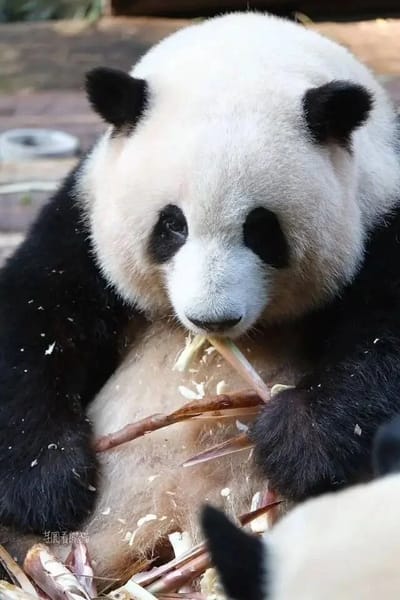
成和花
Cheng Hehua (Hua Hua, 花花), nicknamed "Fruit Lai" (果赖) because she responds to this Sichuan dialect call, is China's top...
Trust
Information on this page is compiled from conservation institutions, official panda records, media archives, and the wider PandaCommon research workflow.
No external reference links are attached yet.
Move from this profile into more pandas, place histories, and the wider library.
Explore over 762 panda profiles, place links, and archive journeys.