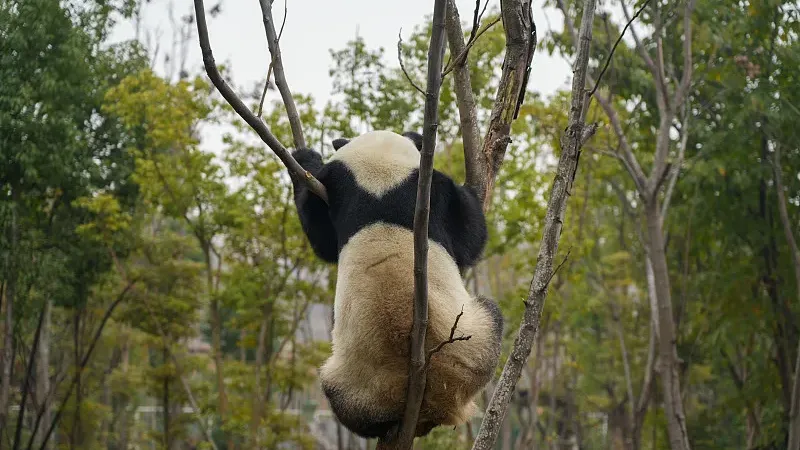
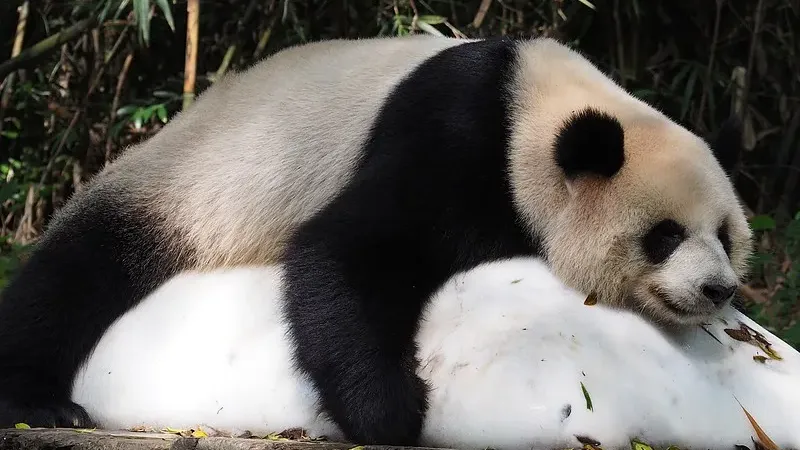
Zhang Ka
张卡
Zhang Ka (张卡, studbook #505) is a female giant panda rescued from Baoxing County in 2001. She set two world records with...
Place archive
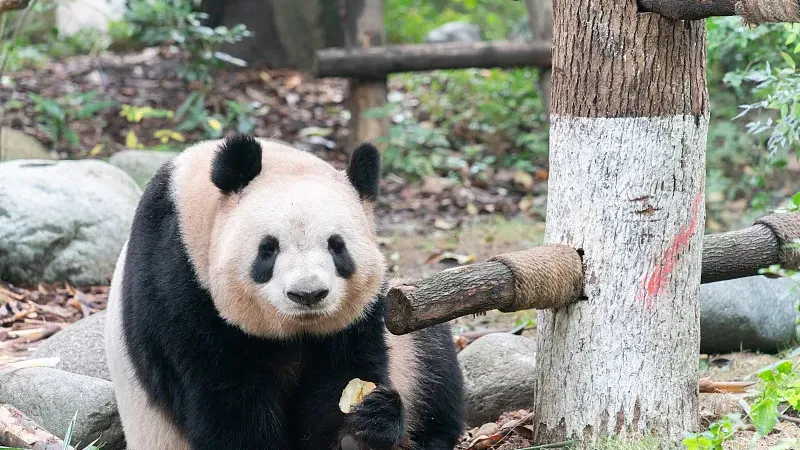
The Wolong Hetaoping Base (核桃坪基地) is the original research center of the China Conservation and Research Center for the Giant Panda, located in the Hetaoping area of the Wolong National Nature Reserve at an elevation of approximately 1,820 m. Established in 1981 through a partnership between the Chinese government and WWF, it opened in 1983 and was the world's first large-scale giant panda research and breeding facility. For over two decades, Hetaoping was the epicenter of global panda conservation — pioneering artificial insemination techniques, developing cub-rearing protocols, and producing the majority of captive-born pandas. The 2008 Wenchuan earthquake devastated the facility, prompting a relocation of breeding operations to the Shenshuping base in Gengda. Hetaoping was subsequently rebuilt as a dedicated wild reintroduction training center, using the "mother-raises-cub" (母兽带仔) method to prepare captive-born pandas for life in the wild. It remains closed to the public and functions exclusively as a research and rewilding facility.
How this page is organized
This page gathers the residents linked to Wolong Hetaoping Base of China Conservation and Research Center for the Giant Panda, the key moments recorded here, nearby institutions, and the articles that add context.
Resident archive
2 pandas recorded
The pandas currently recorded at this institution.
张卡
Zhang Ka (张卡, studbook #505) is a female giant panda rescued from Baoxing County in 2001. She set two world records with...
Pandas that were once linked to this institution.
迎迎
Ying Ying (迎迎), studbook #369, was a male giant panda born on August 15, 1991, at Beijing Zoo. He became the second male...
Recorded moments
Xiu Qiu was born at Wolong Hetaoping Base, daughter of Shui Xiu and Xiang Ge.
Read updateBa Xi (八喜, sb956) was born at Wolong Hetaoping Base to mother Xi Mei (喜妹, sb511) and father Lu Lu (芦芦, sb503). He is a half-brother of the famous rewilded panda Tao Tao (淘淘).
Read updateXue Xue (雪雪, sb850) was born at Wolong Hetaoping Base to mother Si Xue (思雪, sb625) and father Lu Lu (芦芦, sb503). She was the fourth panda selected for the second-phase rewilding program.
Read updateYong Ba passed away at approximately 28 years old from organ failure at the CCRCGP Hetaoping base.
Read updateYing Ying was transferred to Wolong as part of the first domestic panda exchange program.
Read updateLong Sheng was born at Wolong Hetaoping Base in the Year of the Dragon, son of Da Di and Yue Yue, and great-grandson of legendary Hong Kong panda Jia Jia.
Read updateAfter 6 years of false pregnancies, Lei Lei successfully gave birth to her first cub Long Xin at the CCRCGP Hetaoping base.
Read updateIn the library
A curated global guide to over 50 panda documentaries spanning seven decades, seven thematic categories, and ten countries — from Pan Wenshi's raw Qinling field recordings in the 1990s to the 2024 Korean theatrical release Goodbye, Grandpa. Every film is verified, reviewed, and linked to the real pandas, keepers, and breeding centers behind the footage.
Nestled in the misty mountains above Ya'an, Sichuan, the Bifengxia Panda Base is the quiet epicenter of the global panda diaspora — the place every overseas-born panda first encounters when it returns to China. With its cool climate, abundant bamboo, and specialized quarantine facilities, Bifengxia has processed every major panda homecoming of the modern era, from Tai Shan in 2010 to Fu Bao in 2024.
The giant panda's global distribution spans 58 locations across continents — from the bamboo forests of Sichuan to climate-controlled enclosures in Singapore. This article provides an overview of the panda diaspora: where pandas live, why they're there, and what the geographic distribution reveals about panda diplomacy, conservation, and the species' remarkable adaptability.
World map
Coordinates: 30.8500 N, 102.8800 E
Archive notes
The Wolong Hetaoping Base (核桃坪基地) is the original research center of the China Conservation and Research Center for the Giant Panda, located in the Hetaoping area of the Wolong National Nature Reserve at an elevation of approximately 1,820 m. Established in 1981 through a partnership between the Chinese government and WWF, it opened in 1983 and was the world's first large-scale giant panda research and breeding facility.
For over two decades, Hetaoping was the epicenter of global panda conservation — pioneering artificial insemination techniques, developing cub-rearing protocols, and producing the majority of captive-born pandas. The 2008 Wenchuan earthquake devastated the facility, prompting a relocation of breeding operations to the Shenshuping base in Gengda. Hetaoping was subsequently rebuilt as a dedicated wild reintroduction training center, using the "mother-raises-cub" (母兽带仔) method to prepare captive-born pandas for life in the wild. It remains closed to the public and functions exclusively as a research and rewilding facility.