Place archive

Yehe Nature Reserve

sanctuary Mianning, China

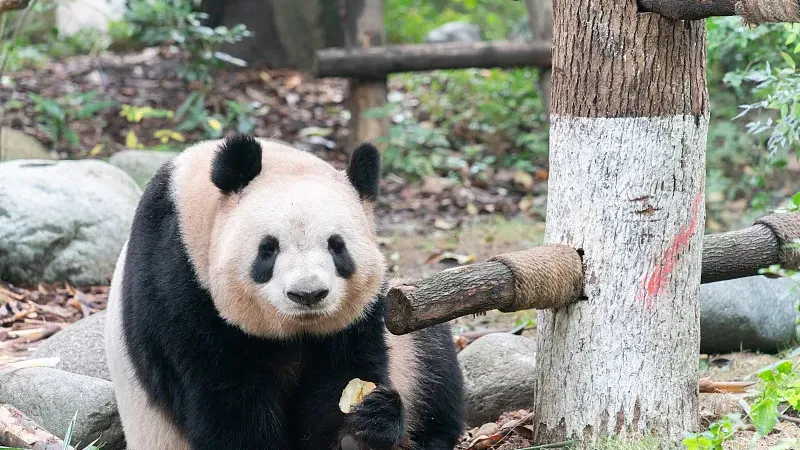
Yehe Nature Reserve is a protected area in Sichuan Province, China, within the giant panda habitat.

Yehe Nature Reserve forms part of the in-situ conservation landscape for wild giant pandas, anchored by nature reserves and protected corridors within the broader panda habitat network.

How this page is organized

Start with the pandas, then move outward into the surrounding archive

This page gathers the residents linked to Yehe Nature Reserve, the key moments recorded here, nearby institutions, and the articles that add context.

Resident archive

Pandas connected to this place

0 pandas recorded

No pandas recorded yet

The archive does not yet list pandas connected to Yehe Nature Reserve.

Recorded moments

Archive timeline at Yehe Nature Reserve

View full timeline →
2017
Sep 28

Zhang Xiang Recaptured for Health Check

Zhang Xiang (张想) was successfully recaptured in Yehe Nature Reserve for a health examination, over 30 km from her release point. She weighed 174 jin (87 kg), with normal development of all limbs, teeth and reproductive organs — confirming she was fully adapted to wild conditions. She was released back to the wild immediately.

Read update

In the library

Further reading on Yehe Nature Reserve

Browse library →
Cover image for "The International Studbook: How Big Data Prevents Panda Inbreeding"
Featured
Nature 🔬 advanced

The International Studbook: How Big Data Prevents Panda Inbreeding

Every captive giant panda on Earth is recorded in a single global database — the International Studbook — which tracks lineage, calculates genetic relatedness, and determines each year's breeding recommendations. This article explains how studbook managers use population genetics software to maintain 90% genetic diversity across 700 captive pandas, making the panda breeding program one of the most mathematically sophisticated conservation efforts in history.

1 panda
studbook genetics breeding +2
Read article
Cover image for "The Giant Panda Genome Project: How DNA Sequencing Transformed Conservation"
Featured
Nature 🔬 advanced

The Giant Panda Genome Project: How DNA Sequencing Transformed Conservation

In 2009, an international team led by BGI-Shenzhen published the first complete giant panda genome — a 2.4 billion base-pair blueprint that revealed why pandas lost the taste for meat, how they digest bamboo with bacterial help, and why their genetic diversity offers hope for survival. This article follows the science from Jing Jing's blood sample to today's conservation genomics, covering TAS1R1 umami pseudogenization, the Illumina sequencing revolution, and what the genome means for the species' future.

1 panda
genome dna genetics +5
Read article
Cover image for "Panda Habitat as Carbon Sink: The Hidden Climate Value of Bamboo Forests"
Featured
Nature 🔬 advanced

Panda Habitat as Carbon Sink: The Hidden Climate Value of Bamboo Forests

The bamboo forests protected for pandas store an estimated 2-3 billion tons of carbon across the Giant Panda National Park's 27,000 square kilometers — an ecosystem service worth $200-750 million annually in carbon sequestration alone. This article examines how panda conservation doubles as climate action, why bamboo forests rival tropical rainforests in per-hectare carbon storage, and how China's carbon market is creating new economic incentives for habitat protection.

carbon climate ecosystem-services +4
Read article

World map

Where this place sits in the wider panda world

View full map →
Click a marker to open the place page Panda counts reflect current archive records

📍 All Locations

Coordinates: 28.5500 N, 102.0500 E