Table of contents (14 sections)
Minshan vs. Qinling: How Two Mountain Ranges Shape Different Pandas
Key Fact: The giant panda is not a single, uniform population but two genetically and morphologically distinct subspecies separated by approximately 10,000-50,000 years of isolation. The Sichuan subspecies (Ailuropoda melanoleuca melanoleuca), dwelling in the Minshan and Qionglai ranges, is larger, darker, and adapted to high snowfall. The Qinling subspecies (A. m. qinlingensis), isolated in Shaanxi Province, is smaller, rounder-skulled, and trends toward brown fur — a color gradient that, in its most extreme expression, produced Qi Zai, the world’s only captive brown panda. Understanding the differences between these two panda forms is essential to understanding panda conservation — because protecting each requires protecting the habitats that made them different.
Key Takeaways
-
Two subspecies exist across two mountain systems — Sichuan pandas (Minshan/Qionglai) are larger and darker; Qinling pandas are rounder-faced and browner. They have been isolated for at least 10,000 years.
-
Habitat drives morphology. Each subspecies’ physical traits reflect adaptations to different climates, bamboo species, and visual environments — including how much snow falls each winter.
-
The Qinling subspecies is at greater conservation risk — smaller population, lower genetic diversity, and lower-elevation habitat that is more vulnerable to climate change.
Two Mountains, Two Winters
Travel north from Chengdu into the Minshan range in January, and you enter a world of deep snow. The bamboo bends under accumulations that can exceed 150 centimeters. The forest is black and white — dark tree trunks against a white landscape. The pandas you might find here are substantial animals, their fur a deep, saturated black that stands out against snow but vanishes against the dark shadows of the forest understory.
Travel 800 kilometers northeast, to the Qinling Mountains in Shaanxi Province, and the winter is different. Snowfall is lighter — 30-60 centimeters annually. The forest floor is a mosaic of brown leaf litter, gray tree trunks, and thin snow. The pandas in these forests are subtly different: smaller, rounder in the face, their black fur tending toward the dark brown of strong tea.
These are not random variations. They are the accumulated results of thousands of years of separate evolution in different mountains, under different climates, eating different bamboo. The Minshan panda and the Qinling panda are the same species. They are not the same animal.
The Visible Differences
| Trait | Sichuan Subspecies (A. m. melanoleuca) | Qinling Subspecies (A. m. qinlingensis) |
|---|---|---|
| Skull shape | Longer, narrower muzzle, flatter cranium | Rounder, more domed cranium, shorter muzzle |
| Body size | Larger (85-125 kg typical) | Smaller (70-110 kg typical) |
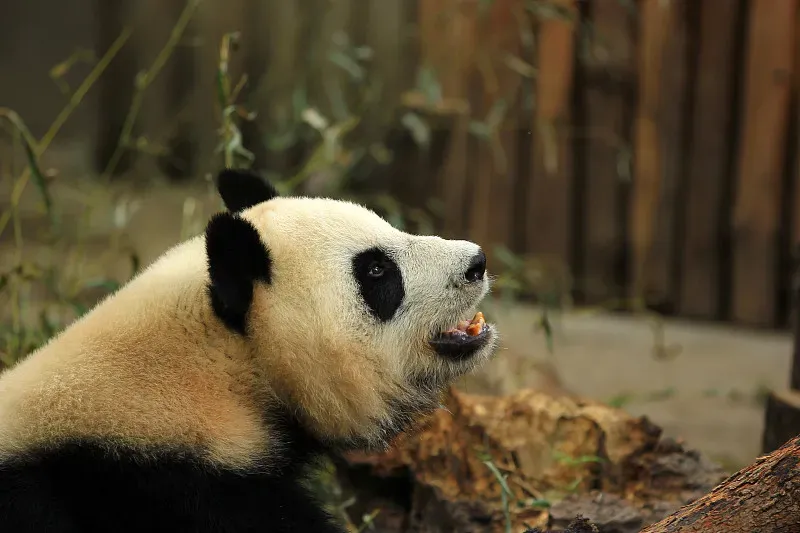
| Fur color (dark areas) | Deep, pure black | Dark brown to brown-black |
| Fur color (light areas) | Pure white | Cream-white |
| Ear shape | Pronounced, well-separated | Slightly smaller, closer-set |
| Typical elevation | 2,000-3,500m | 1,300-3,000m |
| Annual snowfall | 80-150 cm | 30-60 cm |
| Dominant bamboo | Bashania fargesii, Fargesia denudata | Bashania fargesii, Fargesia qinlingensis |
| Population estimate | ~1,500 wild | ~350 wild |
| Number of mountain ranges occupied | 4 (Minshan, Qionglai, Daxiangling, Liangshan) | 1 (Qinling only) |
The visual differences are subtle enough that they went unremarked by Western science for decades. It was not until the 2000s, when genetic analysis and systematic skull measurements were applied to museum specimens and living animals, that the Qinling panda’s distinctiveness became undeniable.
Genetic Divergence: Two Lineages, One Species
The genetic relationship between the two subspecies tells a story of ancient separation and modern rediscovery. Mitochondrial DNA analysis reveals approximately 2-3% sequence divergence — comparable to the genetic distance between African and Asian elephants, though pandas retain full reproductive compatibility, confirming they are subspecies rather than separate species.
Phylogenetic analysis places the estimated divergence at 10,000-50,000 years ago, during the late Pleistocene. The trigger was climatic: the expansion and contraction of ice sheets during glacial cycles repeatedly isolated panda populations in high-elevation forest refugia. The Qinling range, separated from the Sichuan ranges by the deep valleys of the Jialing and Han river systems, remained consistently isolated across multiple glacial-interglacial cycles.
The genetic signature of this isolation is unmistakable. The Qinling subspecies shows significantly lower genetic diversity than the Sichuan subspecies — approximately 30-40% lower heterozygosity, consistent with a smaller population that has been isolated for thousands of years. Low genetic diversity does not mean the Qinling pandas are doomed — but it means they have less adaptive potential to respond to environmental change.
Our article on genetic management of the captive panda population explains how the studbook system tracks and manages the genetic diversity of both subspecies across the captive population.
Population and Habitat Comparison
| Metric | Sichuan Subspecies | Qinling Subspecies | Ratio |
|---|---|---|---|
| Total wild population | ~1,500 | ~350 | 4.3:1 |
| Occupied habitat area | ~19,000 km² | ~3,500 km² | 5.4:1 |
| Population density | 0.04-0.08/km² | 0.05-0.10/km² | Similar |
| Number of isolated subpopulations | 20+ (across 4 ranges) | 5 (within single range) | — |
| Genetic diversity (heterozygosity) | Higher | ~30-40% lower | — |
| Captive population | 600+ | ~50 (identified Qinling lineage) | 12:1 |
| Elevation range | 1,500-3,500m | 1,300-3,000m | — |
| Estimated carrying capacity | ~2,000-2,500 | ~400-500 | — |
The asymmetry is stark. The Sichuan subspecies has more individuals, more habitat, more genetic diversity, and more geographical redundancy. If a disease outbreak or bamboo flowering event devastates one Sichuan subpopulation, the others may be unaffected. The Qinling subspecies has no such backup.
The Geological Divorce
The separation of the two panda lineages began during the last glacial period, when the Earth’s climate oscillated between cold and warm phases. During cold phases, ice sheets expanded, sea levels dropped, and the mountain forests of central China contracted upward into isolated high-elevation refugia. The Qinling Mountains, lying northeast of the main Sichuan ranges, were cut off by a combination of unsuitable lowland habitat and the deep river valleys of the Jialing and Han systems.
The pandas stranded in Qinling did not die out. They survived — in smaller numbers, in a narrower habitat, under different selective pressures than their Sichuan cousins. Generation by generation, they accumulated the genetic differences that now distinguish them: variants in genes controlling skull development, body size regulation, and melanin production.
The key driver of their distinct morphology is the difference in visual environment and climate between the two mountain ranges — the subject explored in our article on panda fur coloration and camouflage.
The Visual Environment: Snow and Shadow vs. Leaf and Light
The most consequential difference between the two ranges may be the simplest: how much snow they get.
In the Minshan range, winter snowfall routinely exceeds 100 centimeters and can reach 150 centimeters at higher elevations. The forest floor becomes a monochrome world of white snow and dark tree trunks — a high-contrast visual environment that, as explained in our article on panda camouflage, drove the evolution of the panda’s deeply saturated black fur for shadow camouflage and pure white fur for snow camouflage.
In the Qinling range, snowfall is less than half as heavy. The winter forest is a mosaic of brown leaf litter, gray tree trunks, and occasional patches of thin snow — a lower-contrast visual environment. In this setting, the selective pressure for pure black fur is relaxed. The Qinling panda’s tendency toward brown-black fur may reflect this reduced camouflage selection — in a brownish forest, slightly brown fur is not a disadvantage.
Did You Know? The color difference between the subspecies is one of the strongest pieces of evidence that panda fur coloration is indeed camouflage, not just random. If the pattern were purely for social signaling or thermoregulation, there would be no reason for it to vary between habitats. The fact that it does — darker where snow is heavier, browner where the forest is browner — strongly supports the camouflage hypothesis.
The Bamboo Factor
Both panda subspecies eat bamboo, but not exactly the same bamboo. The plant communities of the two mountain ranges have diverged alongside the pandas.
| Bamboo Species | Dominant Range | Elevation | Flowering Cycle | Nutritional Profile | Importance |
|---|---|---|---|---|---|
| Bashania fargesii (arrow bamboo) | Minshan + Qinling (common to both) | 1,800-3,200m | 80-100 years | Moderate protein; high fiber | Primary species in both ranges |
| Fargesia denudata | Minshan only | 2,500-3,500m | 40-60 years | Higher protein; lower fiber | Critical for high-elevation Sichuan pandas |
| Fargesia qinlingensis | Qinling only | 1,500-2,800m | 60-80 years | Lower protein; higher fiber | Exclusive to Qinling subspecies |
In the Sichuan ranges, the dominant bamboo species are Bashania fargesii and Fargesia denudata — both cold-tolerant species adapted to heavy snow loads and long winters. These bamboos produce shoots at predictable elevations and seasons, allowing Sichuan pandas to follow a reliable “bamboo calendar.”
In the Qinling range, Fargesia qinlingensis dominates. It is adapted to the milder winters and lower snow loads. Its shoots emerge earlier in spring, and its nutritional composition differs subtly — slightly lower in protein, slightly higher in fiber. Qinling pandas compensate through different feeding behaviors: spending more time on leaves during summer and autumn, when leaf protein content peaks, rather than relying as heavily on shoots.
The bamboo difference reveals a deeper principle: protecting pandas means protecting the specific bamboo communities each subspecies depends on.
Climate Vulnerability: Asymmetric Risk
Climate change will affect the two subspecies very differently.
| Climate Risk Factor | Minshan (Sichuan) | Qinling | Difference |
|---|---|---|---|
| Peak elevation | 4,980m | 3,767m | +1,200m escape room |
| Current mean temperature | 3-8°C | 5-10°C | +2°C warmer baseline |
| Projected habitat loss (RCP 4.5, 2070) | 10-25% | 40-55% | 2-3x greater loss in Qinling |
| Projected habitat loss (RCP 8.5, 2070) | 25-45% | 60-80% | 2x greater loss |
| Bamboo elevation shift potential | High (1,200m vertical room) | Limited (500m vertical room) | Minshan has more adaptation space |
| Population connectivity | Moderate (corridor program active) | Low (single range, limited corridor options) | Qinling has fewer options |
The Qinling subspecies faces a disproportionate climate threat precisely because its mountain home is lower and warmer to begin with. The same degree of warming pushes bamboo out of a larger percentage of Qinling habitat than Minshan habitat. Our article on climate change threats to panda habitat explores the broader context of this vulnerability across all six mountain ranges.
Why Brown Pandas Exist
No discussion of the Qinling subspecies is complete without addressing the brown panda — one of the most searched panda topics on the internet.
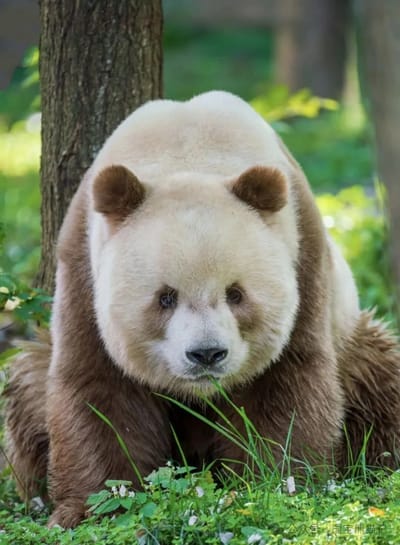
Qi Zai (七仔), the world’s only captive brown giant panda, lives at the Qinling Panda Research Center in Shaanxi. She was rescued as a malnourished cub in November 2009 from the Foping Nature Reserve in the Qinling Mountains. Her fur is not the standard black-and-white of typical pandas but a striking chocolate brown and cream-white.
The brown phenotype appears spontaneously in wild Qinling pandas at a low frequency — approximately 5-10% of individuals show some degree of brown coloration, from subtle brown tinges to the full brown expressed in Qi Zai. The brown coloration is believed to result from recessive genetic variants affecting melanin production — specifically, a reduced expression of eumelanin (black-brown pigment) relative to pheomelanin (red-brown pigment).
The persistence of the brown variant in the Qinling population, despite its low frequency, suggests it is not strongly selected against. In the browner forest environment of the Qinling range — less snow, more brown leaf litter, more gray tree trunks — a brown panda may not be more visible to predators than a black one. The relaxed selection on fur color in the Qinling environment allows the brown variant to persist at low frequency.
Our article on Qi Zai and the Qinling subspecies provides a comprehensive profile of this unique individual and the genetic research she has enabled.
Conservation Challenges: Two Different Problems
The two subspecies face different conservation challenges that require different solutions.
Sichuan subspecies challenges. The primary threat is habitat fragmentation — roads, farmland, and development that have broken continuous forest into 20+ isolated subpopulations. The solution is the corridor program described in our article on wildlife corridors. The Sichuan subspecies needs reconnection.
Qinling subspecies challenges. The primary threat is the small size and single-location nature of the entire subspecies. The Qinling population has no backup. If a catastrophic event — a major bamboo flowering, a severe disease outbreak, a large landslide — affects the Qinling range, the entire subspecies could be lost. The solution is a combination of: (1) maximizing habitat quality and protection within the existing range; (2) maintaining a genetically representative captive population; (3) exploring the feasibility of establishing a second wild population in a suitable location outside the current range.
Shared challenges. Both subspecies face climate change, but the Qinling subspecies faces it with less resilience. Both face bamboo flowering events, but the Qinling subspecies has fewer alternative bamboo species to fall back on.
Which Population Is More Secure?
If the question is “which panda subspecies is more likely to be here in 100 years,” the honest answer is the Sichuan subspecies. It has more individuals, more habitat, more genetic diversity, more geographical redundancy, and more vertical escape room for climate adaptation.
But “less secure” does not mean “doomed.” The Qinling subspecies has survived 10,000+ years of isolation in a single mountain range. It has persisted through the Holocene Climate Optimum, through the Little Ice Age, through centuries of human landscape modification. The subspecies is not fragile by nature — it is vulnerable because its habitat has been reduced and its population has been compressed.
The Qinling panda does not need to be saved from extinction. It needs to be given enough space and protection to continue doing what it has been doing for millennia: surviving in its own corner of the world, one bamboo stalk at a time.
Frequently Asked Questions
Can I tell the subspecies apart by looking at a panda?
With practice, sometimes. A rounder face, slightly browner fur, and a more compact body suggest Qinling origin. But the differences are subtle, and individual variation within each subspecies is significant. The most reliable identification is genetic — or geographic: if you are looking at a panda in Shaanxi Province, it is almost certainly Qinling; if in Sichuan, it is almost certainly Sichuan.
Are there pandas in other mountain ranges besides Minshan and Qinling?
Yes. The Sichuan subspecies also lives in the Qionglai, Daxiangling, Xiaoxiangling, and Liangshan ranges — six ranges in total. But the Qinling range is the only home of the Qinling subspecies.
Will climate change affect the two subspecies differently?
Almost certainly. Climate models predict more severe impacts on the lower-elevation Qinling habitat, where bamboo at the warm edge of its range may be lost as temperatures rise. The higher-elevation Sichuan habitats have more vertical room for bamboo to shift upward. Qinling pandas face a disproportionate climate threat precisely because their mountain home is lower and warmer to begin with.
Can captive breeding save the Qinling subspecies?
Partially. The captive population includes approximately 50 pandas of confirmed Qinling lineage, housed primarily at the Qinling Panda Research Center. This captive population preserves the subspecies’ genetic diversity and could theoretically be used for reintroduction. However, the long-term survival of the Qinling subspecies depends on protecting its wild habitat — the 3,500 square kilometers of bamboo forest in the Qinling range that has sustained it for thousands of years.
Are the subspecies treated differently in the studbook?
Yes. The International Panda Studbook records the subspecies identity for every captive panda when known, and breeding recommendations from the Population Management Plan consider subspecies identity to maintain the genetic distinctiveness of both lineages. Mixing the subspecies in captivity would irretrievably dilute the unique adaptations of each.
Your Turn
Pandas are not interchangeable. The Sichuan panda and the Qinling panda are two chapters of the same evolutionary story — separated by mountains and millennia, united by bamboo, each a distinct expression of what it means to be a giant panda. To lose either would be to lose half the story. Read our article on the genetic diversity of the captive panda population to understand how the studbook system manages both subspecies, and our analysis of climate change impacts to see why the Qinling subspecies needs our attention now more than ever.

Dr. Sarah Hartwell
Habitat & Ecology Editor
Conservation biologist specializing in habitat assessment, climate change impacts, GIS-based conservation planning, and bamboo corridor restoration. Reviews all habitat and ecology content.
View full profile →Tags in this article
Questions readers often ask
What are the main differences between Sichuan and Qinling pandas?
Sichuan pandas (A. m. melanoleuca, Minshan and Qionglai populations) are larger, with deeper black fur, longer skulls, and higher-elevation habitat characterized by heavy snowfall. Qinling pandas (A. m. qinlingensis) are slightly smaller, with rounder, more domed skulls, fur that trends dark brown rather than pure black, and habitat at lower elevations with less snowfall. The two populations have been genetically isolated for approximately 10,000-50,000 years and are classified as separate subspecies.
Why did the Qinling pandas become a separate subspecies?
During the last glacial period, climatic changes created geographical barriers between the Qinling Mountains and the Sichuan ranges. The Qinling population was cut off from the larger Sichuan population, and over thousands of years of isolation, accumulated genetic and morphological differences. The rounder skull, browner fur, and distinct genetic markers of the Qinling subspecies reflect this long period of separate evolution under different environmental pressures.
Can Sichuan and Qinling pandas interbreed?
Yes — they remain the same species and can produce fertile offspring. Captive breeding programs occasionally pair individuals from different subspecies to increase genetic diversity across the managed population. However, natural interbreeding does not occur because the populations are geographically separated by unsuitable lowland habitat.
How genetically different are the two subspecies?
Mitochondrial DNA analysis reveals approximately 2-3% sequence divergence between the subspecies — comparable to the genetic distance between African and Asian elephant species, though pandas retain reproductive compatibility. The divergence is estimated to have occurred 10,000-50,000 years ago, during the late Pleistocene. The Qinling subspecies shows significantly lower genetic diversity than the Sichuan subspecies, consistent with a smaller and more isolated population.
Why are Qinling pandas sometimes brown?
The brown fur of some Qinling pandas — most famously Qi Zai — is thought to result from recessive genetic variants affecting melanin production. The brown phenotype appears spontaneously in wild Qinling pandas at a low frequency (approximately 5-10% of individuals show some brown coloration). Its persistence suggests the brown variant is not strongly selected against in the browner Qinling forest environment.
Which subspecies faces greater extinction risk?
The Qinling subspecies faces greater risk by every metric: smaller total population (~350 vs ~1,500), single mountain range with no backup, lower genetic diversity, and lower-elevation habitat that is more vulnerable to climate change. The Sichuan subspecies has four subpopulations across four mountain ranges and substantially higher genetic diversity.
How does climate change threaten the two subspecies differently?
Climate models project that the Qinling range, with lower peak elevations (3,767m vs 4,980m in Minshan), will experience more severe bamboo habitat loss. Under RCP 8.5, the Qinling subspecies could lose 60-80% of its habitat by 2070. The Minshan population, with greater elevation headroom, is projected to lose 25-45%. The Qinling pandas have less 'escape room' — less vertical space for bamboo to migrate upward as temperatures rise.
Are there brown pandas in captivity?
Qi Zai at the Qinling Panda Research Center is the only confirmed brown panda in captivity. She was rescued as a weak cub in 2009 and has been the subject of extensive genetic research aimed at identifying the gene or genes responsible for the brown coloration. Despite intensive study, the exact mechanism remains incompletely understood, and Qi Zai has not produced brown-furred offspring.