Table of contents (10 sections)
Tropical Challenge: Keeping Pandas Cool in Singapore and Malaysia
Key Fact: In the equatorial heat of Singapore and Malaysia, where year-round temperatures hover at 28-32°C and humidity rarely drops below 80%, giant pandas survive — even thrive — in some of the most technologically sophisticated animal enclosures ever built. The pandas at Singapore’s River Wonders and Malaysia’s Zoo Negara spend approximately 80-90% of their time in climate-controlled indoor habitats that replicate the 18-22°C, misty conditions of their native Sichuan mountains. The cooling load is immense — equivalent to air-conditioning an entire office building for a single panda — and the annual electricity bill for tropical panda keeping runs to hundreds of thousands of dollars. These facilities are the most extreme examples of environmental engineering in the global panda network — and they prove that pandas can be maintained successfully in any climate, provided the technology investment matches the environmental challenge.
Key Takeaways
-
Tropical panda keeping is an engineering feat as much as a zoological one — climate-control systems, redundant cooling, and industrial dehumidification are not optional but fundamental. The annual energy cost for a single tropical panda enclosure can exceed SGD 200,000.
-
Malaysia’s breeding success — three cubs in five years — proves that reproductive function is not climate-dependent. Nuan Nuan (2015), Yi Yi (2018), and Sheng Yi (2021) were all born to Liang Liang and Xing Xing at Zoo Negara under a managed indoor microclimate.
-
The ethics are debated but the welfare data is clear — tropical pandas show no systematic health or behavioral differences from their temperate-zoo counterparts when the microclimate is correctly managed.
The Air That Hits You First
The air outside the panda enclosure at Singapore’s River Wonders is thick with equatorial heat — 31°C, 85% humidity, the kind of weather that makes clothing stick to skin within minutes. Step through the doors into the panda exhibit, and the change is immediate and physical: the temperature drops by 12 degrees, the air dries and cools, and the soft hum of climate-control machinery replaces the buzz of tropical insects.
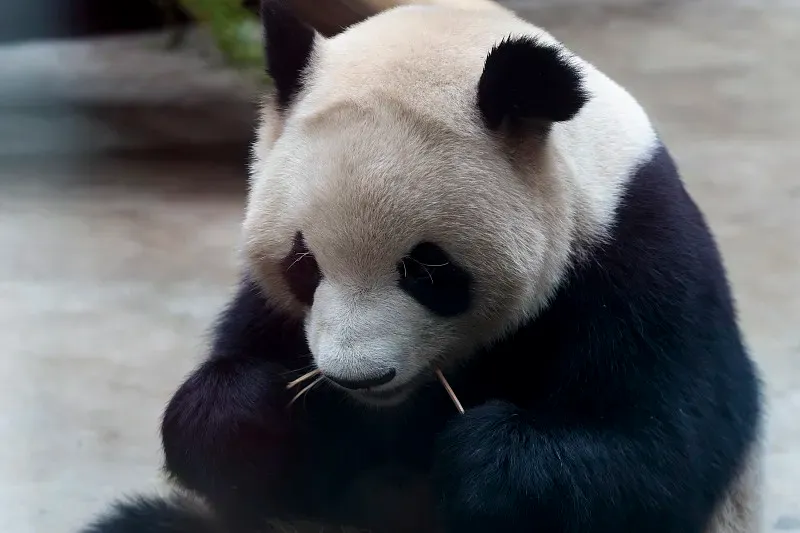
Inside, Kai Kai and Jia Jia are eating bamboo — the same deliberate, unhurried chewing they would perform at 2,500 meters in the Minshan Mountains. They do not know they are in the tropics. The enclosure has been engineered to ensure they never find out.
Singapore and Malaysia represent the most extreme environmental challenge in the global panda network. Pandas evolved for cool, high-elevation forests where summer temperatures rarely exceed 25°C and winter brings deep snow. The tropics are, biologically speaking, the opposite of everything a panda’s body is designed for. And yet — with sufficient technology — pandas live, eat, sleep, and reproduce in equatorial Asia as successfully as they do anywhere else.
The Engineering Behind the Microclimate
Tropical panda enclosures are not simply air-conditioned rooms. They are comprehensive life-support systems designed to replicate a Sichuan mountain environment inside a building in the tropics.
| Parameter | Equatorial Outdoors | Indoor Panda Enclosure | Sichuan Mountain Habitat |
|---|---|---|---|
| Temperature | 28-32°C year-round | 18-22°C year-round | 10-25°C seasonal |
| Relative humidity | 80-95% | 55-65% | 50-70% |
| Light cycle | 12h day / 12h night (minimal seasonal variation) | Seasonal photoperiod programmed (simulating 30°N latitude) | Natural seasonal variation |
| Air changes per hour | Natural ventilation | 8-12 air changes/hour (HEPA-filtered) | Natural air currents |
| Sound level | Tropical birds/insects (40-60 dB) | Quiet white noise (25-35 dB) | Forest sounds (20-40 dB) |
Temperature Control
The indoor enclosures are maintained at 18-22°C year-round using industrial-grade chiller systems — the same technology used to cool large commercial buildings. The cooling load is enormous: a single panda enclosure (approximately 200-300 square meters) requires 40-60 kW of continuous cooling capacity. For comparison, a typical 100-square-meter apartment requires about 3-5 kW.
The system architecture is triple-redundant:
- Primary chillers (two units, each sized to handle the full load) run continuously, rotating weekly for balanced wear.
- Backup chiller (a third unit) auto-activates if either primary unit fails.
- Emergency diesel generator can power the entire cooling system for 48+ hours during grid outages.
The water-cooled chiller systems reject heat to cooling towers outside the enclosure, where the equatorial air is even hotter than the water being cooled — a thermodynamic paradox that requires oversized condenser coils and higher-than-standard refrigerant pressure to overcome.
Humidity Management
Equatorial humidity (80-95%) must be reduced to 55-65%. Industrial desiccant dehumidification systems — not the standard refrigerant dehumidifiers found in homes — are used because they can operate effectively at the low dew points required.
Desiccant dehumidifiers work by passing air through a rotating wheel impregnated with silica gel or lithium chloride. The wheel absorbs moisture from the incoming air and releases it to a heated regeneration airstream that vents outside. Each system extracts 15-30 liters of water from the air per hour, 24 hours a day.
The extracted water is not wasted — it is collected, filtered, and used for bamboo irrigation and enclosure cleaning, reducing the facility’s overall water footprint.
Bamboo Cold Chain
Tropical heat accelerates bamboo deterioration dramatically. Stalks that remain fresh for 3-4 days in a temperate zoo wilt within 24 hours in the tropics. The cold chain from harvest to panda mouth is managed as precisely as a human food supply chain:
| Stage | Temperature | Duration (target) |
|---|---|---|
| Harvest | Field temperature | < 1 hour |
| Field cooling | 4-6°C | < 2 hours |
| Transport | 4-6°C (refrigerated) | 6-24 hours |
| Zoo storage | 4-6°C | < 48 hours |
| Panda consumption | 18-22°C | < 2 hours |
Bamboo is sourced from a combination of local plantations and imports. Malaysia operates dedicated bamboo farms near Kuala Lumpur that supply Zoo Negara with multiple species, reducing import dependency. Singapore imports the majority of its bamboo from China and Malaysia, supplemented by limited local bamboo production. Despite cold-chain management, spoilage rates in tropical facilities are 15-30% higher than in temperate zoos.
Energy Costs and Environmental Impact
The climate-control systems for tropical pandas consume substantial energy. At River Wonders in Singapore, the panda enclosure’s cooling and dehumidification systems consume 400-600 kWh per day — approximately the electricity usage of 15-20 average households.
| Cost Item | Singapore (River Wonders) | Malaysia (Zoo Negara) | Temperate Zoo (comparison) |
|---|---|---|---|
| Annual electricity cost (cooling) | SGD 150,000-250,000 | MYR 200,000-350,000 | SGD 20,000-40,000 |
| Annual bamboo cost | SGD 300,000-500,000 | MYR 250,000-400,000 | SGD 100,000-200,000 |
| Total annual panda program cost | SGD 1-2 million | MYR 1-2 million | SGD 0.5-1 million |
| Carbon footprint (scope 2) | ~200-300 tCO2/year | ~150-250 tCO2/year | ~50-100 tCO2/year |
Singapore’s facility offsets a portion of this impact through rooftop solar panels and has committed to net-zero carbon by 2030 for the entire River Wonders complex. The carbon footprint of tropical panda keeping is a genuine concern that facilities are actively working to address.
Comparing Tropical Panda Facilities
Five panda facilities operate in tropical or subtropical climates, each with distinct approaches to the cooling challenge:
| Facility | Location | Climate | Pandas | Cooling Strategy | Breeding Success |
|---|---|---|---|---|---|
| River Wonders | Singapore (1°N) | Equatorial tropical | Kai Kai, Jia Jia | Full indoor climate control; triple-redundant chillers; desiccant dehumidification | No successful breeding |
| Zoo Negara | Kuala Lumpur (3°N) | Equatorial tropical | Xing Xing, Liang Liang | Indoor climate control; outdoor shaded enclosures; large water features | 3 cubs (2015, 2018, 2021) |
| Ocean Park | Hong Kong (22°N) | Subtropical | Ying Ying, Le Le | Indoor/outdoor with heavy misting; seasonal photoperiod management | Not yet successful |
| Chiang Mai Zoo | Chiang Mai (18°N) | Tropical highland | Lin Hui, Xu Hui | Indoor cooling; high-elevation natural advantage (~1,000m) | 1 cub (2009) |
| Taipei Zoo | Taipei (25°N) | Subtropical | Tuan Tuan, Yuan Yuan | Indoor climate control; cold-water pools; mist systems | 1 cub (2013) |
The key insight from this comparison: latitude alone does not determine success. Chiang Mai’s high elevation gives it a natural cooling advantage, yet it achieved only one cub. Zoo Negara, at near-equatorial latitude, achieved three. The critical factor is not outdoor climate but indoor microclimate management.
The Welfare Debate
The question of whether it is ethical to keep cold-adapted animals in tropical climates is actively debated among zoo professionals and animal welfare scientists.
The case in favor:
- The indoor microclimate is controlled to match panda physiological preferences. The pandas do not experience the tropical climate — they live in an artificial Sichuan.
- Welfare indicators (body condition scoring, behavioral diversity, reproductive success, stress hormone levels) at tropical facilities are within normal ranges.
- The conservation education value is substantial. Southeast Asian audiences who may never visit China can encounter living pandas, learn about their conservation challenges, and develop emotional connections that support conservation funding.
- Tropical facilities contribute to the global panda population through breeding, reducing the genetic bottleneck risk described in our article on panda studbook genetic management.
The case against:
- The total dependence on technology is a vulnerability. If the climate-control systems fail, the pandas are at immediate risk.
- The energy consumption and carbon footprint of tropical panda keeping conflicts with the conservation message of reducing human environmental impact.
- There is an unavoidable artificiality to the experience — pandas in the tropics cannot participate in their natural seasonal cycle of snow, leaves, and bamboo shoot emergence.
- Some critics argue that conservation resources (estimated SGD 1-2 million per year for a tropical panda program) could be more effectively spent on in-situ habitat protection.
Most experts land in the middle: tropical panda keeping can meet all welfare standards given adequate investment, but it requires continuous monitoring, transparent reporting, and a commitment to reducing environmental impact.
The Behavioral Evidence
Pandas in tropical facilities show behavioral patterns that differ from their temperate-zone counterparts in predictable ways:
- Lower outdoor activity. Tropical pandas spend 10-20% of their time outdoors versus 30-50% for temperate pandas.
- Higher water interaction. Tropical pandas use pools and misters 2-3 times more frequently.
- Shifted peak activity. Activity peaks shift to cooler hours (6:00-9:00 AM and 5:00-8:00 PM) rather than the midday activity sometimes observed in temperate pandas during winter.
- Equivalent feeding time. Time spent feeding (10-14 hours per day) is identical to temperate pandas — the controlled microclimate ensures bamboo consumption is not suppressed by heat stress.
These behavioral differences are within normal species variation and do not indicate welfare compromise. A panda at River Wonders eats the same amount of bamboo, sleeps the same amount, and shows the same range of natural behaviors as a panda at a temperate zoo.
Did You Know?
The bamboo supply chain for tropical pandas is a logistical operation that rivals human food service. At Zoo Negara in Kuala Lumpur, fresh bamboo must be delivered every 24-36 hours — versus every 3-4 days at a temperate zoo. A single interruption in the delivery chain can force emergency bamboo imports by air freight, at costs approaching SGD 10,000 per shipment. During the COVID-19 pandemic (2020-2021), border closures and flight cancellations created genuine concern about bamboo supply continuity for tropical pandas. Emergency stockpiles were established, and alternative local bamboo species were tested for palatability — contingency planning that temperate zoos rarely need to consider.
Frequently Asked Questions
Why do pandas need such cold temperatures?
Pandas evolved in the cool, high-elevation forests of the Minshan, Qionglai, and Qinling mountains, where average annual temperatures range from 5-15°C. Their thick fur — described in our article on panda fur camouflage and communication — is designed for insulation against cold, not heat dissipation. They lack effective cooling mechanisms (they do not pant efficiently, they have few sweat glands, and their large body mass retains heat). Heat stress in pandas can suppress appetite, reduce fertility, and in severe cases, cause organ damage.
Could pandas adapt to tropical conditions over generations?
Evolutionary adaptation would require thousands of years and strong selective pressure. The management goal is explicitly to prevent adaptation — the enclosures are designed to maintain Sichuan conditions so that pandas do not need to change. If a panda genetically adapted to tropical conditions, it would be less suitable for reintroduction to its native habitat.
How does the photoperiod work in the tropics?
Because the equator has minimal day-length variation between seasons (approximately 12 hours year-round at the equator), tropical panda enclosures use programmable LED lighting systems to simulate the natural seasonal photoperiod of Sichuan (30°N latitude). Lights gradually transition from shorter winter days (10 hours) to longer summer days (14 hours), providing the seasonal cues that regulate reproductive cycling and behavior.
What is the lifespan of tropical pandas compared to temperate ones?
As of 2026, there is insufficient data to draw firm conclusions. The oldest tropical pandas — Lin Hui (born 2001, Chiang Mai) and Xu Hui (born 2001, Chiang Mai) — have reached ages comparable to their temperate counterparts. Kai Kai (born 2007) and Jia Jia (born 2008) are still in their prime. All available evidence suggests no lifespan disadvantage from tropical conditions, provided the microclimate is maintained.
Why did Malaysia succeed with breeding when Singapore has not?
This is an interesting puzzle. Both facilities use similar climate-control technology. The difference may be individual — each panda pair has unique compatibility dynamics. Xing Xing (sb847) and Liang Liang (sb848) at Zoo Negara have demonstrated strong natural breeding behavior. Kai Kai and Jia Jia at River Wonders have been paired multiple times with artificial insemination but have not yet succeeded. There is no evidence that the tropical environment itself is the limiting factor — facility differences, individual panda compatibility, and timing variables are more likely explanations.
Your Turn
Step through those heavy doors at River Wonders, if you ever visit Singapore. Feel the temperature drop. Watch Kai Kai or Jia Jia chewing bamboo in their air-conditioned Sichuan spring while the equatorial sun blazes outside. And ask yourself: is this an engineering miracle, a conservation necessity, or something in between?
The answer, probably, is all three. But the most important question is not how we keep pandas cool in the tropics. It is: will we need to? If climate change continues warming the panda habitats described in our article on climate threats to bamboo forests, the technology developed for tropical pandas may become relevant far beyond the tropics. The Minshan and Qinling ranges of the future may need their own version of the technology that keeps Kai Kai comfortable in Singapore today.

Dr. Mei Zhang
Spatial Ecology & Conservation Editor
Spatial ecologist using GIS, remote sensing, and satellite imagery to study panda population dynamics, habitat connectivity, and conservation effectiveness at landscape scales.
View full profile →Tags in this article
Questions readers often ask
Can pandas survive in tropical climates?
Yes — but only with extensive climate-control infrastructure. Pandas in Singapore and Malaysia spend approximately 80-90% of their time in climate-controlled indoor enclosures maintained at 18-22°C with 55-65% humidity — replicating their native cool mountain habitat. Outdoor access is limited to cooler early-morning and evening hours. The high-tech enclosure systems represent the most extreme example of environmental engineering for captive pandas.
How much does it cost to air-condition a panda enclosure in the tropics?
The climate-control costs for tropical pandas are substantial. Cooling and dehumidifying a single panda enclosure in Singapore can consume 400-600 kWh per day — equivalent to the electricity usage of 15-20 average Singaporean households. Annual climate-control costs for the River Wonders panda facility are estimated at SGD 150,000-250,000 (USD 110,000-185,000). This expense is partially offset by solar panels and energy-efficient chiller systems.
Is keeping pandas in the tropics ethical?
This question is actively debated. Proponents argue that the climate-controlled enclosures provide conditions that pandas prefer — cool, humid, quiet — regardless of the outdoor climate, and that the education and conservation benefits of tropical panda programs reach Southeast Asian audiences who might never travel to China. Critics argue that keeping cold-adapted animals in the tropics requires an artificiality that undermines the conservation message and that the energy consumption conflicts with climate-conscious messaging. Most experts agree that, given adequate technology investment and welfare monitoring, tropical panda keeping can meet all welfare standards.
Where does the bamboo come from in tropical countries?
Singapore and Malaysia source bamboo from a combination of local plantations and imports. Malaysia operates dedicated bamboo farms near Kuala Lumpur that supply Zoo Negara. Singapore imports bamboo primarily from China and Malaysia, supplemented by limited local bamboo. The cold chain is critical: harvested bamboo is cooled to 4-6°C within hours of cutting and transported in refrigerated containers to prevent the rapid wilting that occurs in tropical heat. Despite cold-chain management, spoilage rates are 15-30% higher than in temperate zoos.
Have tropical pandas bred successfully?
Yes — remarkably so. Malaysia's Zoo Negara achieved three cubs in five years: Nuan Nuan (2015), Yi Yi (2018), and Sheng Yi (2021) — a breeding success rate that exceeds many temperate-zone facilities. Singapore's pandas have not yet bred successfully, though artificial insemination has been attempted multiple times. The Malaysian success suggests that pandas can reproduce in any climate as long as the indoor microclimate is correctly managed.
What other tropical facilities keep pandas?
Beyond Singapore and Malaysia, three other tropical/subtropical facilities maintain giant pandas: Ocean Park Hong Kong (subtropical, with its own climate-control challenges), Chiang Mai Zoo in Thailand (tropical, featuring Lin Hui, Xu Hui, and their cub), and Taipei Zoo in Taiwan (subtropical, housing Tuan Tuan and Yuan Yuan and their cub Yuan Zai). Each facility has developed locally adapted cooling strategies.
What happens if the cooling system fails?
Redundant systems and emergency generators are designed to maintain critical cooling even during power outages. Protocols exist for emergency transfer of pandas to backup cooled facilities if primary cooling cannot be restored within 4-6 hours. No tropical panda has ever been lost to cooling-system failure.
Do tropical pandas suffer health impacts from the environment?
Comprehensive veterinary monitoring in Singapore and Malaysia has found no systematic health differences between tropical pandas and those in temperate zoos. Body condition, reproductive hormone levels, behavior patterns, and lifespan metrics are within normal ranges. The controlled microclimate appears to successfully shield pandas from the external tropical environment. The key risk is system failure — not ongoing exposure.