An An
安安
2 years old
China Conservation and Research Center for the Giant Panda
An An is a male giant panda born on 2024-01-01 at the China Conservation and Research Center for the Giant Panda. His st...
View profilePlace archive
The China Conservation and Research Center for the Giant Panda (CCRCGP), located in Dujiangyan, Sichuan Province, is a world-leading institution dedicated to the conservation of *Ailuropoda melanoleuca*, the iconic giant panda endemic to the mountain ranges of Minshan, Qionglai, and Qinling in southwest China. Established in 1980 through a partnership between the Chinese government and the World Wide Fund for Nature (WWF), it operates under the governance of the National Forestry and Grassland Administration, with long-standing research collaborations with the Chinese Academy of Sciences, Sichuan University, and the Smithsonian's National Zoo and Conservation Biology Institute in Washington D.C. The center's core work aligns with the International Union for Conservation of Nature (IUCN) Red List guidelines, which reclassified the giant panda from "Endangered" to "Vulnerable" in 2016, and it is an officially designated breeding and research institution under the Convention on International Trade in Endangered
China Conservation and Research Center for the Giant Panda is a CCRCGP-affiliated ex-situ conservation facility contributing to the coordinated captive breeding program that maintains genetic diversity across the global giant panda population.
How this page is organized
This page gathers the residents linked to China Conservation and Research Center for the Giant Panda, the key moments recorded here, nearby institutions, and the articles that add context.
Resident archive
186 pandas recorded
The pandas currently recorded at this institution.
安安
An An is a male giant panda born on 2024-01-01 at the China Conservation and Research Center for the Giant Panda. His st...
View profile安宝
An Bao (安宝), nicknamed Ka Wa Yi, is a male giant panda born on August 14, 2022 at Wolong Shenshuping Base. At 14 months ...
View profile八八
Ba Ba is a male giant panda born on 2024-01-01 at the China Conservation and Research Center for the Giant Panda. He is ...
View profile宝兰
Bao Lan is a female giant panda born on 2010-07-15 at Atlanta Zoo. She is the offspring of Yang Yang and Lun Lun. Curr...
View profile冰宝
Bing Bao (冰宝), nicknamed "Bing Tuo Tuo" (冰坨坨), is a male giant panda born August 8, 2021 at Wolong Shenshuping Base. Son...
冰华
Bing Hua (冰华, studbook #929) is a female giant panda born August 9, 2014 at the Ya'an Bifengxia Base. Daughter of You Yo...
View profilePandas whose birth place is recorded as China Conservation and Research Center for the Giant Panda.
安安
An An is a male giant panda born on 2024-01-01 at the China Conservation and Research Center for the Giant Panda. His st...
View profile八八
Ba Ba is a male giant panda born on 2024-01-01 at the China Conservation and Research Center for the Giant Panda. He is ...
View profile冰华
Bing Hua (冰华, studbook #929) is a female giant panda born August 9, 2014 at the Ya'an Bifengxia Base. Daughter of You Yo...
View profilePandas that were once linked to this institution.
白雪
Bai Xue (白雪), studbook #418, was a legendary Qinling giant panda rescued in 1993 from Taibai County, Shaanxi. She earned...
都都
Du Du (都都, studbook #56) was a wild-born female giant panda who held the Guinness World Record for the longest-living gi...
View profile高高
Gao Gao (高高, studbook #415) was a wild-rescued male giant panda who lost part of one ear to predators before being saved...
View profileGallery
Images and video connected to China Conservation and Research Center for the Giant Panda.
Recorded moments
The China Conservation and Research Center for the Giant Panda (CCRCGP) wraps up its 2026 "National Treasures in Green Mountains" birthday season enrichment events, which ran in parallel across its five bases.
Read updateLong Sheng (龙昇, studbook 518) died on June 18, 2026 at about 26 years old from diffuse pelvic-abdominal tumors and multi-organ failure, after a late-May toothache relapse, abdominal ascites, and multiple abdominal occupying lesions found on June 12.
Read updateGao Gao passed away at 14:30 due to severe pneumonia and multi-organ failure. He had been under 24-hour intensive care after developing respiratory distress and hind limb weakness earlier that day.
Read updateMeng Yu and Meng Bao returned to Sichuan to participate in the breeding program, ending their six-year stay at Beijing Zoo.
Read updateLong Sheng returned to the China Conservation and Research Center after a quarter century visiting six zoos across four provinces, concluding his long exhibition journey.
Read updateLiang Liang departed Zoo Negara after 11 years, returning to China.
Read updateLiang Liang departed Malaysia and returned to China after the conclusion of the Sino-Malaysian panda agreement. A farewell ceremony was held at Kuala Lumpur International Airport.
Read updateAfter 11 years in Malaysia, Xing Xing and Liang Liang returned to China following the end of their 10-year conservation loan agreement.
Read updateTong Tong died from gastric pyloric obstruction leading to multi-organ failure.
Read updateIn the library
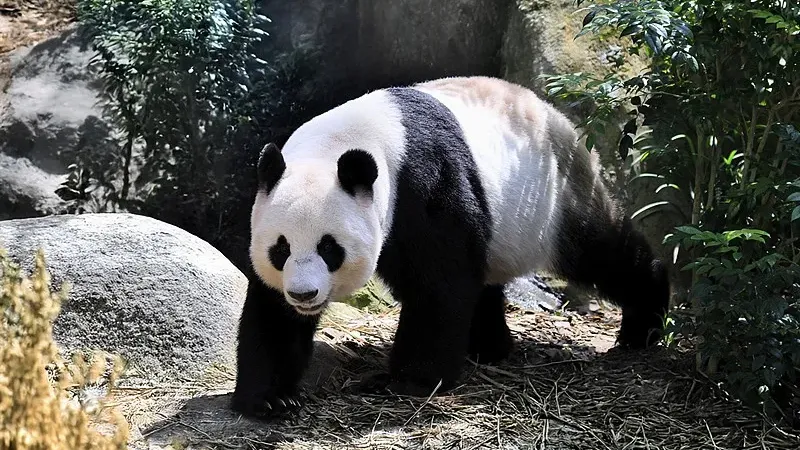
Long before the panda became a diplomatic tool or a conservation logo, it inhabited the Chinese imagination as a creature of mystery, virtue, and folklore. This article traces the panda's cultural journey through two millennia of Chinese history — from early textual references in the Shangshu and Shanhaijing, through Tang dynasty tribute records and Ming dynasty bestiaries, to its modern emergence as the visual shorthand for China itself.
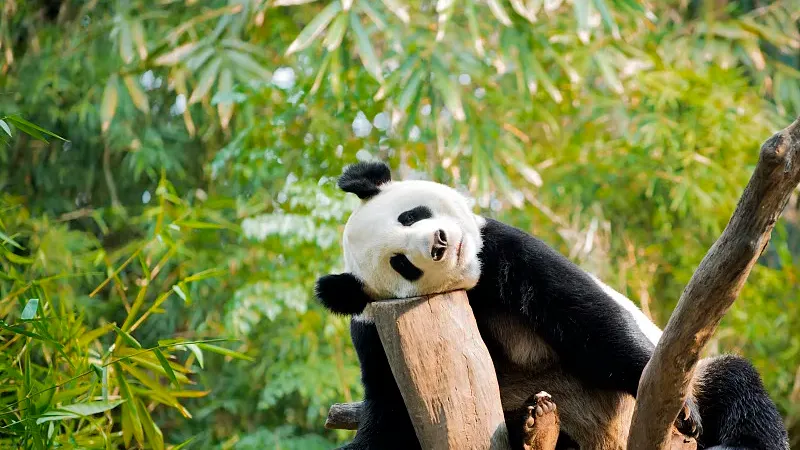
The Giant Panda National Park, established in 2021, spans 27,000 square kilometers across Sichuan, Shaanxi, and Gansu provinces. This article maps the six mountain ranges — Minshan, Qionglai, Daxiangling, Xiaoxiangling, Liangshan, and Qinling — that form the panda's last wild strongholds, exploring how each range's distinct microclimate, bamboo diversity, and elevation profile shapes the pandas that live there.
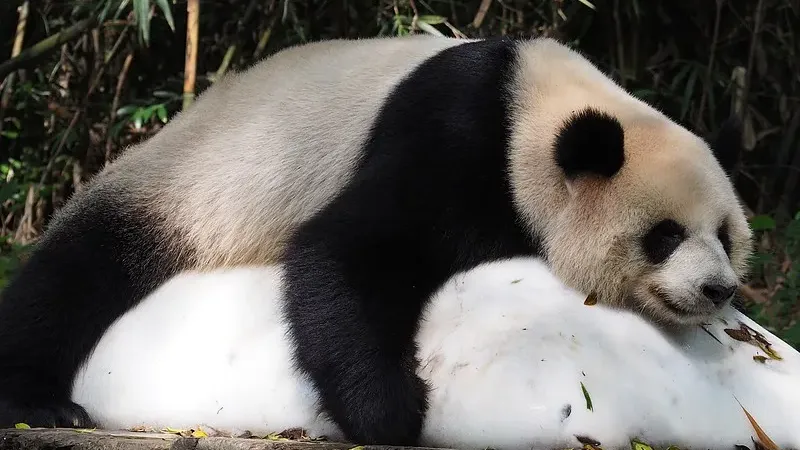
A curated global guide to over 50 panda documentaries spanning seven decades, seven thematic categories, and ten countries — from Pan Wenshi's raw Qinling field recordings in the 1990s to the 2024 Korean theatrical release Goodbye, Grandpa. Every film is verified, reviewed, and linked to the real pandas, keepers, and breeding centers behind the footage.
World map
Coordinates: 30.9950 N, 103.5620 E
Archive notes
The China Conservation and Research Center for the Giant Panda (CCRCGP), located in Dujiangyan, Sichuan Province, is a world-leading institution dedicated to the conservation of Ailuropoda melanoleuca, the iconic giant panda endemic to the mountain ranges of Minshan, Qionglai, and Qinling in southwest China. Established in 1980 through a partnership between the Chinese government and the World Wide Fund for Nature (WWF), it operates under the governance of the National Forestry and Grassland Administration, with long-standing research collaborations with the Chinese Academy of Sciences, Sichuan University, and the Smithsonian's National Zoo and Conservation Biology Institute in Washington D.C. The center's core work aligns with the International Union for Conservation of Nature (IUCN) Red List guidelines, which reclassified the giant panda from "Endangered" to "Vulnerable" in 2016, and it is an officially designated breeding and research institution under the Convention on International Trade in Endangered