Hua Jiao
华姣
13 years old
Wild (Sichuan)
Hua Jiao (华姣, studbook #866) is a female giant panda born July 6, 2013 at Wolong's rewilding training base to mother Cao...
rewilding mother-reared liziping
+1
View profile
Place archive
Generic placeholder for wild-born giant pandas in the mountain forests of Sichuan, Shaanxi, and Gansu provinces. Not a physical institution — used for pandas whose birthPlace or currentLocation is the wild rather than a captive facility.
Wild (Sichuan) forms part of the in-situ conservation landscape for wild giant pandas, anchored by nature reserves and protected corridors within the broader panda habitat network.
How this page is organized
This page gathers the residents linked to Wild (Sichuan), the key moments recorded here, nearby institutions, and the articles that add context.
Resident archive
11 pandas recorded
The pandas currently recorded at this institution.
华姣
Hua Jiao (华姣, studbook #866) is a female giant panda born July 6, 2013 at Wolong's rewilding training base to mother Cao...
华妍
Hua Yan (华妍, studbook #888) is a female giant panda born August 14, 2013 at Wolong Hetaoping Base. Daughter of Ye Ye and...
淘淘
Tao Tao (淘淘, studbook #777) was the world's second captive-born panda released into the wild, and the first successfully...
小核桃
Xiao He Tao (小核桃, studbook #1019) is a female giant panda born July 30, 2016 at the Wolong Hetaoping Base. Twin of Chu X...
View profile张梦
Zhang Meng (张梦, studbook #916) is a female giant panda born July 7, 2014 at the Ya'an Bifengxia Base in a semi-wild envi...
View profilePandas whose birth place is recorded as Wild (Sichuan).
明明
Ming Ming is a female giant panda born on September 17, 1991 in the wild of the Qinling Mountains, China. Her studbook n...
View profile坪坪
Ping Ping (坪坪) was a wild female giant panda found on November 17, 2014 in Tangjiahe National Nature Reserve with a seve...
View profilePandas that were once linked to this institution.
八喜
Ba Xi (八喜, studbook #956) is a male giant panda born July 26, 2015, at Wolong Hetaoping Base. Son of Xi Mei (喜妹) and Lu ...
明明
Ming Ming is a female giant panda born on September 17, 1991 in the wild of the Qinling Mountains, China. Her studbook n...
View profile坪坪
Ping Ping (坪坪) was a wild female giant panda found on November 17, 2014 in Tangjiahe National Nature Reserve with a seve...
View profileGallery
Images and video connected to Wild (Sichuan).
Images and video for Wild (Sichuan) will be added later.
Recorded moments
Ba Xi (八喜, sb956) and Ying Xue (映雪, sb955) were simultaneously released into Liziping Nature Reserve — China's second dual-panda rewilding. Ba Xi, weighing 65 kg, had completed two years of mother-rearing wild training under Xi Mei.
Read updateInfrared camera footage captured Zhang Xiang in Yehe Nature Reserve, Liangshan — over 30 km from her release point. She had migrated between two isolated wild populations (Gongyihai and Shihuiyao), proving rewilded pandas can connect fragmented habitats.
Read updateCao Cao was released into Wuyipeng forest and successfully mated with a wild male panda, becoming the first captive panda in history to achieve natural mating with a wild individual.
Read updateZhang Meng and Hua Yan were simultaneously released into Liziping Nature Reserve — the world's first dual-female panda rewilding and first summer dual release.
Read updateHua Jiao became the fifth captive-born panda and second female released into the wild. She disappeared into the bamboo forest at Mama Di release point within 15 seconds.
Read updatePing Ping was found severely injured in Tangjiahe Reserve, died 8 days later.
Read updateMonitoring teams found Tao Tao in a recapture cage at Liziping. He weighed 115 kg, was in excellent health, and was re-released the next day.
Read updateZhang Xiang became the first captive-born female giant panda released into the wild. She walked out of her transport cage into the forests of Liziping Nature Reserve, Xiaoxiangling, after 26 months of mother-reared rewilding training.
Read updateTao Tao became the second captive-born panda released into the wild, and the first using the mother-rearing method. State Forestry Administrator Zhao Shucong opened the cage at 10:13 AM.
Read updateIn the library
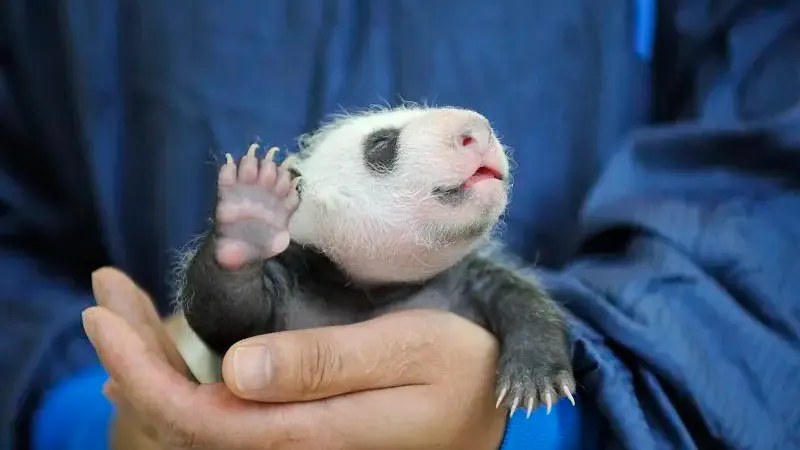
Every captive giant panda on Earth is recorded in a single global database — the International Studbook — which tracks lineage, calculates genetic relatedness, and determines each year's breeding recommendations. This article explains how studbook managers use population genetics software to maintain 90% genetic diversity across 700 captive pandas, making the panda breeding program one of the most mathematically sophisticated conservation efforts in history.
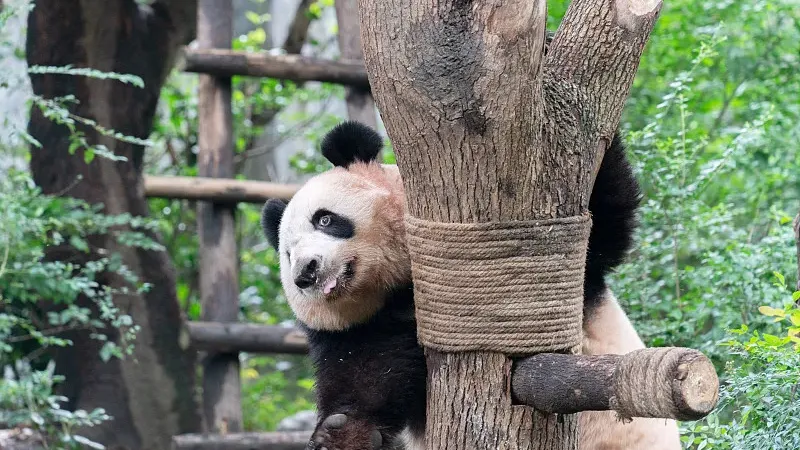
In 2009, an international team led by BGI-Shenzhen published the first complete giant panda genome — a 2.4 billion base-pair blueprint that revealed why pandas lost the taste for meat, how they digest bamboo with bacterial help, and why their genetic diversity offers hope for survival. This article follows the science from Jing Jing's blood sample to today's conservation genomics, covering TAS1R1 umami pseudogenization, the Illumina sequencing revolution, and what the genome means for the species' future.
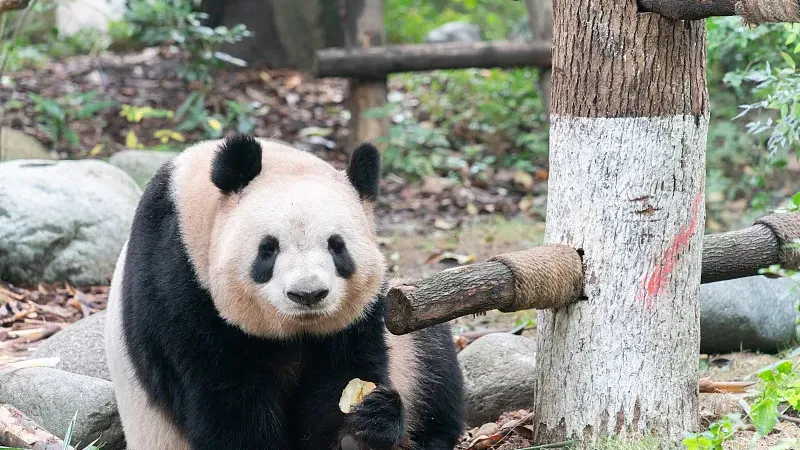
The bamboo forests protected for pandas store an estimated 2-3 billion tons of carbon across the Giant Panda National Park's 27,000 square kilometers — an ecosystem service worth $200-750 million annually in carbon sequestration alone. This article examines how panda conservation doubles as climate action, why bamboo forests rival tropical rainforests in per-hectare carbon storage, and how China's carbon market is creating new economic incentives for habitat protection.
World map
Coordinates: 30.0000 N, 103.0000 E
Archive notes
Generic placeholder for wild-born giant pandas in the mountain forests of Sichuan, Shaanxi, and Gansu provinces. Not a physical institution — used for pandas whose birthPlace or currentLocation is the wild rather than a captive facility.