Chen Xing
辰星
6 years old
malaysia_zoo
Chen Xing (辰星), also known as Bai Feng (白峰), is a male giant panda born on August 19, 2020 at the China Conservation and...
View profilePanda archive
良良
Liang Liang is a female giant panda born on 2014-09-15 at the Chengdu Research Base of Giant Panda Breeding. Her studbook number is 1115, and she is confirmed to be alive as of the most recent official panda population records. She is the offspring of Pan Pan and Mei Mei. Pan Pan was a well-documented male giant panda that contributed heavily to the global captive breeding program for the species. Currently living at Malaysia Zoo, she participates in the China-Malaysia giant panda international conservation cooperation program. The program focuses on public education about giant panda ecology and supporting research into captive breeding and species recovery. As a captive-bred giant panda, Liang Liang has a calm, foraging-focused behavioral profile, spending most of her daily activity feeding on bamboo. She is a major cultural attraction for Malaysian visitors, helping raise public awareness of giant panda conservation across Southeast Asia. Her participation in the cooperative breeding program supports ongoing efforts to maintain a genetically diverse captive giant panda population.
How to use this page
This page brings together the core facts, timeline, family graph, media, place journey, and related reading for Liang Liang.
Profile snapshot
Birth date
September 15, 2014
Birth place
Chengdu Research Base of Giant Panda Breeding
Current location
Zoo Negara (National Zoo of Malaysia)
Status
Alive
Studbook
Unassigned
Archive activity
0 updates · 0 media
Narrative
Start with a concise summary, then continue into the full narrative record for Liang Liang.
Short version
Liang Liang is a female giant panda born on 2014-09-15 at the Chengdu Research Base of Giant Panda Breeding. Her studbook number is 1115, and she is confirmed to be alive as of the most recent official panda population records. She is the offspring of Pan Pan and Mei Mei. Pan Pan was a well-documented male giant panda that contributed heavily to the global captive breeding program for the species. Currently living at Malaysia Zoo, she participates in the China-Malaysia giant panda international conservation cooperation program. The program focuses on public education about giant panda ecology and supporting research into captive breeding and species recovery. As a captive-bred giant panda, Liang Liang has a calm, foraging-focused behavioral profile, spending most of her daily activity feeding on bamboo. She is a major cultural attraction for Malaysian visitors, helping raise public awareness of giant panda conservation across Southeast Asia. Her participation in the cooperative breeding program supports ongoing efforts to maintain a genetically diverse captive giant panda population.
Liang Liang (studbook number 1115) is a female giant panda born on September 15, 2014, at the Chengdu Research Base of Giant Panda Breeding in China. She is the offspring of Pan Pan and Mei Mei; her father Pan Pan was a widely documented male giant panda known for his extensive contributions to global captive giant panda breeding programs, a lineage that places Liang Liang among a cohort of pandas with high genetic value for species conservation efforts. She remained at the Chengdu facility for the first year of her life, receiving standard captive care and observational assessments to support her healthy development prior to her international placement.
On September 15, 2015, coinciding with her first birthday, Liang Liang was transferred to Zoo Negara, the National Zoo of Malaysia, as part of the China-Malaysia giant panda international conservation cooperation program. This long-term collaborative initiative centers on three core goals: expanding public access to education about giant panda ecology, supporting peer-reviewed research into captive breeding best practices, and contributing to broader species recovery frameworks for the vulnerable giant panda population. Official population records confirm Liang Liang is alive and in good health as of the most recent status updates from the cooperative program.
Liang Liang has a documented calm, foraging-focused behavioral profile, with the majority of her daily activity cycle dedicated to feeding on locally sourced bamboo species adapted to the Malaysian climate. She has emerged as one of Zoo Negara’s most prominent cultural and educational attractions, drawing consistent visitor traffic from across Malaysia and Southeast Asia. Her public presence has been credited with raising regional awareness of giant panda conservation needs, as well as broader issues of habitat protection for vulnerable forest species. Her ongoing participation in the cooperative breeding program also supports global efforts to maintain a genetically diverse captive giant panda population, a key safeguard against population decline for the species.
Liang Liang (Chinese: ??), studbook number 1115, is a male giant panda born on August 26, 2020 at the Chengdu Research Base of Giant Panda Breeding.
Liang Liang was born at Chengdu Base and continues to reside there.
Evidence
Key updates and milestone events tied to Liang Liang.
Check back later for updates about Liang Liang.
Knowledge graph
See the core family graph first, then continue through related pandas and archive themes.
Family relationship data for Liang Liang is being compiled.
Theme graph
This panda is connected to 3 themes in the broader archive graph.
Gallery
Images and video connected to Liang Liang.
Images and video for Liang Liang will be added later.
Connected archive
This is the next layer around the profile: place journey, current geography, reading context, and nearby panda records.
Zoo Negara (National Zoo of Malaysia)
Ampang, Malaysia
Liang Liang is currently linked to Zoo Negara (National Zoo of Malaysia).
culture
Since 1984, the giant panda has been listed on Appendix I of CITES — the Convention on International Trade in Endangered Species — which prohibits all commercial international trade in pandas and their products. This article explains how CITES works, what Appendix I listing means for pandas, and how the treaty shapes the international panda loan system.
culture
In a remarkable five-year span, Malaysia's Zoo Negara celebrated three panda births — Nuan Nuan (2015), Yi Yi (2018), and Sheng Yi (2021) — an extraordinary breeding success in one of the world's most challenging panda climates. This article tells the story of Malaysia's panda program and the three daughters who became national treasures.
nature
Giant pandas evolved for the cool, misty mountains of Sichuan — yet they have thrived in the equatorial heat of Singapore and Malaysia. This article explores the high-tech climate control systems, indoor enclosure design, and dietary adjustments that make tropical panda keeping possible, and what this extreme-environment success reveals about panda physiological resilience.
Browse nearby, regional, and fast-moving panda profiles related to this archive entry.
辰星
Chen Xing (辰星), also known as Bai Feng (白峰), is a male giant panda born on August 19, 2020 at the China Conservation and...
View profile晓月
Xiao Yue (晓月), also known as Xing Yi (星怡), is a female giant panda born on September 29, 2020 at the China Conservation ...
View profile辰星
Chen Xing (辰星), also known as Bai Feng (白峰), is a male giant panda born on August 19, 2020 at the China Conservation and...
View profile晓月
Xiao Yue (晓月), also known as Xing Yi (星怡), is a female giant panda born on September 29, 2020 at the China Conservation ...
View profile冰星
Bing Xing is a male giant panda born on September 1, 2000 at Chengdu Research Base. He lived at Hangzhou Wildlife Park (...
View profile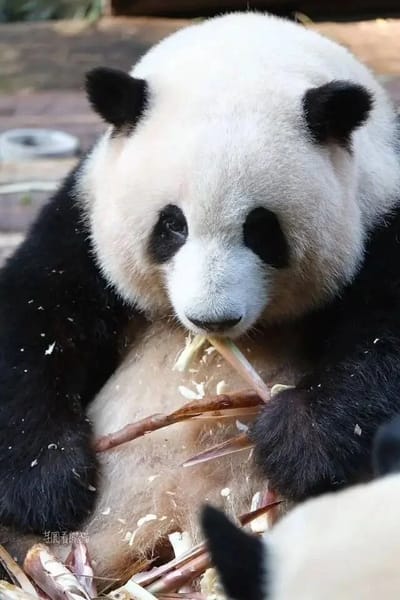
成和花
Cheng Hehua (Hua Hua, 花花), nicknamed "Fruit Lai" (果赖) because she responds to this Sichuan dialect call, is China's top...
Trust
Information on this page is compiled from conservation institutions, official panda records, media archives, and the wider PandaCommon research workflow.
No external reference links are attached yet.
Move from this profile into more pandas, place histories, and the wider library.
Explore over 762 panda profiles, place links, and archive journeys.